It’s Time to Rebel w/ Cari Kenzie

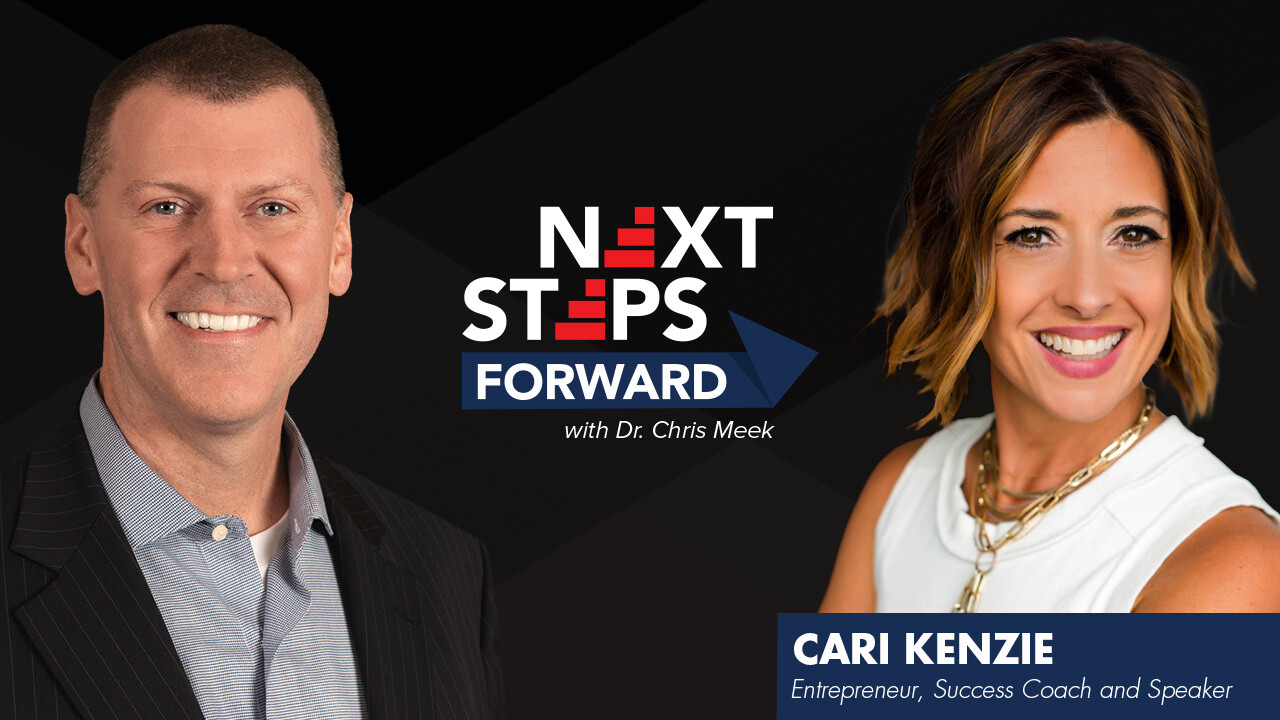


Cari Kenzie is trailblazer in the fields of leadership, resilience and personal transformation. As a dynamic speaker, coach and entrepreneur, Cari has dedicated her life to empowering others to rise above their circumstances and lead with purpose. In 2013, Cari’s life took an unexpected turn when she survived the Boston Marathon bombing. This harrowing experience became a pivotal moment, reshaping her understanding of resilience, leadership and the power of choice. Rather than being defined by the trauma, Cari chose to transform it into a source of strength and inspiration. Her story is not just about surviving adversity - it’s about using that adversity as a catalyst for profound personal and professional growth. Before becoming the renowned speaker and coach she is today, Cari was at the helm of a multi-million-dollar marketing agency. Her leadership guided the company to great success, culminating in a strategic acquisition that allowed her to transition into a new chapter - one that would focus on helping others navigate their own paths to success. This transition was not just a career shift but a calling, leading Cari to co-found iShift, a movement designed to challenge the status quo and awaken the leader within every individual.
About Cari Kenzie: As a dynamic speaker, coach and entrepreneur, Cari Kenzie joins program host Dr. Chris Meek on Next Steps Forward to speak about dedicating her life to empowering others to rise above their circumstances. The harrowing experience of surviving the 2013 Boston Marathon prompted her to transform the experience into a source of strength and inspiration instead of being defined by the trauma. Cari was also previously at the helm of a multi-million-dollar marketing agency. Her leadership guided the company to great success, culminating in a strategic acquisition that allowed her to transition into a new chapter - one that would focus on helping others navigate their own paths to success. The audience will find Cari’s mission to be clear: to help guide others to make the powerful choice to wake up not to the shadows of the past but to the limitless possibilities of the future. She will discuss why curiosity is the first step to true leadership, the importance of asking the right questions even in the midst of chaos, and her belief that every individual has the potential to lead with authenticity and strength.
0:00 There are few things that make people successful. Taking a step forward to change their lives is one successful trait, but it takes some time to get there. How do you move forward to greet the success that awaits you? Welcome to Next Steps Forward with host Chris Meek. Each week, Chris brings on another guest who has successfully taken the next steps forward. Now here is Chris Meek. Hello. You've tuned in this week's episode of Next Steps Forward, and I'm your host, Chris Meek. As always, it's a pleasure to have you with us. Next Steps Forward is committed to helping others achieve more than ever while experiencing greater personal empowerment and wellbeing.
0:44 Our guest today is Keri Kenzie. Based in Phoenix, Keri is a coach, keynote speaker, podcast host, and healer strategist who works with executive and entrepreneurial women to, quote, uncover the leader within and, quote, build legacies without compromise. A survivor of the 2013 Boston Marathon bombing, Keri has used that experience to inform her work in transformational healing, coaching, and her nonprofit, the Ripples of Change Foundation, which supports trauma healing. Keri also hosts the Curiosity, Clarity, Empowerment podcast focused on mindset shifts and courageous living. Her background also includes running multiple marathons and founding and exiting a multimillion dollar marketing agency. Keri Kenzie, welcome to Next Steps Forward. Hey, Chris.
1:25 Thanks so much for having me. I'm excited for this conversation. I know that a lot of transformation comes from discussions just like this. No, I'm looking forward to it and I appreciate your time. So Keri, I guess let's start. Take us back to the morning of that Boston Marathon. You've run multiple marathons. Was that your first Boston Marathon or had you run it before? No. Actually, it was my first Boston Marathon. What's interesting about it is I had qualified for that marathon and the second marathon I ever ran, that would have been in 2010. You typically get two years to run the marathon without having to requalify. I broke my hip in 2011. So I flew to Boston, ended up there in 2012 because the heat was so bad and unprecedented.
2:13 They'd never done before. If you were there, cross the start line, you could be there in 2013. So that's actually why I was at that particular Boston Marathon. I was excited. I was overjoyed. I was nervous. I was very nervous. I'd had a few marathons that hadn't gone super well just prior to this, but the weather was perfect. I mean, it was kind of like this culmination of pulling together thousands and thousands and thousands of people on a perfect, crisp morning. So when that starter gun fired, I mean, you were just ready to go. I remember both of those marathons.
2:53 At the time I was working for a firm based out of Boston and a bunch of my colleagues would run that every year. I remember the one year was extremely, like 75 degrees. It's on April 15th, right? Is that Patriot's Day? Yeah. Yeah. So they do it there because of the heat. Then the next year was perfect. I remember also I was actually heading to London on a business trip. So I left at 7 o'clock in the morning, but when I landed, my Ben Blackberry was blowing up. And so, well, let's get into it here for you. Yeah. What had you done to prepare for that marathon that year and what was your mindset like? Like I said, I was really excited. I had run quite a few marathons. What's interesting is I had actually, I didn't train in a regimented way prior to 2010 when I qualified.
3:42 After I qualified, then I got very serious about training and hired a personal trainer. I did all the nutrition things. So I really felt like I was in a position to be prepared to be able to do this. I had wanted to run the marathon in a way that allowed me to re-qualify to be back there again the following year. So that's kind of where my head was at. Now on that day, we know unfortunately three people were killed and more than 260 were injured by the bombs that made it to the finish line. Where were you at that moment and how did your body and mind respond to the first signs that something was very, very wrong? Well, I had made it to Heartbreak Hill.
4:28 And once I got there, my body started to break down just a little bit, started to cramp, had to pull off to the side. So this is how I kind of finished the race. And the whole time I would tell myself, it's all right, just you have to finish. It's a weird finisher's jacket type of mentality you have. You cannot wear the jacket that you've bought until you finish the race. So this is where my head was at. And so I'm going to finish, but I'll go to the medical tent as soon as I'm done. And that's what I kept telling myself the entire way. So I finished the marathon, I crossed the finish line, one of the volunteers came up to me, pulled me off to the side, took me into the medical tent. So I'd been in there for probably about 15, 20 minutes when I look back at the timing of it.
5:10 They'd come over, checked all the things, and I think they had stepped away to go get fluids, which I'm sure was kind of the issue that I was having. And I heard this loud boom. And the very first thing that went through my mind, because as you had said, it was Patriot's Day. I thought, oh, well, I didn't know that that's how they celebrated Patriot's Day, like literally the words in my head. I didn't know that this is how they celebrated Patriot's Day. I didn't know that they set off cannons. And as soon as that thought processed through, the second one hit. When the second one hit, everything shook. You felt like the ground was coming out from underneath you. The tent shook. I looked up to a volunteer, and we caught each other's eyes, and we knew exactly what had happened.
5:56 No spoken words. I don't know how. I knew exactly what had happened. And so I stood up. I didn't know where my family was at at the time. And by this point, everything happens in such slow motion and so fast all at the same time that they had started to bring in individuals who had been injured into the medical tent. And I knew I needed to leave, that I was taking up kind of this additional space that wasn't necessary. So I walked outside. I looked to my right. It was looking down Finisher's Alley, and it was, all I remember was it just being empty and it being sunny and bright.
6:37 And then I looked to my left, and it was like this chaos, this craziness, people running. It was smoky. It felt dark. And a line of Yellow Jackets started running, volunteers. And they started screaming at me, run as fast as you can. And everybody started chasing me down the street, because at that point, they thought that there was another one underneath the bleachers. So I took off running. I don't know how far, how fast, how long I ran. I just know I ended up at the family meeting area, which I didn't know had been evacuated. So in their minds, they evacuated that thinking that would be the most likely next space for whatever had happened to recur.
7:27 So that's where I found myself. So often when an extremely traumatic event happens, it takes time to process things. What details or emotions didn't register until much later, and when did you comprehend that your life had changed forever? None of it registered. You knew what had happened. I knew what had happened. I was in a state of, I think, shock and a little bit of panic. Didn't know where my family was. Stood in that area for a period of time. Fell in love with Bostonians at this moment, because a woman came up to me and said, can I help you? Is there anything that I can do for you? And I said, I can't find my family.
8:09 And so she handed me her cell phone, and she said, take this and keep it until you get a hold of them. And that was huge, because it took a while. Cell phones weren't going through. It took a while, but I was finally able to get a hold of my husband at the time. He came over, got me. We left the area, found a cab, made it back to the hotel, went to dinner that night. This is the kind of, you're watching it on the news, and you see what's happened, and it just hasn't clicked yet that this is what has happened that you've been a part of. The next day, I went down, and this is such a huge moment that I speak about, is when I went down the next day to pick up my bag, my cell phone, all of the things, I did have that finisher's jacket on, and I was standing at the end of Oylston Street, just kind of overlooking.
9:02 It looked like a war zone, and a reporter came up behind me, and he started tapping me on my shoulder. And he was like, hey, can I ask you a few questions? Can you tell me where you were at yesterday? Can you tell me about your experience? And Chris, I'm not kidding you. There was a voice in my head, a literal voice, and it said, it is not your story to tell. I never looked at that reporter. In turn, I walked away and went about my business. They say that I left Boston a participant, and I got home a spectator. What I mean by that is when I was in Boston, I knew that I had been part of something because you're in the energy of it. You're walking everywhere. You're seeing the National Guard.
9:43 You're seeing just military everywhere and news vans everywhere, and so you're just really part of it. When I got back home, I ran a multimillion-dollar organization, and I had three young kids, and I was married, and I didn't have time to process because as a high-achieving, high-capacity individual, what happens is when something like that occurs, and I say that this is kind of that extreme example of the everyday occurrence, is when something like that happens, you feel like if anybody sees weakness, if you allow anybody to see a moment of vulnerability, everything's going to come out from underneath you.
10:29 You're going to lose it all, so you hold it together in the best way that you possibly can, and you silence everything, and that's what I did. Literally the next day, went back to work, sat down, watched the news with my team. The moment they caught that second terrorist, we shut off the TV, and I went back to work. I was able to keep that up for about four months. By the end of that four months or into that four months, I went from running marathons to not being able to walk up a flight of stairs unassisted. I went doctor after doctor after doctor, kept being told I was depressed, ended up at Mayo Clinic, spent three days at Mayo Clinic trying to figure out what was going on because my body was breaking down.
11:11 I stopped sleeping, and I'm not talking like I couldn't fall asleep or I'd wake up in the middle of the night. I literally stopped sleeping. Like I say, I couldn't walk up stairs. I had seizures standing up. My muscles would cramp so bad I wasn't able to sign checks in my business any longer. I had no clue that all of this stemmed from the experience that I had. We keep things separate. We think that they're compartmentalized. They're not. Everything overflows and weaves into the next. It wasn't until 2000, so this happened in 2013, I navigated so much from trying to heal my physical body in 2017, Chris.
12:00 2017 is when I made that connection, and that's when I was able to heal. Four years. Four years. That's unbelievable. Yeah. You've said that for a long time you weren't living, you were just surviving. You just went through what those days were like for you physically and emotionally, but what were your day-to-day relationships with people closest to you like during that period? Well, one, nobody knew. Nobody knew what I was navigating. Now, my husband at the time had an idea of what I was navigating because I would call him from the conference room and have to have him come pick me up at the office because I had vertigo so bad that I didn't trust myself on my own two feet.
12:50 Nobody in the office knew the depths of what was going on. Friends had an inkling, but quite honestly, Chris, once you get past about two, three months, people feel like we should be over it, right? I don't understand what's going on. Why can't you just get better? But everything continued to ebb away. I had social anxiety to a point where it was very hard for me to enjoy concerts or to be out or to go to dinner in the way that I had before. I was so confused and lost and struggling all at the same time. When we started this, I said, you know, transformations come through conversations.
13:34 In 2014, so 13, I started visiting doctors, 14, I visited one particular one. And he said to me, he's like, well, he did the vitals. He's looking at my chart. He's somebody I found because it's one specialist I hadn't seen yet. And he says to me, he says, are you a runner? Well, yeah. Why? He goes, oh, well, because your heart rate's really low and I'm thinking, well, I hear that all the time. It's not a big deal. And he said, well, here's what I can tell you. He goes, I don't have anything that's going to be able to help you. I don't have anything in my toolkit. But what I can tell you is that you're not depressed. Because I've never known a runner to be depressed. That changed the game for me. Because he saw me for the first time.
14:16 He saw beyond the chart. He saw beyond the thing that had been laid out in front of him. I had consultants, I had coaches in my business who never could see beyond the spreadsheet that sat in front of them. So they would come, were you able to accomplish? Did you do that marketing thing? You know, the P&L we were going to look at, did you do this? And I'd go, no, actually, I need to move that, you know, another couple of weeks or I wasn't able to do this. And nobody asked the question beyond the question. They stood at the surface. In 2014 is when I realized that I had to, one, do it myself. I had to figure this out because I was the only one who was going to be able to.
14:57 And so I started getting curious about everything. And I started to listen to my intuition. So I would listen to podcasts, I would read books. And if I heard that thing three times, right, it would pop up here, pop up here. That last time I'd go, I think that's something that I need to look at. That's how I uncovered chronic Lyme disease, Hashimoto's, Epstein-Barr, like, that's how I was able to uncover kind of that physical manifestation of all of the things that had happened dramatically that I had caught emotionally in my body. And so I was able to heal enough from 14 to 16 to be able to function in a much better space.
15:41 But once I made that connection, again, back to that trauma, that's where everything started to shift. So when you saw that doctor, that was your aha moment? It was an aha moment. It really was. It was that, and again, I go back to when I talk to individuals, you have all the answers in you. And that intuition, that kind of gut instinct that, you know what, I've heard that a couple of times. I think maybe I need to go take a look at that. I didn't ask for permission. In 2016, I had been seeing a doctor in Iowa, and she's the one who had found the chronic Lyme disease. Now, at the time, you could not treat nor diagnose that in the state of Iowa, or you would lose your license.
16:26 So she took me on. We began treatments. I was doing heavy, heavy doses of antibiotics, and I did that for about three to four months, and my body started to say no. So I called her, and I said, look, I've been doing this for a period of time. I have so enjoyed working with you. I appreciate everything that you've done, but I need to move on and do something else. I immediately stopped the antibiotics because I listened to what my body was telling me. I listened to the intuition, and it guided me into that next step. That took me to a next layer of healing. So we all have that internally, and that's what that wake-up moment gave me. You've shared that trauma doesn't define you.
17:07 It reveals you. Mm-hmm. Would you unpack what you mean by that, and how did trauma help you uncover something essential about yourself? That is such a layered question because the experiences that we have are so incredibly layered. I think what we tend to do is we tend to take an experience, whatever it is that we're navigating, and I'm going to call it kind of a misalignment because I think a lot of times people look at trauma, and they look for the big things. It's not always the big things. A lot of times, it's the small moments where we've stepped outside of what we know is best for us, where we have denied ourselves the opportunity to make a decision that we know we need to make because we feel like we need permission for it.
17:57 It's in every single one of those moments that we have the opportunity to not be defined by that decision, by that experience, but we have the opportunity to understand more about ourselves by getting curious around what was that experience for me? Why is it that that experience is something that I needed to navigate? How is it that I felt when they said that thing to me? When I stepped into that meeting, and I got really upset with my team member because they were not doing the thing that I knew that they needed to do because they didn't listen to my direction, and I got so incredibly frustrated by it?
18:45 In every single one of those moments, that's when we've got to ask the question, why did I get so frustrated? Because I'll tell you right now, it's not the person that's sitting in front of you. It's an experience that you've had somewhere along the way that has caused you to believe something about that moment, to have an expectation of what you should be in that moment or what they should be in that moment, which is causing you to have that frustration. The more we can ask the questions around and have an awareness around, why am I thinking what I'm thinking? Why am I experiencing what I'm experiencing? Why am I feeling what I'm feeling? The more we can dive into that, the more we understand who we are at our core, what it is that we truly, truly value, and how it is that we get to navigate this life in a sense of ease and a sense of empowerment, which again, I also know is one of those words that everybody's using right now, like, let's be empowered.
19:45 What the heck does that even mean? It means that I have the ability to know that I get to make a decision, period. I get to make a decision and be confident in that decision because I have clarity. I've removed all of the static of the emotion. I've removed the heaviness. I've removed that knee jerk, right? Oh, I'm just done. And I was able to find a place of ease around it. So I don't know if that answers, but that's really just kind of what comes when you ask that question. Nope. That's super helpful. I appreciate that. I'm also smiling as you're talking about the word empower, and this is the empowerment channel on the Voice of America network, so I just thought that was rather ironic.
20:26 So Carrie, how can someone begin to reframe their trauma so they recognize it not as something they deserve or invited, but something that becomes a source of strength and part of, lack of a better phrase, a legacy of strength to pass on? I did, last year, I did a number of interviews with women who had graduated or who had been part of the Air Force Academy. And it was some of the most fulfilling work, just having conversations around the experiences that they had. And I know in a few of those conversations, we kind of, we dug into how did they navigate and how did they now look back and see some of those experiences that they had had.
21:19 And I think it's never something that happens to you. And it's never an invitation, so to speak. But it is an experience that has the opportunity to transform and to change, not in a detrimental way, but really in, go back to that revealing way. Every single moment gives you the opportunity to find a greater sense of strength, of resilience, of identity, of value.
21:59 And if we have the opportunity, I go back to that curiosity, because that curiosity in those times when we're feeling so incredibly out of alignment, knocked off, rug pulled out, if we can have a moment to ask the questions, to ask further than the surface, to go another layer deeper, then you will have the ability to see the true gift that has come to you. And it's a matter of what am I experiencing? What am I feeling? And what is it that I could have potentially learned from that?
22:41 Or how did that, could that have benefited me? Which I know makes a lot of people mad, because nobody wants to think that I benefited or learned anything, right? Didn't benefit me in any single way to have gone through that experience. When you can peel away the emotion around it, you will have and be able to find more clarity. And sometimes, in order to have that discernment, to have a greater awareness, when I'm working with particular people, I'll go, okay, so let's say that you're best friend. Let's say that you're child. So we can always see it from the outside looking in. You're watching somebody navigate the same thing over and over and over again, and they're so frustrated.
23:26 Why do I end up hiring the same person? Why do I end up in the same relationship? I don't understand. Why do they keep showing up? There's something for you in it. And we can ask those questions, and you go, okay, so let's pretend that your child was navigating through. What would you want them to know? How would you want them to see themselves differently? You'd want them to know that they are confident, that they have value, that they can trust themselves to make the right decision. When we can start to understand those things, that's when we really release the weight of the trauma, the weight of the experience, and we get to move forward.
24:07 Again, going back to that intuition and that leader that sits within each and every one of us. Well, maybe as a follow-up to that, can resilience ever become a mask? And by that, I mean, can appearing strong really be a way to avoid real healing? Oh, yeah. Oh, I was really good at that, Chris. Come on. Four years running. Oh, buddy. I've got stories upon stories that I could tell. Yeah, because that's what we think resilience is, right? Resilience is get up, brush it off, and keep moving forward. This is what I was taught as a kid, right? Doesn't hurt that bad. Stop crying. Somebody has it worse, and that's everything that that it's not your story to tell was telling me in that moment. Somebody had it worse.
24:49 You didn't need to take up space. Everybody else needed to have the platform to have the voice. Somebody else needed to share. And so I held strong, but it's kind of like that very rigid tree that stands, that wind hits and knocks it over. This is why we have to have that vulnerability. We have to peel away the layers of everything that we have built up on ourselves in order to be able to look like we've got it together. When we can pull in vulnerability, we can allow ourselves, and I'm not talking the kind of vulnerability where you're sharing your stuff all around because you need validation for it. I've seen speakers who do that, right?
25:30 I'm going to share with you my experience, and I'm going to pause in the moment so you can validate the experience back to me so I know that you know how bad I had it. That's not the kind of vulnerability I'm talking about. I'm talking about, look, this is the thing that I went through, and this is what it gave me. This is what I learned from it. And the vulnerability to be able to ask a question, I will strip down my own layers to be able to ask the questions. Resilience is the most courageous thing that you will ever do because you have to be vulnerable, you have to ask the questions, and then you have to know that the foundation you stand on is you, your value, period.
26:14 Because the more you try to reach out in that resilient state, in that I've got to hold it together state, when you hold it together, you do this. You know what happens when I hold it together like this? I'm holding everything else around me. So I held tight to the business, to the family. I constricted everything out of a sense of need to have to be in control to not lose whatever foundation I thought I had built underneath myself because I didn't trust myself to be it. What beliefs or practices helped you sustain your resilience, and especially in the years when the world had moved on, but your healing was still continuing?
26:57 You know, I just love myself. That's like the simplest answer, but I think, I'm going to use this example. My son had an experience in a football game his senior year, and his captain of the football team, senior year, started both ways. Gets a concussion, like, second quarter into the game. I go down and talk to him, and he's like, mom, if we're down in the fourth quarter, I'm playing. He had a fourth quarter goal, and he was going to do whatever it took, whatever he needed to do, whatever curiosity he needed to have in that moment in order to be able to overcome the experience he was having in order to be in that fourth quarter.
27:45 And I say that across the board. You have to have a fourth quarter goal. For me, I was not going to live an existence of illness. I was not going to live an existence of insomnia where it took five prescription sleep medications to put me to bed. I was not going to not be able to participate with my kids the way that I wanted to. I wanted to be able to show up in all of the ways. I had a fourth quarter goal. When you have that fourth quarter goal, you're going to keep going. You're going to keep moving. You're going to keep searching. I remember in 2016, I was at a conference because, again, I'm going to all the things and doing everything to try and figure this out.
28:28 And this gal says, I know this woman who does this thing. You should call her. And at this point, Chris, I'm like, I don't care if it's a voodoo dolls and needle. Like, I don't care. Give me the number. I will call this person up. And this is the gal. I get her on the phone and she says, so what is it, you know, what is it that you're navigating? And I kind of tell her a little bit. And then I joke, I go, it's like, she goes, so tell me about your childhood. And I'm thinking, I'm sorry, I'm here because I have Lyme disease. Give me some medication or if you could tell me, like, the thing that I need to physically do. But that's when I started to put those pieces together. Oh, everything emotionally that we trapped in. Everything emotionally that we trapped. The pain of silence that we experience because we refuse to speak up for ourselves is everything that we hold that manifests physically within our own bodies.
29:18 Well, that's good to tell you the next question. You didn't just recover. You transformed your pain into purpose. Yeah. What did that process require of you emotionally, spiritually, mentally, and even physically? I have had to let go of a lot. I've had to let go of everything I thought I knew. I say that Boston, that finish line is the moment that my life path and my divine purpose collided. And sometimes we have to be shaken into the extreme in order to be able to wake up to ourselves because we walk around numb.
30:02 We walk around in the slow fade and we don't realize we're doing it. It's like when you're just putting on little tiny, tiny bits of weight over a period of time, you don't realize it and you continue doing the things. And then all of a sudden, one day you wake up and you're like, oh, how the hell did that happen? And then you realize that you've got to make a shift or you've got to make a change. And that's really what happened in that moment for me is that I hadn't been paying attention to all of the ways, to every whisper that was in my head that I would wake up in the morning and I would go, is this it? Every day for the rest of my life, this is it.
30:42 And I would shut it down and I would get up and I'd go about my day. Eventually, those whispers become screams and like the Christopher Lee two by four that comes and smacks you across the face, right? Like if you don't pay attention in the slow fade, it is going to wake you up in those catalytic moments. So let's ask the questions and let's allow ourselves to reveal the path. But again, it takes an incredible amount of courage because there's a lot of thoughts in your head you don't want to hear, right? So when you tell somebody, I want you to sit down, I want you to get curious or meditate. Oh my God, you told me to meditate back in 2014. I was like, no, thank you.
31:23 I don't, this, whatever's happening in my head, I don't want to hear it. It is mean, it is vicious. And so I'm going to keep moving my way and work my way beyond it and past it. And all you do is dig a hole deeper for it. So it takes a lot of courage and it takes the ability without judgment because there's been a lot of things that have come up that you would go, there is no way I would ever think that. It's right there. There is no way I would ever feel that way because we always try to pull ourselves up into righteousness. Well, what if? I go, what if?
32:05 What if that was the case? When would you do that? And I play with it and I don't bring judgment to it. And I allow the thought to take me to the next thought, to the next thought, because before you know it, you're going to be homeless in a box underneath a bridge. That's where your brain's going to take you. Allow it to go there. And then that's the place that you can heal from, but nobody wants to take it that far. That's what it takes. And what has resilience made possible in your life that you won't have otherwise been able to achieve? Well, I moved to Phoenix. I will say it allows me to make decisions that otherwise I'd be too paralyzed, too frightened to make.
32:53 Because comfort's easy. Staying the same is easy. Staying in the same place. I lived in Des Moines, Iowa. I lived in Iowa for like 50 years. Who does that? Who picks up and moves across the country in June to Phoenix, Arizona, right? Not a lot of people. But that's what it has done. Resilience allows me to know that I can get up and move and it's going to be hard in my head through a blessed fit. Oh my gosh. But I have enough awareness now that during that three to four days when it really went into a tirade, I knew that the only devastation, the only turmoil that I was feeling is from the thoughts in my head, not the reality that I was living.
33:43 Which gives me the ability to separate, to witness, throw your fit, do your thing, but we're going to keep moving. We're going to keep moving to the other side because now I have an awareness between the fear of the unknown and every moment that wants to hold you back and keep you comfortable and to be able to overcome it because I know that we can get to the other side. I know that those thoughts are a temporary moment. They just need addressed. They just need a moment to speak and then you can get to the other side of it. What simple habits or mindset shifts do you recommend to build emotional resilience on a daily basis or are there any simple habits?
34:26 Have compassion for yourself. That's the first thing I would say is to have compassion for yourself. I don't say meditate because you're not going to do it. I say that if you can give yourself three breaths for a pause, that is the most important that is the most amazing gift that you will ever give yourself. If you're sitting and you're toiling with a decision, and I've had this happen multiple times, especially in the business that I had, right? Do I do this? Do I do that? I don't know. Which way do I go? Do I keep them? Do I release? And spinning and spinning and spinning. What I learned was you've got two different things that are happening.
35:09 You've got the inner knowing and you've got the fear and they're battling for attention. So I would close my eyes. Yes, you can close your eyes and I would take three breaths, but I would focus on my heart space. I would just focus on that breath, really feel the breath coming in. I would do it three times and then I would ask the question and then I would allow it to come up. And that's when the intuition can come forward. If you take a pause and you allow yourself to breathe and you don't have to do it in the middle of a meeting, but you do have the opportunity to say this, you know what I'm processing through a lot of information right now.
35:56 I just need a moment and I'll let you know when I'm ready to have that conversation. Powerful pause, pull yourself out, get curious, ask the question, get rid of that emotional Get curious, ask the question, get rid of that emotional static and step back in with clarity. That's how everything changes. And if someone is in the messy middle, and by that I mean in between breakdown and breakthrough, what do you want them to know or remember about resilience? That the more they understand who they are, the more they give themselves the opportunity in that messy middle to find themselves, to understand or to see the value of who they are, the more they're going to be able to move through it with ease.
36:50 When I talk to those women from the Air Force Academy, I would ask them because some of the situations they went through were, wow, is all I can say. Like, wow. And not just in the Air Force, but really throughout the course of life. And I sat with two leaders specifically and I said, how did you do it? How did you consistently overcome everything that you had been through? And it was two women who had graduated in the 80s, partners, married, and living that entire life in the Air Force. And I asked that, how did you do that? And they said, you know what?
37:30 Because we always knew who we were. At the end of the day, we always knew who we were. And that's the thing that we consistently came back to. Doesn't mean it didn't rock us. Doesn't mean it wasn't hard. But we always knew who we were. And that's what got us through. You've said your biggest passion when it comes to work is developing leaders and, quote, bringing people back to the ability to trust their own inner wisdom. You also believe we're in the midst of a leadership crisis and that, quote, we have to start navigating the world differently. First, what's causing our leadership crisis? And second, how should we start navigating the world differently?
38:11 Ooh, leadership. This is fun. This is a fun conversation. I'll tell you why. Because we have leaders leaving the workforce and like in the thousands every day. And that's only if they get to leave or get to leave. OK, so there's individuals who are wanting to retire, boomers who are wanting to retire that the organizations are saying can't let you. We can't let you because we don't have the leaders behind you to be able to fill your space. So we need you an extra six months. We're going to need you an extra year. So one, two, we don't even understand what leadership is anymore. We think that leadership is commanding from out front.
38:53 And leadership is being within. Leadership is guiding. Not only yourself, but the people around you simply by the way you move. Simply from the presence that you carry and your own ability to trust the moves that you make. It's coming into alignment with the genius of who you are. We all have these particular makeups of what makes us incredible human beings in who you are in this lifetime. Like this is what you get to bring into the world.
39:34 And this is what we get to experience of you. When you understand that of yourself, you can see that in other people. But if we're doing performative based leadership. Then we are proven driven and we are not passion driven. And we need to come back to a place of being passion driven. Because you're not supposed to have to prove anything. When you understand this is the gift that I have and this is what it is that I get to bring into the world, that I get to bring into this organization, that I get to share in my family. Then we're not pulling ourselves out of alignment.
40:15 Because when you pull yourself out of alignment, if you're trying to do things that don't fit in that genius. For me, I had to tell my team, I'm good for about 45 minutes in a meeting. Because after about 45 minutes, dude, I'm gone, right? I don't read pages of emails. You have to give me bullet points. I am a outside networker. I am really good in front of people. Do not sit me behind a computer all day long. I do not function well. I am not your spreadsheet person. I'm not. But it's taken me a while to figure that out. But it's taken me a while to figure that out. Because I would step into those roles in order to prove that I was valuable, that you needed me, right?
40:59 And every time I do that, I stretch myself out. And that's when the shadows come forward. That's when we start to respond to things reactively and not proactively. We don't take the moment of presence. Because again, we're just trying to prove it. We can step back into passion. We can step back into this is who I am. And this is what I get to bring forward. And this is what you get to bring forward. Now, I can lead from where I am. And you can lead from where you are. And we can come in the middle. And innovation and clarity are going to spur forward. That's the kind of leadership that we need now. Not the kind of top-down, hierarchical, this person leads this person leads this person.
41:40 And then you do the thing that I tell you to do. We can't do that anymore. The new generation doesn't want it. I love that you used the words passion and purpose. That's on the homepage of our website. And those are the types of conversations we like to have is that without passion, you're not gonna know what your purpose is and vice versa. And so I appreciate you sharing that. Maybe part two on this generational change in the workplace. You believe that we're in a pivotal time in history for that change in the workplace. And how this new generation of workers approaches work and life and expects to be treated. What makes this moment so unique? And what do you see changing most dramatically between generations?
42:21 You know, what's incredibly unique about this time is this is the first time in history where we have five generations in the workforce at the same time. That's something. Five generations. Now try to navigate that, right? Try to navigate how every different generation operates and functions and what it is that they appreciate. What it is that they expect and how it is that they want to be seen or how they want to show up. Every generation has gone through something. Every generation has. And so even, you know, the pandemic and creating the shifts that the pandemic created just in the way that we operate in business.
43:06 Like we don't go to the office like we used to. People are virtual more than they ever have been. Zoom calls are the norm. Where before it was like, oh my gosh, let's go. Let's meet up. Let's do this thing. So we've all kind of navigated different elements within our own eras, so to speak. And we all appreciate different things and we work in different ways. And the first issue that I see in leadership is that the generations of the work and the loyalty and the legacy and you stay in the organization for 30, 40, 50 years because that's what you do and you show up and you work as hard as you can and then you leave and right and you go home.
43:46 That's not the way that we operate anymore. But that generation has that expectation because that's what they know. And that's all they know. Where the younger generations don't care. I'm not going to work myself to a bone. I am not going to sacrifice myself for you or for your organization. I will come in and I will do the thing that means the most to me because I'm passionate about it, because I want to be purpose oriented. That's what this newer generation is looking for. I don't care about money. They do. Don't get me wrong. But at the same point, they would much rather do work that means something to them where they feel seen, where they feel valued, where they feel like they are making a contribution as opposed to just coming in and doing the thing that's sitting in front of them.
44:36 So there's a huge difference there. But again, I go back to when we don't understand how it is that we operate, when you don't understand that my generation, the Gen X, we got the work ethic and we're going to show up and we're going to do the thing and we're going to get gritty and we're going to get dirty and we're going to figure it out. Right. Because this is just what we did and we're very independent. We're going to do it on our own because we were out till 1030 at night. Didn't have to be home free. Like when we understand that's the way I operate. That is not the way my children operate at all. When I understand that I can shift and I can see them for who they are and I can have a different conversation.
45:18 I can honor them in the space where they are. I can give them the freedom and then also still have the expectation of the work. But I hit it from a passion. And this is how it is affecting the mission of the organization overall. Then you get the buy-in. Birds of a feather right here between you and me and how our kids are. So I totally understand the story there. When you have workshops, you ask people if they think leaders are made or born. And I think what most of them say is interesting, but I'm fascinated by what you tell them and the reason behind your answer. So what did they usually say? And then what do you say?
45:59 Well, especially if you ask older generations, I mean, leaders are made. Leaders are made. This is what you have to learn, the leadership. You take the courses and you go through and you learn and your grit and your experience, this is how you become a leader. Every single person is a leader. This is where I go back to like we've shifted the definition to mean leadership is something outside of self. Leadership is something that I have to earn as opposed to something that I already am. We lead ourselves every single day.
46:44 When you're born, you don't know how to walk. You got to figure it out. And yes, you've got people that are modeling it for you, but nobody can do it for you. And that mentoring comes from witnessing, witnessing how they behave, not what they tell you, but witnessing. And then you stand up, you fall down, you stand up, you fall down. You continue to do that until you finally figure out I can stand and now I can walk. That's a leader. Everybody is a leader. But when we don't see ourselves that way and we expect the leadership to come from somebody else, and again, it falls back into that vicious cycle of I need permission and I need to prove and I become performative in order to be able to earn.
47:40 And I don't give myself the ability to have the voice that I need in the meeting to speak up when I know that there's something that could be done, when I know there's a different when I know there's a different direction that could be taken. Because again, I don't have that leader title. Let's talk about another way that you have channeled your pain into a purpose. You created the Ripples of Change Foundation with the goal of helping others transform trauma into triumph. How does the foundation embody and execute that mission? Well, that was a big reason for the interviews that we did through Ripples of Change for those women, part of the Air Force Academy. So they're in the process of writing a book.
48:21 The academies are coming up on their 50-year anniversary in 2026 of having women be part of them. And when I was speaking with the head writer of that book, I go back to we can have vulnerability and we can share from a space of trauma or we can share from a space of power. And the only way that you are going to truly be able to affect change and to inspire others is to share from that position of power. And a lot of these women, again, had navigated some pretty difficult, very difficult experiences in the Air Force or in the Academy and wanted to bring that forward but did not want this to be a trauma book.
49:11 Like nobody wants to come forward and just share, oh, these are the things that happened and feel sorry for us and feel bad. But how is it that we could bring forward the information in order to help others be able to reclaim their own voices, be able to reclaim their own experience in a way that gives them hope that they can come to the other side of this? Because there are still many women who navigated this in the 80s, and I am sure beyond, that physical manifestation of that trauma is still gripping hold of them. Because again, they did not have permission to speak. They did not have the ability to be vulnerable or to have a voice.
49:55 And any time that they did have a voice, it was shut down. And so we wanted to give them that space to be able to speak. And we wanted to help them from that space of curiosity to be able to ask the questions and to find the purpose in it so that they could reclaim themselves through it. How can people in our audience get involved in the Ripples for Change Foundation, either supporting a mission or seeking healing for themselves? Oh, gosh. You know, we are consistently looking at resources to bring forward to help people to be able to have the conversation, to have and host events, to share stories so that other people can see themselves in it.
50:43 Again, it's hard when you're in that slow fade, when you feel like somebody has it worse to be able to see yourself. And so we love to have the conversations to share around this is what I've experienced, and this is how I got to the other side of it. Because there's just glimmers. And you can grab onto that and you go, oh, my gosh, if they did, I can now see mine. And what's always fascinating to me is the way that we see our own experiences as that medium. I didn't have it that bad. And then I will hear, they'll share, and my mouth drops. And I'm like, I'm sorry, what?
51:26 Like, if you were to share that with anybody in the world, they'd be like, how did you navigate that? How did you get to the other side of that? So we want to bring forward the voice. So for people to get involved, we're always looking for, of course, financial support. We're looking for resource support and just education to be able to share that we do exist. So those would be the ways. And Carrie, I know we could keep going on for another hour, but we have just a few minutes left. Would you please tell us how people can get in touch with you? Oh, gosh. Well, some of the fun things that we have going on, Kinza Collective.
52:07 Kinza is the organization where we really are working with those high-capacity women to navigate the big transitions. So it could be in transitions, scaling, exiting, whatever it is that they're doing in their life or business. We help them to be able to navigate that, and that's through Kinza. So you can find me, Carrie, at CarrieKenzie.com. You can find me at CarrieKenzieKinza.com or KinzaCollective.com. So there's a number of different ways that you can get in touch with me. I would say the best right now is to go follow Carrie Kenzie or Ripples of Change Foundation, because you're going to be able to find all of the resources, what it is that we're sharing, and then how it is that you can get involved.
52:54 Carrie Kenzie, executive coach, founder of the Ripples for Change Foundation, and host of the Curiosity, Clarity, Empowerment podcast. Thank you so much for being with us today. Chris, it was a pleasure. Thanks so much. No, it was my pleasure and honor, and I got through about half of my notes, so you have to come back. Absolutely. Enjoyed it. No, thank you. I'm Chris Meek. We're out of time. We'll see you next week, same time, same place. Until then, stay safe and keep taking your next steps forward. Thanks for tuning in to Next Steps Forward. Be sure to join Chris Meek for another great show next Tuesday at 10 a.m. Pacific time and 1 p.m. Eastern time on the Voice America Empowerment Channel.
53:38 This week, make things happen in your life.