UnchainedTV: Robot Elephants Are Replacing Real Ones! And, That's Great!
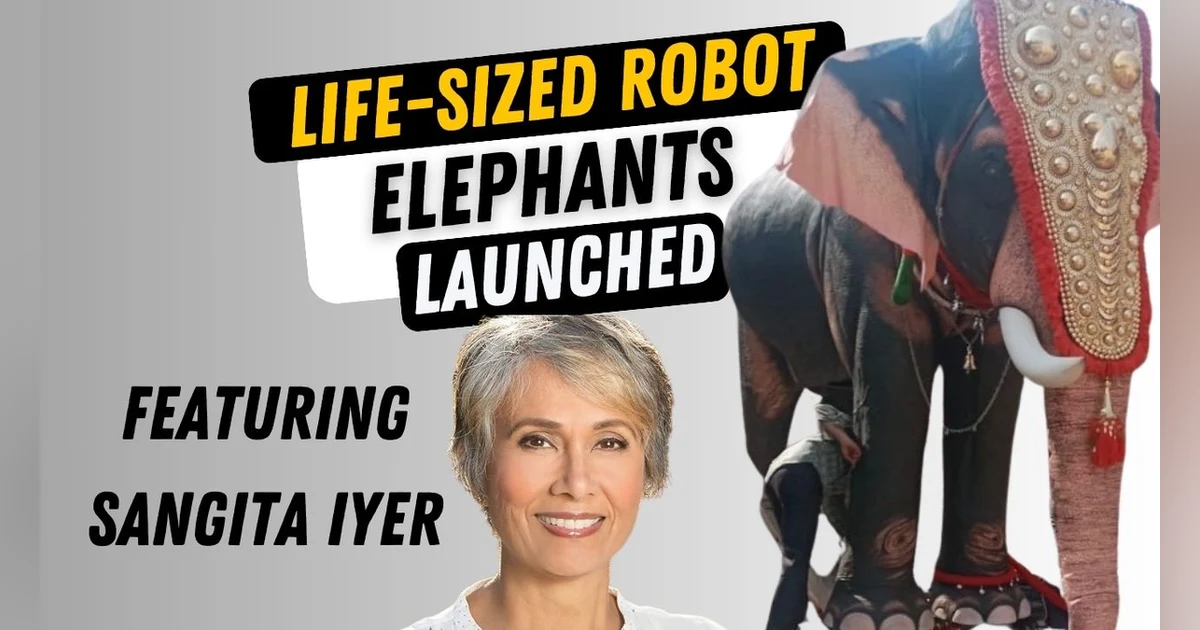
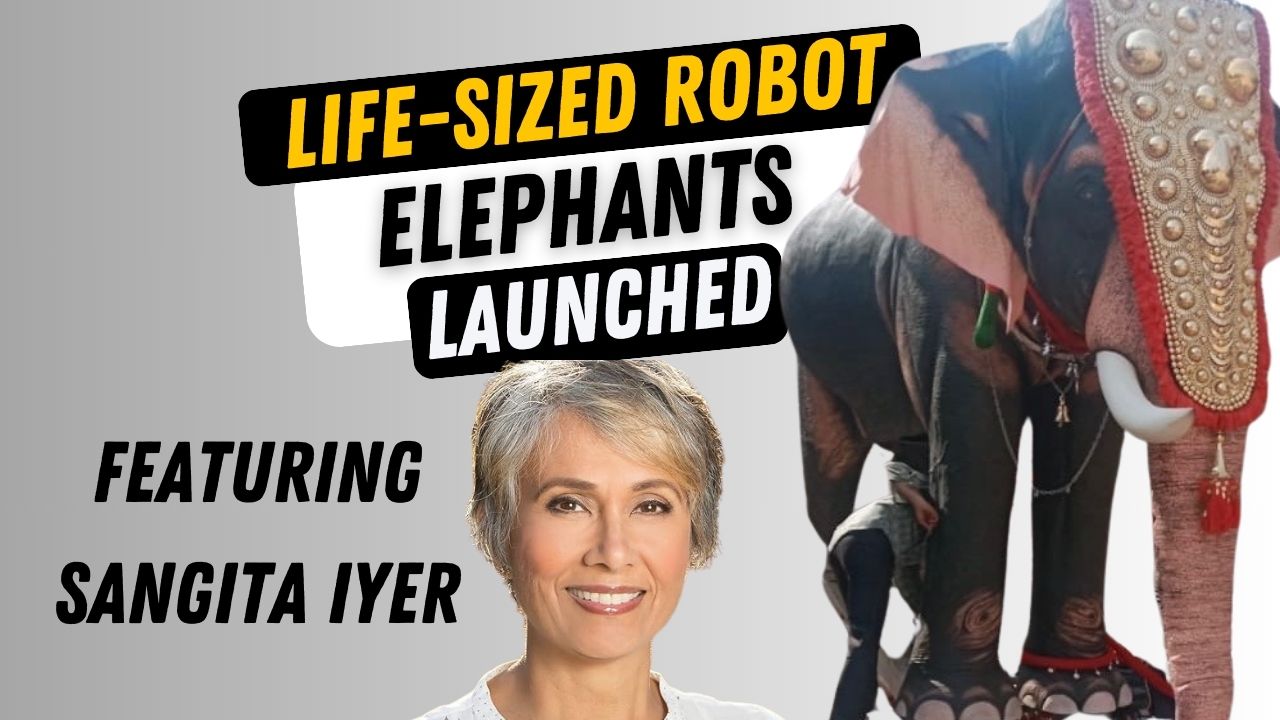


Breaking News: In the wake of horrifying elephant-related tragedies in India, life-sized robotic elephants are being launched at a temple in India as we speak and UnchainedTV is bringing you the news as it happens.
In just 2 months, captive elephant-related incidents have killed 6 people and left more than 50 people injured in India! One temple ceremony turned into a nightmare when two elephants, spooked by fireworks, deprivation, exhaustion and relentless abuse, attacked each other, sparking chaos in the huge crowd. Another captive elephant - at a different festival - gored two people, one of whom later died. In a desperate bid for freedom, that elephant ran for more than 8 miles before being recaptured, highlighting the immense suffering and safety risks posed by captive elephants. Now, realistic, robotic elephants offer the solution! All of India’s abused temple elephants can and should be sent to sanctuary to live out their lives in peace while lifelike robots take their place preserving cultural tradition without cruelty.
UnchainedTV gets the very latest from the woman leading the robotic elephant movement: Sangita Iyer, Founding Executive Director of Voices for Asian Elephants and award-winning filmmaker of the UN-nominated documentary Gods in Shackles. Visit:
https://www.vfaes.org/ to get involved.
0:00 Check this out. Those are not real elephants. They look like real elephants, but they are life-size robotic elephants. And that photo was taken moments ago in India. We are bringing you the latest. Here's what happened. Captive elephant-related tragedies, which you're looking at, have now killed six people and left more than 50 people injured in India. This one temple ceremony turned into a nightmare when two elephants, as you can see, spooked by fireworks, deprivation, exhaustion, and abuse, sparked chaos in the huge crowd. There was another captive elephant at a different festival who gored two people, one of whom later died in a desperate bid for freedom.
0:46 That elephant ran for more than eight miles before being recaptured. And you can see the attempts to recapture that poor, poor, animal. And this has highlighted the immense suffering and safety risks posed by elephants used in temple ceremonies in India. And now, what a miracle, you are looking at robotic elephants. They are realistic, they are life-size, and they offer the solution. All of India's temple elephants can be sent to sanctuary to live out their lives in peace while these lifelike robots take their place, preserving the culture without cruelty.
1:29 And we are so honoured to have the woman who is making this happen. She is spearheading this, Sangeeta Iyer, Executive Director of Voices for Asian Elephants and award-winning filmmaker of the UN-nominated documentary, Gods in Shackles. What you are looking at now are robotic elephants. Tell us all about it, Sangeeta. It's wonderful to be here, Jane, and what a great honour for me to be on this show to talk about these precious animals. And yes, indeed, they are robotic elephants and they weigh approximately 800 kilos. You can multiply that to make it into pounds, 2.2 pounds.
2:11 I mean, one pound, sorry, one kilo is 2.2 pounds. And they look exactly like live elephants, ears moving, eyes moving, tails moving, and they even sprinkle water on the devotees. And so this is really catching on. We launched our very first robotic elephant last year in the Southern Indian state of Tamil Nadu. And the first few images that you shared earlier, that was from the location called Gudalur at the Sivan Kovil. And so I went there live to watch this. I mean, live on camera that is. And it was just an incredible privilege to realise that what we are doing is making a difference.
2:58 This particular elephant you're seeing, his name is Shiva Shakti. And Shiva Shakti was just donated recently on February the 24th to a temple called Bhagavati Temple, which is located in Thrissur, Kerala. And Kerala is actually the elephant entertainment hub. It is indeed the ground zero for elephant torture. And this is where my film, Gods and Shackles, that is now streaming live on Unchained TV, this is where it was entirely produced. And so for me, it's a full, like, you know, coming full circle kind of moment for me, because this is where everything started.
3:42 And to be able to present this incredibly precious robotic elephant that has, you know, kind of replaced the live elephant in this particular temple is just like an aha moment for me. And one of the great things about donating this elephant is that they appreciate, they understand the value of not using live elephants. And one of the founders or one of the persons who actually was responsible who organised this whole robotic elephant, he came and he said that just a few months ago, a live elephant was so frustrated, so distressed that he gored his handler and killed him instantaneously.
4:30 That's when the temple made a commitment that they would never, ever use live elephants. But then they didn't know where to turn until Voices for Asian Elephants. We came into the picture and we said, we're going to help you. You can still have the cultural festivals. Cultures can thrive. Elephants don't have to suffer. People don't have to get killed in the stampedes. And there could be a total peaceful coexistence between elephants and culture and the traditions, right? So it's a win-win situation for all. When I'm looking at this, I'm seeing, I can't tell the difference.
5:12 I actually, when you sent me this footage, I was like, I hope I got this right. I hope these are the robot elephants and not the real ones because I'm looking at this and I'm like, damn, they look so real. Their eyes move, their ears move. They, as you said, people can also get on top of them because part of the abuse is that a lot of times there's, you know, four or five, six men on top of these elephants. And I saw some four men on top of one of these robotic elephants. They're so fantastic that you really have to remind yourself, these are robot elephants. Look, there's the guys on there. One, two, three, four, at least, that I'm seeing.
5:55 So they're strong. They're huge. How much do they cost? Because I know that your nonprofit has very little overhead. Everything you do goes directly to saving elephants in India. That's your life's work. How much do these cost? We're going to go straight out to you. How much do these cost? They cost about $10,000. And this includes not just the creation of the elephant, designing of the elephant, but also the jewellery and the transportation and all of the rest that goes with it. Yeah. $10,000.
6:36 That's not a lot. No, that's not, not at all. And this elephant has the ability to do almost everything that a live elephant does, except it won't run amok. You know, the robotic elephant will not run amok. He sprinkles water on the devotees, which is one of the big deals, you know, that they think that they are blessed when the elephant sprays water and, you know, their beliefs are valuable and it can be preserved. The traditions can be preserved, like I said, and yet elephants don't have to suffer. And you mentioned about the men sitting on top of the elephants, right? When they do that on live elephants, they have to control the live elephants using brute force, which means they'd have to use bull hook and they have to use long poles and keep poking and prodding.
7:27 In fact, some of the elephants, the live elephants are even drugged so that they can be brought under control. There's so many evil things that they do to these poor, precious, intelligent, highly supremely social animals. And these robotic elephants completely prevent all of the cruelty and the suffering that live elephants would never ever have to endure. Yeah. And the image that you're just showing, this is one of the elephants who ran amok on February the 13th. And as you showed previously a footage of two elephants attacking each other, what happened was there was fireworks that they were lighting up just behind them, so close to them.
8:15 And both these elephants, they were spooked and they didn't know what to do. And so they kind of started attacking each other in the process. Three people were killed, three devotees were killed, 50 of them seriously injured. But here's the thing, one of the elephants, the image that you showed, he was so badly injured. He sustained at least 24 grievous injuries. And worse still, despite those grievous injuries, they shackled and they took him to wherever he was brought from and tortured him further instead of nurturing him. Of course, there were veterinarians who were trying to treat them.
8:59 But in order for them to bring the elephants under control, as I said earlier, they had to impose brute force. And this is where despite the elephants being injured, they still had to suffer. No compassion, no love, only cruelty. All that has been replaced by the robotic elephants. And we are just so excited. We are over the moon to be contributing these robotic elephants. And we are only going to expand. There are so many temples who are so delighted seeing the progress and how they can still preserve their culture and traditions. And they're actually asking, how can we obtain these robotic elephants?
9:42 So we're absolutely thrilled to be, we hope to do, provide like two or three more this year later. And I'll share with you when it happens. And yeah, it's all good. What I would like to say is I think this is the best spend for animal rights that I've ever heard. Because look, we all donate, we donate our time, we donate our money as much as we can. And sometimes it's hypothetical, it's you're giving to a possibility. But in this case, for only $10,000, so two people could split five each and get an elephant.
10:22 My question to you is, because I've seen this work in the past with other groups, naming rights. If somebody donated $10,000, for example, I'm not saying I'm doing this, but my name's Jane. Is there an Indian word for Jane? Would you be able to name the elephant after the person who donated? Take that away. That's a really good question. Actually, I'll tell you something, right? The first robotic elephant was donated by a person by the name of Ganesh Hariharan. He donated it in his father's name. He lives in Chicago, but he donated it in his father's name. So we call the elephant Shankar Hariharan.
11:06 We gave him the last name. Now, with regards to this particular elephant, he was donated by Dolores Whitley. Obviously, we couldn't call the elephant Whitley because you need to have an Indian name and there's no Indian translation. So what we did was we asked her, here are three Indian names, which one would you prefer? And we gave her the opportunity to select the name. So that's something we can do. And somewhere at the bottom of the foot of the elephant or something we can say donated by Jane Valez Michelle, for instance.
11:46 That's very sweet of you. Look, I would go in 50-50 with somebody. If somebody were willing to do 5,000, I would do 5,000. Or if we could get four people to do 2,500, I would do 2,500 because I've never seen anything that has such a payoff immediately. So I want to say that right now, I will say that if we can get, and I'll just say this right off the top of my head, I wasn't thinking about it, but I'll do 2,500. If we get three other people who can each do 2,500, we can have an elephant. I don't need the naming rights.
12:27 I will give the naming rights to the other three people. Let's keep it out there in the atmosphere and let's see what happens. Additionally, you could get 10 people giving $1 ,000 each. But what I love about this is that the payoff is immediate and we know that there are temples in India who want these. So somebody asked, how do we donate? It's very, very simple. It's the easiest thing in the world. You go to vfaes.org forward slash donate. That's vfaes.org forward slash donate.
13:10 That stands for voices for asianelephantsociety.org. So I urge everybody, look, $5, you can become a monthly donor. I love this idea because the payoff is immediate and what these animals have gone through, the real ones, I just can't even imagine. It makes me completely embarrassed to be a human being. Let's listen to and watch the actual rampage that occurred and you will hear the fireworks in the background. It's disturbing, but we're only gonna play you a very short less than 30 seconds of it. So that is, it's revolting and let's not attack any particular nationality or culture.
14:25 We can talk about what's happening to elephants in zoos here in the United States. And that's also horrific. We're going to get to that in a minute. So tell us who in their right minds would set off fireworks when there's two elephants right there. Now, before you answer that question, let me say that right where I live, they set off fireworks every 4th of July next to a bird sanctuary. So again, this is a human problem, not a problem of any particular ethnicity or or nationality. Take it away. Yeah, absolutely. First of all, I want to thank you so much for your generosity. And you have started a chain reaction, put it out in the universe.
15:10 Thank you for your offer. And we will promote it on our website. Okay, with regards to the fireworks, listen, there are real stringent guidelines, rules, regulations, etc. Nobody enforces it because the elephant lobby groups, they have immense power to do whatever they want. In fact, the Kerala High Court had issued specific guidelines saying you have to keep the elephants at least eight metres apart. What did you see in that image? They were right. I mean, in that video, they were right next to each other. And where was the fireworks coming from? Behind the wall, right next to the elephant, this this book, they were completely spooked, right?
15:53 You saw that. So you're absolutely right. Anyone in the right frame of mind will never do this. And given that this is a temple, would you not follow the guidelines? And would you not conduct ethical practise? This is our challenge. And these two elephants that you saw running amok, these are from a world renowned temple called the Guruvayur temple. And my organisation voices for Asian elephants had launched a public interest litigation three years ago. And now they're actually still arguing the case. But some incredible things have happened. Because the Animal Welfare Board of India, the Central Zoo Authority, and all of these top Indian animal welfare organisations run by the government, they have completely validated what we have been suggesting all along that elephants are being mistreated.
16:55 And that if they are going to be held in captivity, they need a minimum of two acres of land to roam freely, unchained when they're not being used in cultural festivals, they need to be given a minimum amount of water, they need to be given a minimum amount and a certain type of diet, and they need to be provided with shelter. That's the absolute basic right to be shaded from the elements like rain and sunshine and torrential thunderstorm and lightning that also spooks the elephants. And a couple of them have died because of heart attack, literally, you know, and so even these basic things, this world renowned temple cannot provide Guruvayur temple.
17:42 And that's what is really gut wrenching to me. Like when you are a temple, you are supposed to practise the basic Hindu tenet called Ahimsa. Ahimsa means non violence, yet everything being inflicted upon these elephants, everything is violent, because in order to control this massive animal, you have to impose brute force, real force. And that in turn hurts these supremely intelligent and highly sensitive animals. And so yeah, so it's time, you know, that all of the religious institutions took charge.
18:25 We have some breaking news. So people are saying they want to donate. People want to get together to get at least one elephant out of this broadcast. So let's go to the comments. This is super exciting. We have the incredibly generous Nilofar Ashgarian, who often helps us, who says that she is going to second what somebody else said, a team of 10 to each donate 1000. So we've got Nilofar, we've got me, and we've got this person who said that he or she would, she I guess, I think you said 10,000, we need 10 people to do 1000.
19:09 So Extropian Transhuman, which is quite a name, are you willing, you can comment, are you willing to give 1000? Because then we're on our way, we've already got 3000. And we can move this up throughout the course of this conversation. There was somebody else, Bruce Anderson, who asked, Sangeeta, does this ensure that an elephant will be released to sanctuary, take it away? No, it doesn't ensure that they'll be released into a sanctuary because they don't have sanctuaries for wild elephants. They do have wildlife rescue and rehab centres run by the government. And it is up to the elephant owners, you see, because these elephants, so you need to understand the whole situation behind the captive elephants of Kerala.
19:59 These elephants are owned by private citizens. What these private citizens do is they lease out these elephants for these temple rituals, right? And they make money out of this. If they are so culturally and traditionally connected, then they should not even be charging, right? Or they should not even be using the elephants in the first place. So the point in providing these robotic elephants is to reduce the demand of live elephants. When you reduce the demand of the live elephants, it's going to cut into their pocketbook. And then they'll realise, oh, my goodness, there's nothing we can do with these live elephants. So we might as well voluntarily surrender them into an elephant rehab centre.
20:43 So there's nothing we can do to, like in Thailand, you can buy out elephants. That's not possible here in India because of the laws, right, that many of them flout. And yet when we try to do something legally and ethically, we get attacked, being called the enemy of culture, et cetera, et cetera. But to answer your question, this will actually reduce the demand for live elephants in many temples and ultimately cut into the pocketbook. This is going to take time and effort. And I cannot guarantee that these private elephant owners will voluntarily even give those elephants away. But if they're not able to make money out of these elephants, which they need in order to maintain them, then I reckon they would have no choice but to give them away.
21:34 And we would say, OK, bring them to the elephant rehab centre. Again, in India, private rehab centres are not allowed. I mean, this is kind of crazy, right? There are one or two available in different states, like for instance, in Karnataka. I know somebody who runs an elephant rehab centre. She does a phenomenal job and she collaborates with the government. That's the kind of thing we can do in Kerala in the long run. But this is not going to happen overnight. You're saying is that we have to eliminate the market for the captive elephants used in temple ceremonies.
22:21 And it's kind of like think of stuff that used to be normalised that isn't anymore. You know, elephants in circuses. So you reduce the demand for elephants in circuses. You know, when I first started this whole nonprofit, after 30 years in the news business, I went with a little GoPro camera in the middle of the winter in Brooklyn, New York, to cover a protest against elephants in the circus. And I thought, is this even worth it? And I saw 200 people lined up, shaking with the cold, nine degrees, demanding an end to elephants in circuses. And all the customers were walking right by with their kids, ignoring us or basically telling us to get lost.
23:07 And I thought, wow, this is an uphill battle. But guess what? Not because of me, because of incredible organisations like PETA, and because of those protesters, now Ringling Brothers is out of business, does not use any animals. We thought it could never happen. It happened. Okay. As I believe it was Nelson Mandela said, it's always seems impossible until it happens, until it's done. So by making it cool to have these robotic elephants and creating a demand for the robotic elephants, then the real elephant's demand vanishes and that business ends.
23:48 And that's exactly what happened with elephants and tigers and lions and circuses that used to be everywhere. And they are, for the most part, with some exceptions, gone, especially Ringling. So it's worth it. These things take over, right? Can you elaborate? Yeah, absolutely. And so, as we are already seeing, we launched our first robotic elephant last year in the southern Indian state of Tamil Nadu, after this temple watched what happened there. And yes, exactly. This is the robotic elephant called Sankar Hariharan. And he was donated by one of our precious donors.
24:31 And he donated the full amount for us to buy him. And we got the decorations and everything. And so when we did this, actually, this temple is, it actually borders Tamil Nadu and Kerala. So this temple watched what happened there and said, can we also get this? And so, of course, they reached out to us and, you know, we designed this by collaborating with an amazing designer who's based in Kerala. And when we donated now this temple to this particular temple called Sri Bhagavati Temple, there are other temples who are actually asking, can we, can we, can we?
25:16 So we are creating ripples. And this is how we kind of do it gradually. But we do it in a manner that we are not being called the enemies of the culture. How are we diminishing the culture in any way by using the robotic elephants? We are allowing you to sit on top of the elephants. The elephant actually can even squirt water on the devotees, you know, and you can actually touch the elephants. And this elephant actually conducts rituals. It moves its tails, its tail, and it can even sort of, we crawl him on a, on a trolley, right? He moves his ears.
25:57 And even his eyes, his eyes are absolutely stunningly gorgeous when he looks up and down, right? And so you can never tell the difference, even the colouration. This is how the festival elephants look because, you know, they consider it a pride and privilege. And so for me, the best way to present the opportunity or to do this is to present an opportunity to them and let them take the reign rather than us impose things on them. When they see this trend, it's kind of trendy right now. When they see this trend to take over, then there's going to be an issue with the demand for live elephants because people are now seeing, hey, there's peace here.
26:45 We can actually conduct this, you know, these rituals peacefully. We can, you know, we can fire, we can use fireworks without worrying that elephants will run amok. People will not get killed. Cultures can thrive. And so that's, that's where our focus is. And when the demand for the robotic elephant increases, the demand for the live elephants will decrease, will cut into the pocketbook of the elephant owners who will not be able to lease out their elephants to the temples, which means they won't be able to make money and, you know, elephants will be saved and it's going to be a win-win situation for all. A lot of questions coming up as people are watching on the Unshaded TV streaming network, as well as on social media.
27:31 Tom wants to know, how is it that these animals move? What is the mechanism? What are the gears? Is it electric? Tell us about the technology. Yeah, it's not, it's not electric at all. And I'm glad you raised that question, but let me tell you, this is an artificial intelligence based technology, artificial intelligence based robotic technology. Okay. And I will tell you about the electrical information, misinformation or disinformation that is going across just as it's happening in our political arena. Some of these elephant owners are pushing out fake news saying that these elephants are connected to electrical supply or whatever.
28:17 And as a result, four people were electrocuted, complete nonsense, complete nonsense. And so with regards to the specifics of how they make this, I can tell you that it's made with fibreglass and it's the duration or fibre optics. The duration is quite a bit. And I don't think they have an engine inside them. How they move. Yeah. Like I said, I don't have the details on the technology because the designer is obviously going to keep it close to his chest. I can only tell you that it's the, it's an artificial intelligence based technology that they, it's probably battery operated to my best of guessing.
29:01 And even the batteries are like solar powered. And so yeah, that's, that's about what I know about the technology. I'm not going to pretend like I know how they are moving, but that's a really good question. And I did ask the designer and you know, there are secrets that they will not divulge. That's just the way it goes. I would have to think that this would be cheaper for the temple too. Animals are very expensive to keep up. They, if you want to keep them alive, even if they're being abused, they require veterinary care and they require food, water, housing. There's all their excrement that has to be cleaned up.
29:42 I mean, it's expensive. One of the reasons why horses unfortunately end up going to slaughter is that people get a horse on a whim or you know, a romantic notion and then they see how expensive it is. So can you appeal to these temples on a price basis? Yeah, exactly. And that's one of the things that we are already doing. And we did this with the temple in Tamil Nadu, right? Exactly what we said is not only leasing the elephant from the elephant owner. So that's one cause. Number two is transporting them. That's highly expensive, not just in terms of money, but also in terms of the stress and the physical and mental exhaustion that these elephants have to endure.
30:26 And then of course, in terms of feeding, I mean, many of these live elephants are deprived of food, water, and shelter, and they're transported for hours on end beneath the scorching sunshine. And sometimes they're paraded on hot, tar roads, which kind of is really, really heartbreaking and gut-wrenching. And sometimes the elephants can't even walk. The minute they see water, they take the water and they toss it on their foot instead of drinking the water. Like that's how sad it is for these poor elephants. And so, yes, there's not just the financial cost, but also all kinds of other costs. Here, one of the elephants is being treated.
31:08 He's getting foot treatment from one of our elephant care people called Steve Coyle. He had actually worked with us in one of the elephant rehab centres in Kerala. And we can provide this kind of rehab for the elephants, even the owners have. And kind of coax and convince them that it's in their best interest to kind of retire these elephants. And the temples to suggest, look at all the costs, not just the financial, but all of the costs. And you just invest one time. You don't even have to pay for this. We are giving this to you. And you can use the same elephant over and over and over again, every single year.
31:51 In fact, you can add to your elephant troop. Maybe we can give you one elephant each year, you know, if you wish, because they need like two or three elephants in some temples. We are willing to do that for you, you know? So yes, indeed. Yeah. Money plays a big role. I'm just so fascinated by this because it's such a win-win. And what is the reaction amongst the people? It seems like they're very fascinated. I don't know how they would react with normal elephants, with real elephants, but it seems that everybody is just playing their part and not acting like, well, there's something wrong here because these elephants aren't real.
32:34 You're seeing all these people engaged in very ornate, elaborate cultural traditions, and they're doing it with the elephants without any, to my view, negative reaction. Yeah, absolutely. And so funny I should bring that up because when they inaugurated this, because I could not be there this time, I produced a recorded video and I played it. They displayed it on a big, big screen. And oh my goodness, 300 to 400 women and 300 to 400 men seated on either sides.
33:15 It was just like pin drop silence. Everybody was listening so keenly. And towards the end, there was this massive applause because everything I said in that related to how the Hindu traditions actually promote ahimsa, which is nonviolence, and yet they need to open their eyes to see the real suffering of the elephants. So I used a small trailer of Gods and Shackles in that presentation so they could see the difference, you know, between the actual live elephants and the suffering that they have to endure and the people have to endure. And here you have the robotic elephant. So it takes a lot of awareness and ongoing education.
33:59 And I think the temple authorities have done a phenomenal job convincing the devotees and the organiser, Dr. Prakash, who actually approached us. He, again, reminded the devotees of that, you know, fateful day when that elephant, the live elephant, was so distressed and so sick and tired of being mistreated that he ran amok and he gored the handler. And that's when he decided we will never, ever do this to an elephant or cause any harm to the people. And so it's that kind of determination from, you know, a leadership level that has also helped.
34:40 And we continue to collaborate. I continue to, you know, give them my short films so that they can screen them in the temples whenever they want so they can educate the employees regarding the beautifully sensitive and highly intelligent creatures these animals are and that they deserve to be in the wild and not in captivity. So I think the message is getting out there. It's a combination of a you can't just say, OK, I don't want you to use these elephants in the cultural celebrations. We offered an alternative. So that was number one. Number two is, OK, well, now we have an alternative. But, hmm, you know, they're kind of sitting and thinking exactly what you suggested.
35:22 This is not a live elephant. We cannot touch and feel. But yes, they can touch and feel this elephant. You can see the fascination of all of these people. They're taking selfies and their little kids that used to be terrified of going close to the elephants are now falling in love with these elephants. This way, you could even nurture and cultivate empathy, love, compassion for these beautiful animals and indeed all animals. So it's again, like you said, it's a win win situation. Tell us about this image taken minutes ago in India that was just texted to you. Yeah, thank you. Yeah, this one was this is our amazing elephant called Shankar Hariharan.
36:03 And there is a special event going on in southern India, actually across India. It's called Shivaratri. And if many of you may have heard or not have heard about Lord Shiva, it is his birthday. He is considered to be very, very strong, but in a very peaceful manner. Like he's not the aggressive kind of strong people that think that being aggressive and being a bully is being strong. No, but this Lord Shiva, through peace, like even when people attacked him, even when snakes came near him, even when the folklore goes that even when tigers came next to him, they were so touched by his peace and calm that they settled next to him.
36:49 So it's a huge celebration. And the image that you shared earlier was that they were parading Shankar Hariharan on the streets of Gudalur, right next to this Sivan Kovil, which is like Shiva temple. And the organiser, he actually called me live. And he's like, just watch this elephant. Look, our elephant has been paraded. And I just went crazy clicking on my iPhone, all of the screenshots. And I'm so happy that you could use them. Yeah, it was just really touching to see, you know, that the elephant that we donated last year is still being put to proper use.
37:31 This is like really, really heartwarming. And it's really fascinating because we were getting ready to do this show and Sangeeta said, I'm going to text you some images from India. I got just minutes ago, like 30 seconds ago, try to put them up. And I said, okay. And I managed to get these two shots. She sent me about 18 shots. I managed to get these two up right before we started, but look at this robotic elephant in the streets of India being surrounded by people. You can't tell that it's a robot elephant from this distance. And it's even hard to tell very close up. So, you know, I think this is so fascinating.
38:14 And the fact that they only cost $10 ,000, it's shocking to me. I would have thought you'd say $100,000. $10,000 is very, very cost-effective for something like this with moving ears, with moving eyes, with the actual elephant moving, the moving trunks. My mind is blown. And again, if you want to donate to make one of these happen, we're trying to get one elephant out of the show, one robot elephant, you can donate to vfaes.org forward slash donate. That's Voices for Asian Elephant Society.org.
38:57 And they have very low overhead, huge, overwhelming amount of everything they raise goes right into these robotic elephants and similar projects. And I just think it's absolutely fascinating. Congratulations. People are saying, cannot tell, this is genius. Wow, this is amazing. It's, you know, it's so much better than the alternative, which is so cruel and backward. I mean, let's face it, India is known for being on the forefront of technology. And so I would think it would be a point of pride to say, look at the high-tech methods that we're using.
39:43 That's got to be another selling point, Sangeeta. Indeed. And so the thing is, the irony of it all is that they love technology, but when it comes to really implementing technology in terms of cultural celebrations, some of these elephant owners are still resisting. But I mean, obviously we are seeing the temples embracing this opportunity and this option and the technology. And so I think it'll get to a point where the elephant owners will begin to realise that there's no point in actually owning the elephants. Let's leave them in the wild. This is where they belong. And, you know, there are times that I, when I have the social media conversations with people who comment and stuff like that, I say, you know what?
40:31 We all love technology and India, like you said, is like in the forefront, on the forefront of technology. And the worst thing is that you don't use the knowledge that you have to serve the collective good and to ensure that nobody is harmed. This includes the animals as well. You know, they have the best cell phones, the best selfies that they take, all kinds of incredible things. Right. And they've been to the moon recently, just last year. So there are scientists and technology is so highly evolving drastically in India. And it's about time, you know, that they embraced the culture and there's this merging of culture and technology that can bring forth harmony, compassion, love, and peace of mind for people and for the elephants.
41:24 And get rid of the horror of elephants in captivity. Never take an elephant ride. Never, ever, ever. And let's talk about one other thing that you're doing that is really fascinating. Again, another high-tech solution to a big problem in India. And that is many, many elephants are killed by trains because they're traversing and the trains are coming at them. You've created this high-tech EleSense elephant alerting system. Tell us about that. Yeah, it's beautiful. And it's an AI-based technology. And I can tell you that between January 2023 and December of 2024, we have averted 1139 train collisions with elephants.
42:17 And in West Bengal, there's been absolutely no train collision deaths of elephants since we have installed, especially in this particular region. So we are now in the process of expanding it in the Chapramati Wildlife Sanctuary because the sad reality is India is the most densely populated country on the planet with 19 % of the world's human population in India. And so space is a very sacred commodity and the competition for space is rampant between people and animals, two dominant species. And so humans are encroaching into the wild habitat and they're building train tracks, roadways and railways and all kinds of structures inside the wildlife sanctuary, which is the home of these elephants.
43:11 Electrical wires cutting through the forest and they sometimes drop down because of thunderstorm, rainfall and everything. And so many elephants are getting killed. So we decided, no, we've got to implement some high tech technology here. So this is again, artificial intelligence-based technology grounded in four components. Number one is that this alert system can detect the temperature, the height, the pattern and the movement. These are the four components that this EleSense can detect. As soon as it detects it, that's what it does. It sends out that message saying, oh, elephant movement has been tracked. And that message is dispersed to everybody, including our team, the railway department, the forest department and the tea plantation owners and all of the relevant stakeholders.
44:04 So when the railway department gets this information, what they then do is they send a walkie talkie message to the train pilots and the train pilot then slows down and allows these elephants to cross over. We have so many camera trap images that I'll share with you soon that we have captured recently of elephants crossing over the train tracks and the train halted in a distance. And it's just really heartwarming to see that we are harnessing technology to see these tangible outcomes and thus save elephants. Hundreds of elephants get killed on the train tracks every single year.
44:48 These are like completely senseless tragedies that can be totally avoided. And so, yeah, it's really heartwarming to see the results. 1,139 train collisions with elephants have been averted since January 2024 and sorry, January 2023 and December 2024. Absolutely amazing what you're doing for elephants in India. I would like to see it expanded globally to other animals in other parts of the world. I know you're also doing something to stop elephants from falling into water wells, which happens and you're building like basically a block around the well so that the elephants can't fall in.
45:40 And the same thing is happening to donkeys in another part of the world. I saw it online and I was going to contact you. I mean, all your incredible practical ideas need to spread around the world to other species. But getting back to elephants, you know, sometimes people say, well, you're attacking a culture. No, there's plenty of cruelty directed at elephants and other animals right here in the United States. Let's take a look at the world famous singer actress Cher and what she had to say about one particular elephant.
46:20 Billy the elephant has been at the LA Zoo for 33 years. He lives in constant pain and anguish. It was seeing Billy suffer that made me want to help him. The LA Zoo claims that they're taking good care of Billy and the other elephants, but the truth reveals a very dark and different reality. We invite the LA Zoo on anytime to comment on what Cher and other critics have said. And I actually contacted an attorney who's been involved in litigation attempts, unsuccessful thus far, to get Billy out and said, hey, have you heard about these robotic elephants?
47:06 And he has said that he has offered the robotic elephant concept to zoos here, there and everywhere and has not heard a positive response. So, you know, that's sad because that would be a solution to elephants trapped in zoos as well, Sangeeta. Absolutely. And that, I mean, it's, they can even use the robotic elephant for elephant back rides. I mean, which child would not want to climb up this robotic elephant and touch the year and see the eye movement? It can be used for elephant back rides in Thailand, which is where it is rampant. And even in India, you know, and they can actually get these people to sit on their, on the elephant back if that's all they want, because this is a life size elephant.
47:53 The elephant that we gave was like 10 feet tall. He's 10 feet tall, this guy, you know, and so it's, it can be used as an alternative in every situation, including the zoos, including circuses, even. Oh, can I tell you, they in Spain, they have actually replaced live elephants with the robotic elephants designed by the same designer who made our elephant. And he, he actually created three solid elephants for the Spanish circus in Spain and his elephants are displayed at the airports in Bangalore airport in Dubai, in all of these Middle Eastern places where there are so many people from Kerala that live there.
48:41 It's just becoming really a global phenomenon and it's, it's, yeah, it's really, really, it's really good to see positive changes. It's just not fast enough for all of us. Of course not. We'd like to see it all end, but you know, sometimes we have to have patience. I say that to myself when I start new projects and I want payoff immediately. I want to see animals saved like yesterday when I start a project. And then I have to remember, Jane, you have to learn patience. You can't just expect it to be an event. It's a process and it's starting. The process is the most important part.
49:23 You have, how many of these elephants do you now have? So this is only our second one. And this year we are planning to give away three more in October. So that we are just trying to enhance because we need money, right? For everything. We are a small organisation and without the money, we cannot provide this. And so all of those people who came up with those brilliant ideas to donate money, I am more than happy to meet with them on a Zoom call. We can all get together on a Zoom call. And if you have any questions, I would be more than happy to answer, you know, and I can even share with you some of the intricacies in terms of how the temples operate, what is going on, why is change so difficult?
50:10 So this way your questions will be answered one-on-one. I'm more than happy to do that. Just send us an email to support at vfaes.org. And you can even contact Jane directly, whatever you want. I mean, Jane is the one who launched all of this for us. So if she wants to take the lead, by all means, go for it. I just, I interview a lot of groups and I, what I love about your organisation is that it's practical solutions for specific problems. And so you're drilling down on very specific things. We only have a couple of minutes. Tell us very briefly about your wildlife corridors.
50:53 Wow. I'm so excited to share with you about the wildlife corridors. So let me explain to you quickly what corridors are. Forests are being broken up into tiny patches, because as I said, railways are cutting through the forest, roadways are cutting through the forest. So these forests are being broken up into forest patches and even homes and settlements and everything. So what we are doing is we are purchasing plots of land, which we just donated another, like a four acre plot of land to the Kerala forest department just in 2024, March, which has now been officially transferred to the forest department. And this corridor, even though it seems like only four acres, it's a significant corridor for elephant movement.
51:38 So they can come from this patch to this patch, but they can move peacefully because there are no obstacles on their way. And so there are 340 plus elephants living in that area where we bought the four acre plot of land. And we're going to continue to expand that project in Odisha. And I'll have something to share with Jane sometime in the future. I cannot share much more than that right now, but it's so exciting. And these patches of land, we are not only purchasing, but we're also rewilding. We are planting saplings and creating water holes in Odisha on the forest lands, elephant-friendly saplings like jackfruit, mangoes, and whatever things that elephants love.
52:23 Everything elephant, right? We plant those things and we have the tribal people. We employ 200 tribal people in order to take care of these plantations, water them, nurture them, et cetera. And so when these plantations come to maturity, then elephants will have regular fruits and regular, you know, these are fruit yielding trees. And so we are doing that. We're employing people. People are happy. And now they're more into conservation. They're like, Ooh, if we protect elephants, guess what? We're also going to get paid. So that's the kind of approach we are taking rather than vilify them. We are trying to partner with them, bring them together. And collectively we are, we are making a difference.
53:06 And I'm really excited about returning to India on March the 21st. And I will share something with you via WhatsApp and you can share it with your public. Wow. You are doing so much. I am so impressed. And it also, you know, it inspires me because you're hitting the finish line. You're getting something done. Like it's not just a proposal. These robotic elephants are going into the temples. You are putting these high-tech elephant warning signals on the train track, saving elephant lives. You are creating these moats that prevent elephants from falling into the wells and you are creating these wildlife corridors.
53:49 So it's a win, win, win, win. And I just want to tell everybody support Voices for Asian Elephant Society. And it's come back because you always have great, great information. There it is, vfaes.org forward slash donate. While we're doing asks, I want to tell you, please support Unchain TV. We are the world's only free vegan nonprofit streaming network with 2000 videos. You can download it on your phone for free, on your TV, go to Unchain TV online. And you know, we're doing something unique, but we do need you to download it for free and get involved.
54:32 This episode is brought to you by Unchain TV. Unchain TV is a nonprofit organisation producing plant -based content built with tips and tricks to spice up those healthy veggies, grains, and legumes. For more information on Unchain TV productions, just visit unchainedtv.com. That's unchainedtv.com. So it's a vegan Netflix. Okay. That's the craziest thing I've ever heard. I love Unchain TV. Your life will change. It's just that easy. Unchain TV has all sorts of content for everybody. Unchain TV changed my life. Unchain TV is crushing it.
55:14 I love Unchain TV. Unchain TV is my go-to. Unchain TV. Who knew? Unchain, baby! Yay!