UnchainedTV: Stop Live Animal Abuse!
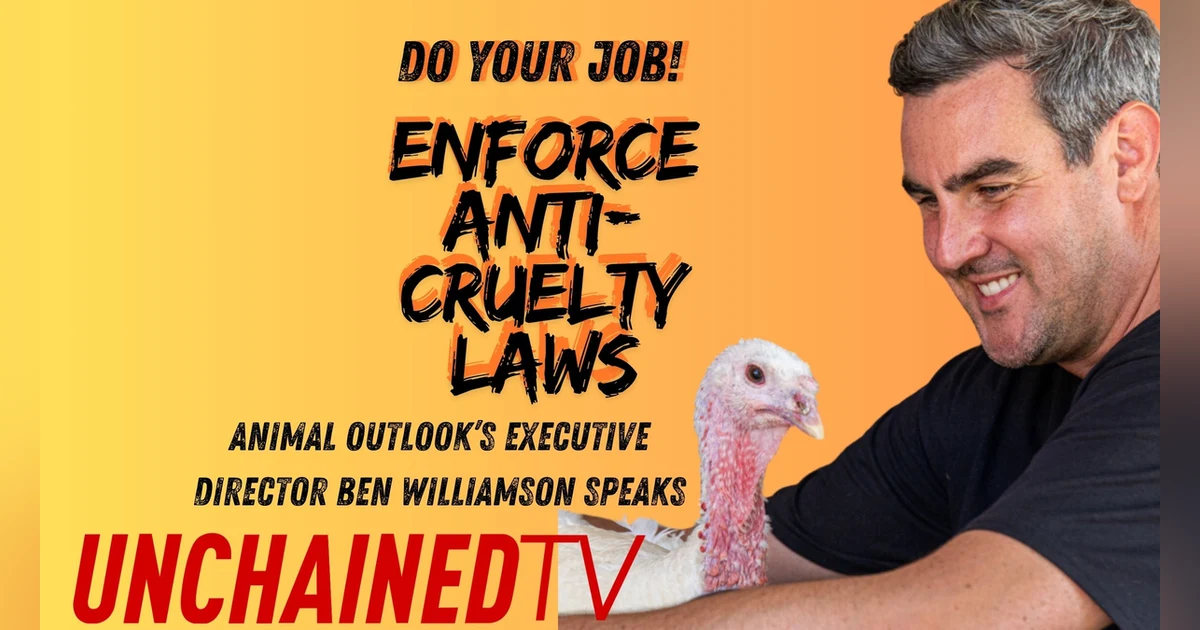


BREAKING NEWS: Animal Outlook charges that laws against animal cruelty are not being enforced when it comes to live animal markets in the San Francisco area. Animal Outlook has conducted undercover investigations - complete with shocking video footage - and says it has documented “widespread abuse” it believes “violates California law.” The group says even though it’s presented evidence and detailed solutions to help law enforcement do its job, it can’t get them to take action and enforce the law. The alleged abuse involves turtles and frogs being cut open while still alive, which Animal Outlook says violates California law, which requires be animals be rendered unconscious or insensible to pain before death. We invite the agencies involved on any time to respond. Now, Animal Outlook’s Executive Director, Ben Williamson, brings us the very latest in this interview with UnchainedTV’s Jane Velez-Mitchell.
More about our host:
Jane Velez-Mitchell is an award-winning journalist, TV producer and NY Times bestselling author who founded and runs UnchainedTV, the world's premier streaming TV network to promote the plant-based, compassionate, sustainable lifestyle. UnchainedTV offers 2,000 free documentaries, vegan cooking, lifestyle and news shows as part of its nonprofit media network. You can download UnchainedTV for free on any cell phone. You can watch UnchainedTV for free on any TV via streaming devices like Amazon Fire Stick, Roku device and Apple TV device. And, it's on all Samsung TVs. Here's the online portal: https://watch.unchainedtv.com/browse
0:00 We have a breaking news for you. It is making headlines all over the place. As you can see, San Francisco, Chinatown, wet markets under scrutiny for alleged animal cruelty. Turtles' legs seen moving in response to being cut apart. This is a breaking news. Live market horrors have been caught on tape. Animal Outlook is charging that laws against animal cruelty are simply not being enforced when it comes to live animal markets in the San Francisco area. I gotta warn you, some of the things we're showing you are just horrifying. And they've provided this shocking video documenting widespread abuse that they believe violates California law.
0:44 The group says, even though it's presented this evidence and solutions, law enforcement just can't seem to get around to taking action and enforce the law. The abuse involves turtles and frogs being cut open while still alive. That violates California law, which requires animals be rendered unconscious or insensible to pain before death. Now we invite the agencies involved on anytime to respond. Very happy to have today, Ben Williamson, the executive director of Animal Outlook. They have been leading the way on this story with their undercover investigations. So Ben, just bring us the very latest.
1:28 What is happening at these live markets? Well, thanks so much for having me on the show, Jane. What you summed it up, we've done two investigations now of these live markets in San Francisco, one in 2022 and one in October, 2024. And we went to dozens of these live markets across the Bay Area. And we find the same thing, routine daily killing of animals in egregious ways, being bludgeoned over the head, being cut open while they're seemingly still alive, being suffocated, being placed into plastic bags, animals trying to escape, animals tipping out onto the street. And it's really horrible stuff.
2:09 I mean, the cruelty is right there in plain sight. And we've, over the years, since our very first investigation, we've submitted our complaints to the SFACC, Animal Care and Control, who are charged with enforcing the law when it comes to animal cruelty. And they just haven't done enough. On our first investigation, they issued one citation for animal cruelty, and that was for a turtle who was being cut open alive. So they acknowledged that there's a problem here. They just, they say that they're kind of powerless to do anything, which we disagree with. Our lawyers have looked at the case law. They've looked at all of the law in regards to this. And they say, no, not only does ACC have the right to enforce the animal cruelty law, which in California is pretty good, they have an obligation to do so, because it's certainly not up to the police.
2:59 The ACC is responsible to enforce animal cruelty law in California, and they just haven't done enough of it. So again, this is disturbing footage. And, you know, you've got to look at this all the time. Just uploading the video was so disturbing to me. And what occurs to me is that frogs, turtles, and fish are just not considered a top priority by society, which is so unfair. I want to dive deep into some of the responses. Now, I have to tell you, we did call San Francisco Animal Care and Control and sought a response.
3:43 I did not get a call back. However, San Francisco Animal Care and Control did speak, at least issued a statement to CBS News, which covered this, quote, while the allegations are shocking, San Francisco Animal Care and Control can only act on what we see. We cannot cite based on videos. Our animal control officers respond to constituent complaints and concerns as quickly as we can with the resources we have available. So what is your response to their response that they can't go on a video that you've shown them, which we've all just watched, which shows a giant mallet and a thrashing animal, that they've got to see it themselves?
4:25 Yeah, well, there's two points they're making there, right? They're saying that they can't cite based on video evidence and that they don't have the resources available to enforce. And we dispute both. So for the video evidence case, I mean, clearly you say that these animals are overlooked by society. This would never happen if it was humans, right? If we had documented reliable evidence of this kind of thing happening to humans, you can guarantee that the doors being kicked down would be people going to jail for this. So on case law, and we looked at the traffic laws, the footage-involved traffic laws, the case law is quite clear that you can issue citations for footage-involved traffic law violations.
5:06 You can do that for this as well. Neither the US Constitution, the California Constitution, or California Penal Code prevents the ACC from issuing citations based on third-party video evidence. That seems to be a rule that ACC has just created for itself and it seems to be quite convenient that they don't have to do it because they say they don't. In fact, California Penal Code is quite clear. They have an exemption for arrests. Arrests you have to witness firsthand. The police and ACC, who also have the ability to issue warrants and arrest people. But citations, which are considered small fines at best, which can be contested in court, the people committing these apparent crimes can have their day in court if they contest the citation.
5:56 They can be issued free and especially based on third-party evidence, which is a way of getting around the fact that they say they have no resources. That's the other thing we dispute. They have 14 animal control officers. They go to 10,000 calls every year, most of them being cats and dogs because, Jane, as you alluded to, society generally takes cats and dog preferences over wild animals, over aquatic animals. So you could, we think, if you're not gonna accept our evidence, which we think is irrefutable, and they have also called shocking and they have also issued citations based on our evidence, or at least inspected based on our evidence in the past, then you can at least send your officers on a daily or a weekly or a monthly basis because, as I say, they know this stuff is happening.
6:42 We know it's happening. Everyone in San Francisco knows this is happening, but you can go see it for yourself, issue citations, and maybe it will stop. Well, this is not just happening in San Francisco. In New York City, there is a similar battle against live markets, and this is just so, so disturbing. First of all, a couple of things. It doesn't sound like you needed to go in there and take a job as a butcher to see this. This is a retail market where people go to get food, their idea of food, live animals, and watch them be killed in front of them and then take those animals home, the carcasses, and eat them.
7:32 So it would appear to me, correct me if I'm wrong, that you went in as a shopper and documented this with a hidden camera. You didn't have to, your team didn't have to take a job there and lurk around. It seems like it's pretty much happening in the open. As one of the articles said, hidden in plain sight is this cruelty. So why can't they go and document exactly what you documented with a simple trip there in plain clothes? Yeah, yeah, we feel that they could, and we feel that it's just, you know, we know these people to be well-meaning. They are animal people, but for the reasons that they've put up, and they're not giving us that many reasons, as you said, they're not in communication with us, but speaking through the press, through all those articles that you've cited, they do allude to the fact that they say they can't accept third-party evidence and they don't have the resources to send people.
8:26 And that's just something I don't think is valid. 14 animal control officers, 10,000 calls every year. Why can't you make time for these turtles and these frogs? And let's take a look at some of their other, I'm gonna just say, excuses, all right? Now, you got written up at the San Francisco Standard. The deputy director of animal care and control said, they told the Standard, the agency is constrained because it's not staffed by sworn officers, which means its team members have to witness an offence in order to cite it. Now, we just went over that. They could go over just like you did. And with a video camera or their phone, any number of ways they could see what you've seen with so many people who visit these live animal markets, which are retail slaughterhouses, see.
9:14 Then they said, the agency has not seen anyone successfully prosecute live animal cruelty under current laws. Courts are backed up with serious felonies with violent crimes. So these are not always seen as a priority. To me, that gets to the heart of this. They don't see it as a priority. They assume because it's a turtle or a frog that, eh, but that's not the law. The law is that in California, an animal has to be rendered insensible or unconscious before he or she is slaughtered. Take it away. Yeah, yeah, you're absolutely right. I mean, that word, serious crimes, just alludes to the fact that they're not taking it as seriously as they should.
10:00 And because we're talking about other species, it's a deprioritized target. So we, as we say, we fully want them, we're pushing them to actually do more on this subject. They have the power to do more. They are enforced to do more. They, the health code actually gives them the power to issue citations, to issue fines. It's there in plain writing in the California health code. While they may not be, they may not feel that they have the power to arrest people and enforce warrants, they can issue fines. In fact, they're mandated to issue fines. So that's what we're asking them to do. If you issue enough citations on it, then practises will change.
10:43 It will be financially impossible for these places to keep doing what they're doing. And that's how you can bring about change. But they're also, they could work with police if they wanted to, to enforce the law and to bring about criminal prosecutions on this. And so far we haven't seen any action on either one. So we just think that they're really falling down here. We think that we can, as a society, as people who care about animals, as San Francisco residents, and you're right, these things happen all over the country as well. And we urge anyone who's outraged about this to contact their local officials and demand action for the cruelty that's happening on a daily basis in these live markets.
11:23 But we can push them to do more on this. And we just need some public support and we need people to really take this responsibility seriously. So you had mentioned that this is a coast to coast battle. It's happening in New York. There are many protests. You're looking at an image of one of them. And we have a short clip to show you of one of the shows about this on Unshamed TV, which really documents the horror of live markets. This is from New York City. Do you see any water troughs anywhere for them? I don't see any water troughs.
12:05 Get the fuck out. Get the fuck out. Don't touch her. Do not touch her. Get the fuck out. Get the fuck out. You may be surprised to learn wet markets where live animals are sold on the spot are also in the United States. There are over 80 wet markets still operating in the New York City area alone. In Brooklyn, Astoria, Flushing, the Bronx, and Harlem. Careful with the faeces. You don't wanna bring that faeces home. There's heads, guts, just leaving it on the sidewalk. Why are these live markets in our neighbourhood? Right next to a dental office. We can't be pointing the finger at China when we have the same or worse conditions here. It doesn't matter whether they're wild animals or domestic animals.
12:46 Live animal markets are a breeding ground for disease. And indeed, the next pandemic may come from live bird markets in New York City rather than wet markets somewhere in South Asia. Does it have concerned you that you have a live animal market in your own backyard? Everybody gets upset, but the health department, nobody wants to do anything. If you don't like it, don't come by there. Because unfortunately, I personally can't do anything. There we have it. Two of the most influential cities in the world, New York City and San Francisco. And they're all over the country.
13:28 They're all over the world, these live animal markets. And what activist Adita Bernkranth said is, we're pointing the finger at China for like their Wuhan market, which some still now feel was the source of the COVID pandemic. There's always a debate. Was it the lab in Wuhan? Was it the wet market? But we know that those wet markets are a harbinger of disease. We know we've got bird flu right now, which is an escalating threat that is posing a greater and greater problem. This New York Times report just from the other day says a dangerous virus, bird flu enters a new phase.
14:12 A human pandemic is not inevitable, but a series of developments indicates that the possibility is no longer remote. And despite this and despite that live markets inherently have animals in crowded conditions, which is a breeding ground for potential disease, still authorities in New York, authorities in San Francisco, nowhere are they taking action against these live markets, Ben. Yeah, I mean, you're right. Even before the COVID pandemic, we all knew that live markets were a source of possible zoonosis, transfer of pathogens from non-human animals to humans.
14:52 SARS, MERS, bird flu, swine flu, you name it. All of these diseases started in non-human animals and can be passed. So we haven't specifically looked at the health implications of this as an animal protection organisation. Our priority is with protecting these turtles, the fish, the frogs. But absolutely, you're right. These places, I mean, you can smell the gore, the blood as you walk past them, as the bacteria that must be living in all of them. We don't want to be alarmist about this thing, but if the history keeps showing that these diseases are, these novel diseases are being created in animals, in non-human animals, and then transferring to humans, surely you've got to do something about it.
15:43 And I think the whole, the Wuhan, whether it was in a lab or the market, has just kind of sidetracked us into not taking the threat, the fact that it could have possibly happened, and probably, a lot of people think, probably happened at this wet market. Surely that's enough to go on to say, right, we should do something about this. Enough is enough. And we're getting other people saying, for example, Tom, we have wet markets in Chicago too. Yes, they're all over the country. And speaking of the bird flu, we have been very carefully following the developments because so many of them are happening also here in California.
16:26 I don't know if you've seen this, but Dr. Crystal Keith, of our honour, went around at her own risk and started documenting piles of dead cows by the road in California, apparent victims of bird flu. And we know that bird flu has infected cows and it has infected some people. And again, the threat is very real. So for those who might say, oh, we're being alarmist, look at these images, okay? And then let's go back to the images that Ben Williamson's organisation, Animal Outlook, provided vis -a-vis the conditions in these wet markets.
17:13 And again, we're not singling any one wet market out. This is how it's done. It's live animals that are slaughtered on the spot. And you see there, frogs being beheaded with no stunning. So they're being chopped up alive. Now, again, there you see, there's a fish being chopped up alive. We invite San Francisco Animal Care and Control on any time to respond to anything said today. We would love to dialogue with you about this issue. There you see a turtle being struck with a mallet then butchered. I mean, now look, one of the things that Adita Bernkrant, the activist said, don't point the finger at China.
17:58 We're doing the same thing here. And let's face it, factory farming is just as cruel in a different way. So nobody's attacking anybody's culture, but there is a general reluctance, I think, to look at any issue where somebody can say, you're attacking my culture. And we all have cultures. I'm Puerto Rican and Irish. Do not use my culture to justify animal cruelty in any way, shape or form, all right? I don't want it. It's no excuse for animal abuse. And I think that the same would apply to any culture. There's no excuse for animal abuse. What are your thoughts on that?
18:40 Yeah, yeah, I totally agree. I mean, Animal Outlook as an organisation, we spend most of our time doing undercover investigations of those international massive agribusinesses, the likes of Tyson and Foster Farms and JBS. They're the organisations that provide the most amount of meat and have the most culpability in animal suffering, certainly in terms of scale. So, and our message is a vegan one. It's not singling out a particular slaughtering method. We want all of this to stop because we know that even with the best wool in the world and the most humane slaughtering techniques, it's still wrong to kill animals, take the life of an animal who doesn't want to die.
19:25 So our message is always vegan. Our message is always, if you're upset by what's happening at wet markets, but you still eat meat, then you really need to rethink that, your priorities there. I will say something, Crystal Heath, who you mentioned, has done fantastic work exposing the dairy, the bird flu and dairy. She's done more work to get veterinarians who are another group who are quite absent on this issue, on taking bird flu, on bird safety and ventilation shutdown. She's done more on this issue than almost anybody in the movement. So hats off to Crystal for all her undercover analysis here. But yeah, I mean, this is not an issue of culture.
20:08 It's an issue of animal cruelty. We take a plain view reading of the law. And if animals are suffering according to the law, then wherever you live, whatever culture you're part of, we're calling for that to stop. Because let's face it, most of the time, animals aren't represented very well in the law because they don't vote. This is one instance where the law is really clear. California's Penal Code, General Animal Cruelty Law, and they also have a live market law specifically to cater to our feathered and skinned friends. It's one issue where we actually have good law and the law is not being enforced. Well, let me say this. The idea of not enforcing animal cruelty laws is such a big issue.
20:50 And so many organisations have tried to tackle this with very little success. As you know, California passed Prop 2 many years ago that just wanted to give animals room to turn around and spread their wings. And then they most recently passed Prop 12, which essentially bans pig gestation crates, which are these hideous, like the first time I saw one, I said, no, it's not possible that human beings can be this sadistic to keep animals in crates the size of their bodies, never able to turn around, even scratch themselves, they become psychotic.
21:31 And I just wonder about the human, it makes me embarrassed to be a member of the human race when I see something like this, just beyond comprehension, horrible. Well, California passed Prop 12, which says that products from pigs kept in these crates cannot be sold in California. California is the fifth largest economy in the world. So that battle went all the way up to the US Supreme Court and the US Supreme Court said, Prop 12 is the law. However, are there any enforcements? No, there's never been an enforcement to my knowledge and others who have been examining this issue of either Prop 2 or Prop 12.
22:13 And then when animal organisations go in and they document abuses of these particular propositions passed by the California voters, what happens is they're often prosecuted. So I wanna play a clip for you of protests about the prosecution of activists who have gone in and documented what's happening to these animals and taken a few symbolically out as rescues. And then they themselves, those animal rescuers are prosecuted.
22:54 Sonoma County District Attorney. Instead of prosecuting rescuers and whistleblowers, prosecute this. On November 2nd, a jury in Sonoma County, California convicted Wayne Chung, the co-founder of Direct Action Everywhere, of three trespass charges associated with the rescue of sick and dying ducks and chickens in factory farms. Now, advocates around the world are asking why the Sonoma County District Attorney prosecuted a person who was lawfully helping desperate animals instead of the factory farmers engaging in criminal animal abuse. Here's what New Yorkers have to say about this miscarriage of justice.
23:36 Sonoma County District Attorney. You have evidence of animals with painful injuries who are starving to death right now because they have no access to food and water. Animals are being criminally abused at a duck farm in Petaluma. What steps are you taking to investigate and stop the rampant criminal animal cruelty in your animal factories? How can you ignore the horrific abuse of thousands of animals in your jurisdiction? Sonoma County District Attorney. When will you stop looking the other way and prosecute this? I'm appalled that you sent an animal rescuer to jail when all he did was try to help the victims who your office is neglecting.
24:21 Sonoma County District Attorney. Prosecute this. Oh, you get the idea. I know this is a totally different organisation from yours and I'm not implying that you guys are in any way connected. The commonality is you are trying to get San Francisco Animal Care and Control to prosecute laws that say you cannot just chop up animals alive in a wet market just because it's a wet market. They are trying to get a district attorney in Sonoma County to prosecute what they say are violations of animal cruelty laws happening in factory farms. And not only is there no prosecution, but the people who go into these facilities, in your case, you didn't have to go into any, it's a retail market.
25:11 You go in as a shopper. But in their case, they've got to go in there to document, then they get prosecuted. I mean, we're living in an upside down world. What are your thoughts on that? Yeah, absolutely. It's one of our biggest frustrations as an organisation. So Animal Outlook's theory of change is we do our undercover investigations. That's probably what people know us best for. Then our legal team sues on the violations of criminal statutes that we find as a result of our investigations. And then we use all of that as our evidence base for our vegan outreach programme. Now, the suing, the recommending charges, in the case of live markets, recommended dozens of charges and had one citation, as I mentioned, at the top of the show issued.
25:52 It's just a lottery whether the people are going, the judges in charge, whether the magistrates are going to take up, whether the district attorney is even going to file the charges, let alone it go to court, whether the police are going to take the time to investigate. It's just a lottery. Sometimes you end up in the hands of a sympathetic district attorney and they take it on. And we have been successful in the past of getting guilty pleas and successful prosecutions and fines and prevention of ever working with animals again orders. But a lot of the time, just getting people to prioritise the animal suffering that we have documented so clearly and so meticulously, and we take so much time and effort to do that, making sure that we're always on the right side of the law.
26:41 We're not doing anything illegal, which would invalidate all of the evidence. We do so carefully plan these things, but just because someone doesn't feel like it, someone hasn't put it to the top of their pile, these things can call for that. And that could be months and months of work down the drain. Now, in the case of direct action everywhere and actually going after the wrong people, fortunately, we've never been on that side. And I hope that we're not on the side of being prosecuted ourselves, because as I say, we plan these things so meticulously and we aren't doing open rescues. Unfortunately, our investigators are in the impossible position of having to watch the cruelty, having to document the cruelty without having, otherwise they'd blow their cover, the ability to intervene and prevent it from happening.
27:29 It's more impactful if we can document it, watch it and all the suffering that goes into it, and then extricate ourselves and then push for criminal prosecutions. Because as we know, the way our theory of change works is if you can get those sympathetic DAs or the police to take this seriously, and you can get a judge to rule when you have what's called the police and other organisations, if you can do that, you build up a series of case law where then in the future, judges and DAs have no alternative, but to say, okay, because this happened in the past and the case law is such, we have to now follow through on this. Animals won't be, you know, it's like the non-human rights project.
28:10 Animals can't be turned over again and again. At some point, the penny has to drop and there has to be a tipping point where suddenly it becomes imperative for people in authority to act on the incomprehensible, but also the irrefutable evidence that we've provided. Well, you talk about tipping points. So let's broaden our conversation out a little bit because let's face it, the animal rights movement has been under attack lately. The vegan movement has been under attack. Personally, the way I see it, when Beyond Meat's incredibly successful initial public offering hit in 2019, the stock shot up, everybody was talking about it.
28:55 Animal agriculture went, oh my gosh, we better. And they literally started a PR war against veggie burgers and it's taken its toll. That's why I always tell vegans, I don't care what your form of veganism is, don't attack veggie burgers. They're a thousand times healthier than meat burgers. Processed meat is officially cancer causing and all processed is not equal. You take a banana and a mango and you mush them up, that's processed. That doesn't mean it's bad for you. But suffice it to say that I urge people, do not repeat meat industry talking points. So there's that. And unfortunately, if we look at the number of animals killed, it continues to go up.
29:44 Now, when I look at this and it breaks my heart to look at this, and this is the result of all sorts of individuals across the world making a choice to eat animals, but you can see very clearly that the number one animal being killed for food is chicken. And this to me seems that it's gotta be an opportunity that if we could somehow, you've got the bird flu issue, right? You've got the health issues of cholesterol and heart disease. You've got so many issues. If we could convince people just to forsake chicken as a first step, perhaps, even though that seems to be sometimes the first thing when people give up eating quote unquote red meat, they start eating chicken.
30:35 But to me, there's gotta be an opportunity there to just tackle this massive chicken consumption and maybe put a dent in those numbers. I know it's a little off topic, but I was wondering what your thoughts are on that. Yeah, absolutely, you're right. Chickens are by far the most abused animal on the planet. And that's why a lot of our undercover investigations are in grower farms, they're in contract catcher crews. The suffering is enormous. Our most recent investigation, Jane, which you had me on the show for a few months ago, of Foster Farms, which is California's largest poultry producer, showed workers violently throwing and kicking the animals and punching them, and forklifts, trucks running over, clipping the wings of birds and then backing up over them as well.
31:23 So we know that the cruelty happens. We know that it's a cause of, at the moment, certainly bird flu, when you keep that many animals tightly compacted into one of those windowless sheds. So we do go after chicken. I think what the ability of the conversations around live markets allows us to do is also to have those kinds of conversations with people as a new entry point. Because you get to people who eat chicken but are against the suffering of turtles and frogs by saying, well, what's the difference between a turtle, a frog, and a chicken? These abuses happen everywhere. My personal opinion is if there's money to be made from animals, corners are going to be cut and animals are going to suffer.
32:05 That happens anywhere. So we have to take the use of animals out of the system, the money, monetary incentives, the financial incentives out of it, and then animals will cease to suffer. But for now, chicken is, you know, it is the number one abused animal. It is the one that, if we could end the suffering of chickens, we would have done a lot to end the suffering of animals altogether. I think the meat substitutes that you've talked about, the technology is just getting better and better. You know, we did have that high point at the IPO of Beyond Meat. It seems to have plateaued now. And I think that has a lot to do with the cost of living crisis, the fact that inflation is so high and people just aren't feeling that ability to spend a bit more.
32:50 As the technology improves, as the economy of scale grows, you know, I just had the impossible Lion King nuggets that I give to my kids. You know, that's a wonderful invention that replaces those kind of dino nugget things that Tyson Purdue and all those companies produce. So that is the way that we do this by scaling up those fantastic, delicious, that just come on leaps and bounds in the last decade. Certainly, you know, Jane, you and I remember what it was like to eat all those analogue, let's call them, initial first round burgers and franks and those kinds of things. So that's how we do it. We keep showing the cruelty. We keep breaking out of our vegan bubble as well, because we're the best one in the world.
33:34 We are a relatively small community. We need to keep taking our footage to the streets to show people who have never seen this, who have never thought about animal suffering in their life, who have never tasted a veggie burger, let alone an impossible dino nugget, and show them and get them to realise just how wonderful this world is. And if they could make choices in their daily lives, which don't have any suffering, you know, why would they choose otherwise? Yes, you're making so many good points. And I feel there's no stopping a movement whose time has come and ours has certainly come. This New York Times article, I think, sums it up. Save the planet, put down that hamburger.
34:15 Researchers examined the diet of 55,500 people and found that vegans are responsible for 75 % less in greenhouse gases than meat eaters. And, you know, it's interesting because no other network picked that up. I looked that night and for next couple of nights, you never hear mainstream media talking about animal agriculture's impact on the climate or a plant-based solution to the climate crisis. And why is that? Look at the advertisers, meat, dairy, fast food, pharmaceuticals. Those are the very industries that would suffer mightily if people got healthy and stopped eating meat and dairy packed fast food that is causing so many health crises in this country.
35:04 Two thirds of Americans are overweight or obese. We have heart disease as a leading killer. We have cancer, processed meat is officially cancer causing. According to the World Health Organisation, even the NIH, National Institutes of Health admits that most people experience lactose malabsorption. That means most people are allergic to dairy and shouldn't be drinking it. I would just like to get your thoughts. Why is it that what is so obvious to us, and, you know, it's very apparent in the media today that they like to look at sort of these, ah, you know, solutions or things that are trending.
35:45 And I like to cite the 80-20 rule. I typed it down here somewhere. I can't find it. But anyway, the 80-20 rule is that 20% of inputs create 80% of outcomes. And as soon as I saw that and read an article about it, I was like, ta-dum, that is animal agriculture. It's the 20% creating the 80% of negative outcomes for the climate, animal abuse, human health, ah, disasters, ah, pollution, you know, ocean desertification, ah, all sorts of problems that are the result of this one industry.
36:27 Why do you think the intelligentsia, and it's a bipartisan problem. Both administrations have been, well, historically, Republicans and Democrats have been horrible on this issue. Let's say in the past, historically. I don't want to get into politics. But why do you think that the best and the brightest, the smartest in the room can't see what is so obvious to us? Yeah, I mean, it's a really interesting question. And it's one that kind of confounds behaviour scientists to this day. We've done a lot of research. We worked with the Yale School for Environment and Public Health. We've worked with the School of Communications down at the University of Florida.
37:10 Because this aspect of how you change human behaviour is so important. And there are, when you're talking about something that you've put into your body three times a day, it's a very loaded question. People, there's such cultural identity that people associate with food. I mean, we started talking about the fly market issue. You know, the cultural identity issue, the familial ties, the social aspects. You know, there's a lot that goes into people's food choices. I mean, that's why it's fairly easy to get people, the general public riled up about the torture of cats and dogs, but not about, you know, the chicken, the pigs, the cows that they're putting into their bodies because of all these emotive societal ties that go into it.
37:54 So I think there's that. I think there's a huge blind spot when it comes to the information. I also think that people have lost trust in the media and partly for the reasons you talk about, advertisement. And people, they see things in journals and they just don't believe them anymore, which is a psyche that goes beyond our animal protection movements and invades all kinds of other movements as well. So there's that barrier to get across. But we have the problem, and Jane, you'll know this because you're in the news. We struggle to get our investigations out there even because a lot of the news editors will say, I mean, we know it's slaughter, it's horrible.
38:36 We know that animals suffer. Yeah, when you go and talk to the general public and show them this, they say, wow, I didn't think this kind of thing happened. This is shocking. No, it happens every day. In every investigation that we do, we find instances of cruelty to animals, blatant, egregious cruelty to animals. But, you know, so it's a strange paradox where the news is saying, we know this, we know it's cruel, yet the general public doesn't. So someone's not doing their job properly and someone's not doing enough to educate the public, or maybe the public also just have this blind spot and don't want to know. And everything, it's what I think is called cognitive dissonance.
39:19 People have just switched off. You know, I don't want to know. I think the world is all hunky-dory and I think that animals live outside in fields and enjoy, and there's just one tiny moment at the end of their lives. That's just not the case. We prove it on a daily basis with our investigations, yet breaking through into the mainstream and changing people's consciousness. That's why a lot of organisations like mine, like Animal Outlook, like everyone else, is really searching for how do we get our message out there? Because, Jane, you're wonderful in inviting us into the show and talking about it, but just there's not enough opportunities to do that. Well, absolutely. I started this because I was in mainstream media for decades and I've been behind the curtain.
40:03 And you don't have to have somebody knock on your door and say, hey, don't talk about that. You just look at the advertising on your network and you could do the math pretty easily. You shouldn't talk about that. And again, this is across the board. It doesn't matter which network. If there's advertising involved, they're not gonna cover it generally. Now, you have had success, though, in getting some mainstream media coverage. On this particular issue, the horrors in the live market, you were on CBS News, San Francisco Standard, and as I understand it, the Daily Mail. So what is your strategy when you approach these media organisations?
40:48 How do you work it that you're able, because you have to claw your way, like getting one of these articles. I know how hard it is. How do you do it? I mean, it's a really difficult process. I came up in the animal protection movement through doing press. Before I joined the animal protection movement in 2011, I was an economist and I was working in the city when the financial crisis of 2009 happened. And suddenly there was a lot of demand from the news to work out what would happen to the labour market, what would happen to interest rates. And so I started doing a lot of press at my firm.
41:31 And so my first job in the movement was with PETA, who do a lot of press themselves and working in the press office. And I did that for seven years. So I learned some things along the way about how to package a story, how to make it interesting and make it easy for reporters, because reporters are doing sometimes two or three stories a day. I spoke to one Daily Mail journalist once who was doing 16 stories a day. So you have to make it easy as a PR. There's tonnes of tips and tricks and dark arts of PR as well, which Jane, I know you know all about. But it's about being relentless. It's about, it's the same thing with our movement. And that's why I think communicators are really important in our movement, because you just have to be relentless.
42:14 You can't say no for an answer, and you can't be dispirited by it either. If we took every knock and every hurdle in the road as we took it personally, then we wouldn't achieve as much as we can. So you have to keep getting back, keep moving forward. And that's the only way. So it's about being relentless. It's about sending to a lot of people. And you do find people, going back to one point, and it's specific about who is vegan, why we, you and I, Jane, and many of your audience, I'm sure, why we've made the connection. What I love about our movement and why I'm so positive that we will make a vegan world happen is because you can, there's vegans in every section of society, whether you're in the news or you're a doctor or you're a labourer, it doesn't take anything special to be vegan.
43:09 You just have to, a switch has to flip on. And so that's why I'm so buoyed about the future is because there's no barrier to entry. It's just about going, oh yeah, that's wrong. And I shouldn't do that. And I have the power to change. I mean, so much in the world that we can't change. I have the power to do something about it every time I sit down to eat. And so you find those sympathetic reporters, those reporters who you know, they're either vegan or they have an interest in it, or you think this, or their editors are saying, yeah, this is a subject we really need to do more on. And certainly some outlets, Jane, you were wonderful when you were doing a mainstream and now you're wonderful being so focused on this now. But there are a few reporters who you know, you can go back to and who have a megaphone who can say, yeah, this is an issue that needs closer attention.
43:56 Well, thank you for those kind words. There are a lot of, Vox is doing great work. Sentient Media is doing great work. The Guardian, which is not as advertiser based because my understanding is that there's a trust that runs them, does incredible work on animal rights. So yes, Independent Media is doing some really good work and we just hope it increases. So getting back to our subject, what's next for this live animal horror story? Like what is it that people should do? What are you gonna do? Are there hearings that can be attended? What's going on?
44:37 Yeah, thanks for asking. So there is actually a hearing of the Commission on Animal Welfare in San Francisco next Thursday, Thursday the 13th at 5.30 PM at City Hall in San Francisco. And we urge people who want to, to please come. As if you're a resident of San Francisco, even better. You can have your say, you can have your 30 seconds and give your opinion about why these places should be shut down to the Commission. The Commission itself have been very good to work with. They don't have the power, they're not the ACC, but they are representing San Franciscans when it comes to issues of animal welfare. So they will, hopefully if they take this issue on board, they will put some more pressure on ACC to do more enforcement when it comes to live markets.
45:21 And so, yep, Thursday the 13th at 5 .30, City Hall. We're having a little photo up on the steps of City Hall and a little protest before five o'clock on Thursday, February 13th. So please do join us there in San Francisco if you can. There's an Eventbrite page that we've created. We will, yeah, we'll send some information around if you join our mailing list next week. So please do join us for that. And once- So if people go to animaloutlook.org and there's a place to sign up, go to animaloutlook.org and poke around, but they can get all the information that you've talked about there.
46:03 Yeah, yeah, they can indeed sign up to our mailing list. We'll send some information out about it next week. As a reminder, sign up to the Eventbrite page and we look forward to seeing you there. We already know that we have at least 10 people coming who will have their say. So we're really grateful for the support. And then the ball's really in ACC's court. If they continue not to take it seriously, we'll have to look to step up our campaign. It might mean looking to make a political change, getting the council, getting the city government involved, because some of these things, as you alluded to Jane, are decided on the ballot, at the ballot box, are decided at the higher echelons of politics.
46:44 And so we hope that they'll see the necessity to do something about it. We think it's really clear, it's night and day, but if they fail to continuously, then we're gonna have to move higher up and further our tactics. Well, we've only got a couple of minutes. Let's just get personal. How do you handle dealing with all of these very difficult subjects? As I said, just editing the videos to put them on, it takes a toll, but nothing like what you have to go through probably looking at many, many, many hours and really saturating yourself in this horror.
47:25 How do you handle it? For those who are also involved in animal activism, who are watching sometimes say, oh, I'm getting so burnt out. Yeah, it's horrible stuff. I mean, you have to desensitise yourself a little bit to it in order to survive. You have to remember why you're here and why you're in the privileged position of being able to work on behalf of animals. And that keeps you going. But we do, certainly when it comes to our investigators and mental health, we take that incredibly seriously. We have a support system for not just our investigators, but all kinds of people doing investigations in the field. Because as I say, when you're actually living in it, you think it's bad to watch it when you're actually having to work in it.
48:10 That's a whole nother level, which I just can't imagine. I've never done it myself. So we take it incredibly seriously, the mental health side and preparing people for it and then giving them the resources, the support system. So yeah, it's nasty stuff, but it happens. And if you really want to end it, if you don't want to see it, then you've got to work to prevent it from happening because otherwise you're just burying your head in the sand. So we appreciate, it's not for everybody. We just appreciate any elements of support. If it's not something that you can watch, then hopefully you can help us by signing those petitions, by donating and by having your say at council meetings and things like that.
48:51 I think the heroes of our movement, the real heroes of our movement are those who go undercover. I could tell you right now, I could never do it. It just takes a certain personality, a certain level of bravery, grit and endurance. And you have some of the top undercover investigators in the animal rights movement. Tell us about that. Yeah, our investigations team has a combined experience of about 16 years. They actually train other investigators in the movement through the International Investigator Training Programme and create that support system.
49:32 So there are other fantastic investigators doing a lot in the field. But as you say, Animal Outlook, we started doing this about 25 years ago, doing undercover investigations, doing open rescues actually. And we've just got such a great strategy, which I was lucky enough to inherit from my predecessor, Sheryl Leahy, who was at the organisation for 18 years. And there's just such a good strategy and such a good structure in place that we can do two or three of these undercover investigations every year. So we're in a lucky position to be able to do it. It's a privilege to work for animals. It's a tough job, but it's one that we feel has to be done.
50:14 And we're lucky enough to be able to do it. I think one of the statements being made here by commentators who are watching on social media really gets to the heart of the matter. What good are laws if they're not enforced? California has passed, and I collected signatures years ago. I threw a party for Prop 2. And Prop 12, I was so excited. But if it's not enforced, and if the laws against cruelty in San Francisco or in LA or in San Diego or wherever in California, we have some of the toughest laws, but if they're not enforced, what's the point?
50:54 And Tom makes a very good, I think, summary of the entire issue. Yeah, yeah, absolutely. We have to enforce the law. That's why we work really hard with judges, with prosecutors to bring about enforcement of it. It's just a matter of priority. And I think you don't have to be a lawyer or a judge or involved in the legal system. If you care about animals, you do have to just put pressure on whomever you can, be it the politicians, be it your local representatives. Get to know your city councillor. Get to know your mayor. These people at local government level, they're the ones who can influence the legal system. And if the prosecutors aren't taking action, then they can get them out.
51:38 So wherever you are in your advocacy, get to know your political representatives because you can help create change at the ballot box. Let's vote in the people who do care about animals and let's replace the people in positions of power who don't. So there's lots of actions that we as individuals can take if we're of the mind to do so. And you're a very positive person. Everybody's saying, wow, great, your optimism. Sometimes I'm not as optimistic. And what really got me was we just went through a pandemic. Now we're looking at a possible pandemic. And I'm not the one saying that.
52:18 I'm not a scientist. The New York Times has said bird flu is entering a new phase. It's not that a pandemic is inevitable, but it says right at the bottom, the possibility is no longer remote. Okay, that's all the news that's fit to print. It seems like we don't learn from our past mistakes. As you said, whether it started in the Wuhan market where they were torturing animals and chopping them up as every live market and keeping them in cramped conditions where disease can spread, or they were torturing animals in experimentations at the Wuhan lab. Animal abuse was at the heart of that pandemic and animal abuse will be at the heart of a next pandemic.
53:01 God forbid, I don't wanna see it if it happens. It seems like humans are not learning the key lesson. And it's groupthink, groupthink that allows people to say, I'm just not gonna connect the dots. The powers that be aren't connecting the dots. The media is not connecting the dots. The government isn't connecting the dots. The government is not even acknowledging, and I'm talking about bipartisan, not acknowledging the impact of animal agriculture on the climate. Even though way back in 2008, the United Nations said that animal agriculture is responsible for more greenhouse gas emissions than all transportation combined.
53:47 Nobody's talking about it. The UN COP conferences, they don't talk about it. So I guess our final thoughts, your final thought before we wrap up, sorry. No, how do you stay positive knowing that there's such a massive industry and inertia against you? I just think because we all know, I'm sure everyone watching your show knows deep down that we're on the side of right. So if all of us know that it's right, then it doesn't matter who you are. You just have to be convinced. You have to be shown the right thing, whether it's a documentary or a particular health fact or a particular statistic, it could be.
54:32 I've known so many people whose vegan origin stories starts in a strange way from a book they read or a leaflet they got or a friend they spoke to or a meal they had. So I think there's just so many opportunities to create more vegans in this world. And then once we hit a threshold of people who care, whose knowledge, and one of the reasons I'm so optimistic as well, information has never been more available. We can now distribute our investigations or your news programme can get picked up any part of the planet. So because we have that ability to get out our vegan message, I just think there's many, many opportunities to get to reach people with this message. And that's why I'm so positive about it.
55:15 I hope that we don't have to go through another pandemic in order to reach it. And history shows that we may not even learn our lessons then, but if you think about just the suffering of the animals, that's as clear as day. And for that reason, there's never been a more important time to go vegan. Well, we are out of time. So excited to have you on. Your work is absolutely extraordinary. And of course, I always urge people, along with supporting Animal Outlook, please support Unchained TV. We are a 501c3 nonprofit. Download us right on your phone or your television set. So it's a vegan Netflix. Okay, that's the craziest thing I've ever heard. I love Unchained TV.
55:56 Unchained, Unchained TV. Your life will change. It's just that easy. Unchained TV has all sorts of content for everybody. Unchained TV changed my life. Unchained TV is crushing it. I love Unchained TV. Unchained TV is my go-to. Unchained TV. Who knew?