UnchainedTV: VEGANUARY is in Full Swing! Why It's Your opportunity to transform!
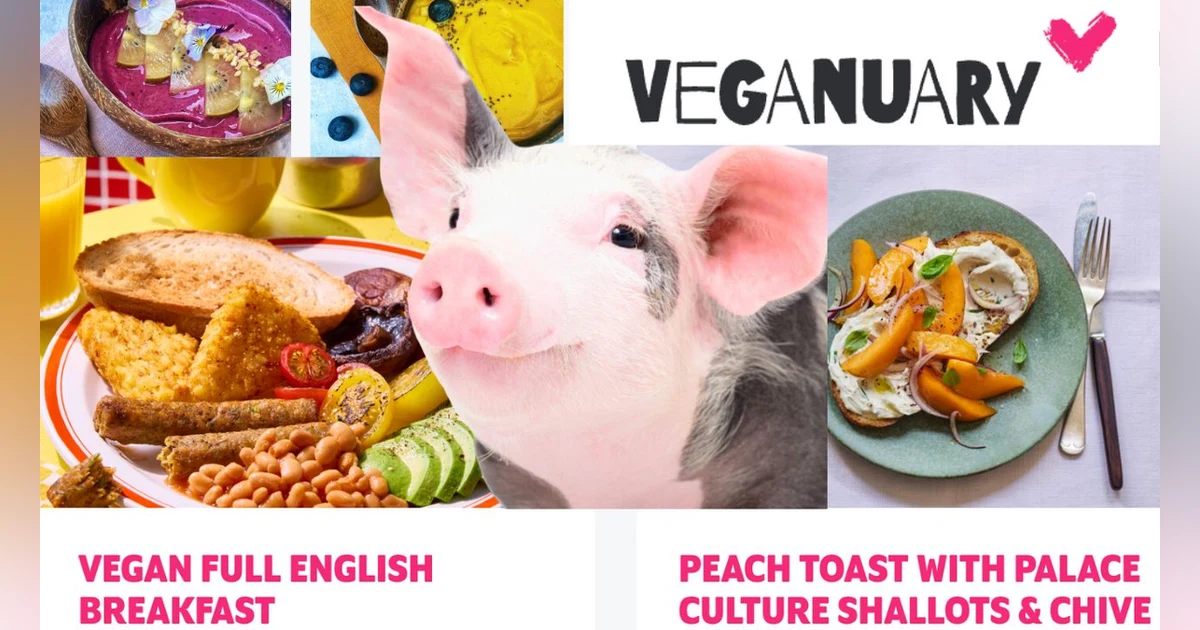


Veganuary is here and it is arguably the most successful ongoing vegan campaign EVER! And, it’s fun! Veganuary is simply an international campaign to encourage people to try vegan during the month of January, a month where millions of us are making vows to get healthier and in better shape. The campaign began with a kitchen table discussion in late 2013, as two vegans, Matthew Glover and Jane Land, brainstormed about their passion: waking people up to the many benefits of a vegan lifestyle. It started off small in January 2014 but quickly took off, exploding into a global phenomenon that has changed the lives of millions of people! Now, UnchainedTV’s Jane Velez-Mitchell gets the lowdown on THIS Veganuary from Sandra Hungate, Veganuary’s U.S. Director. To join the party, visit: https://veganuary.com/ More about our guest: Sandra Hungate has been advocating against animal testing since she was a child. Sandra gave up meat in her early 20s and fully transitioned to vegan a few years later after learning about the dairy industry. Sandra has been working in marketing for sustainable living and eating for most of her career and started working at Veganuary in 2023. Now vegan for over 7 years, she dedicates her work and volunteer time to helping animals. More about our host: Jane Velez-Mitchell is an award-winning journalist, TV producer and NY Times bestselling author who founded and runs UnchainedTV, the world's premier streaming TV network to promote the plant-based, compassionate, sustainable lifestyle. UnchainedTV offers 2,000 free documentaries, vegan cooking, lifestyle and news shows as part of its nonprofit media network. You can download UnchainedTV for free on any cell phone. You can watch UnchainedTV for free on any TV via streaming devices like Amazon Fire Stick, Roku device and Apple TV device. And, it's on all Samsung TVs. Here's the online portal: https://watch.unchainedtv.com/browse .
0:02 I have the vegan Marion Berry Oatmeal Cobbler and it is delicious, look at this, oh my god, this is so good. Veganuary is a great way in restaurants and shops like this ice cream shop to introduce non-vegans to delicious vegan food. I like Veganuary because the restaurants are really going out of their way to come up with some amazing vegan creations. You get to try a lot of stuff you would not normally try. It's great and it's also a great way for these restaurants and stores to see that there is, people are interested in eating vegan and it's a great way to welcome them to be creative with their food because this is vegan Marion Berry Oatmeal Cobbler.
0:51 I mean how creative can you be, it's delicious. Absolutely makes me so happy as a vegan, always scrambling around trying to find vegan options. During Veganuary it's everywhere. I wish every month were Veganuary. And we are so excited here at Unshained TV to have the U.S. Director of Veganuary with us today, a tremendous honour because as you might imagine, this is one busy lady. We are in the midst of Veganuary. So tell us Sarah Hungate, how big has it gotten this year? Hi Jane, thank you.
1:32 It's an honour for me to be on your show. I've been following and watching your show for years. So it continues to get bigger every year and we don't know the participation numbers yet obviously because we're still at the beginning of the month, but in sizes of countries participating we now have officially 20 countries that are running a Veganuary campaign. But we actually have participants from every country in the world except as of yet North Korea. We have not yet had a participant there. But in terms also of businesses participating, I loved your video. There's continuously new businesses joining and some of our big hits this year in the U .S. that we know so far is that we have a record breaking number of restaurants in New York participating.
2:15 There's over 50 in New York alone. We also have more chains than ever before in the U.S. participating. So like you saw, you just showed Salt, Salt and Straw, but we also have and Pizza and Ike's and Crisp and Green. We always also have Blue Sushi Saki, Mellow Mushroom, Veggie Grill, Plant Burger and many, many more. And so we love to go and try all these vegan options. And there's even some fun surprises around the country. Like there's different cities and states that are not always like the obvious vegan friendly ones. So one big one that I loved or like one one that is really special to me and to us is that in St. Louis, Missouri, there's a ice cream chain, Clementine's, that is making their menu for this month half vegan, like 50 percent of their flavours is vegan.
3:01 So they added eight vegan options for this month in St. Louis, which is super exciting. So VeganU is everywhere. To your point, you have people everywhere celebrating. It is so absolutely extraordinary everywhere. The reason I said Veganuary is everywhere, it's literally every time I open my computer, another email, Veganuary this, Veganuary that, I walk down the street, Veganuary, Veganuary. It's it's so extraordinary. And to me, it is it gives me inspiration because this began with two people just sitting at a kitchen table in late 2013 saying, how do we wake people up to the joys of the vegan lifestyle?
3:46 And they just decided to do this. So anybody who has an idea and thinks, well, I don't know, do it, because look how this has transformed our world. I mean, as I said on the tape, I wish Veganuary was every single day of the week. Now, let me ask you about some of the exciting aspects, the cookbook, the cookbook. So now you can get a free celebrity cookbook. Tell us about that. Yes. So every time or every year we have a new updated version of the celebrity cookbook. So it continues to grow in pages. We're around 70 pages now. And this year we have a new edition from Woody Harrelson and Laura, his wife.
4:32 And then we also have Bethany Antonia from the House of Dragons TV show. And yeah, just a lot of also international celebrities that joined in. And this is just one piece of the free resources people receive when they register on our website. So the other pieces are that they receive a starter kit that answers all the questions about what is plant based eating? How do I deal with these kinds of challenges or questions from my family? I could cover everything so you can be ready and you can overcome any challenge that might come in your way during the month. And then we also give them meal plans, a daily dozen nutrition lists to make sure that they check all the boxes. And then every day at their starting date, which is up to them, they can select any date of the year.
5:15 They don't even have to do it in January. Then they receive 31 daily emails that are short and sweet, talking about the three pillars of our programme. So it's the animals, it's health and sustainability. And then every day, these emails also include a few more recipes and just encouragement and links to dive into certain topics, to documentaries, joining our official Facebook group to talk with other participants and much more support. So we want to make sure that it's always fun, welcoming and encouraging. Well, I want to ask you about this because this is so extraordinary. I just looked at one area. This is the District of Columbia. And I'd like you to break it down for us because this is just one tiny area of the United States.
6:03 And take a look at all the different things happening vis-a-vis January. Break it down for us. Yeah, so we have dozens of participating businesses in D.C. this year, but we also have events that are booming in D.C. like we have our friends at Veg Society of D.C. are organising eight events. And then there's also Rosie's Sanctuary that is having a family event so people can go and meet animals. There are hikes, there are potlucks. We also have from VSDC, there's an event with a council member of the Maryland County that's just neighbouring D.C. who is also supportive of Vegan Year. So there's a lot of different ways that people are celebrating in their capital.
6:46 And yeah, this is just one of the main target cities that we contact, like we contact businesses as much as possible in New York, D.C. and in the LA area. But we also reach out to nationwide chains, regional chains, retailers, as many food companies as possible. However much we can do in our small team, we reach out to however many people we can so that they can participate. And there's so many also who participate just because they know of it. And we just find out throughout the month of January. It's like a fun surprise every day for the team. We find out this business or this city is participating. These celebrities want to take part. Like it's just fun, fun little gifts every day. Well, all I have to say is bless you and bless Veganuary, because as some people may know, veganism is under attack.
7:34 The incumbent industry, the meat and dairy industry, has really declared a PR war against veganism, trying to characterise everything is processed. When in truth, we all know that we've always had fruits, vegetables, nuts, grains and legumes. OK, I had a kale smoothie this morning that was packed with nutrients. And you could say it was processed because I put it in a blender. You put a mango in a blender, it becomes processed. But they've used that as a weapon, never mentioning that processed meat is officially cancer causing, according to the World Health Organisation. So a lot of nasty articles are being written.
8:16 Thank God we have Veganuary there to counteract that terrible narrative that is motivated by greed. And also because these very, very multibillion dollar industries have started to see veganism as a very real threat and they are fighting back. They reportedly, according to The Guardian, have a war room the size of Fox News and issue things like Masters in Beef Advocacy to thousands and thousands of people who go on social media and push that agenda. So you are counteracting that. And I want to go over these stats a little bit because I think they're very, very important. Eighty two percent of respondents to your survey who were not already vegan when they took part intended to permanently change their diet.
9:07 Seventy three percent of those who aren't committed to staying vegan are likely to try vegan again in the future. Almost half of respondents to the survey that Veganuary did saw some improvement in their overall health after just 31 days. Tell us about this. Yeah, and actually the numbers are even higher from the latest 2024 survey. The last number is 48 percent saw improvements in their health within a month, which is almost half. It's really, really amazing. And then we had this time around 92 percent of the people who are not staying vegan after. Sorry. Yeah, there's there's about a quarter who stay vegan after Veganuary.
9:49 We check a month after the Veganuary month that they participated and then six months later. And usually it's about a quarter who say they're going to stay vegan. And after six months this past year, 2024, 27 percent said that they stayed vegan, which is a little bit of more than the years before, like by two points. But then from the ones who said they didn't stay vegan, 92 percent said that they're likely to try vegan again in the future. So the numbers are even better than than the previous years. As of 2024, we also have a 98 percent recommendation rates. People around half of the participants usually also bring a friend into it or their roommate or family member.
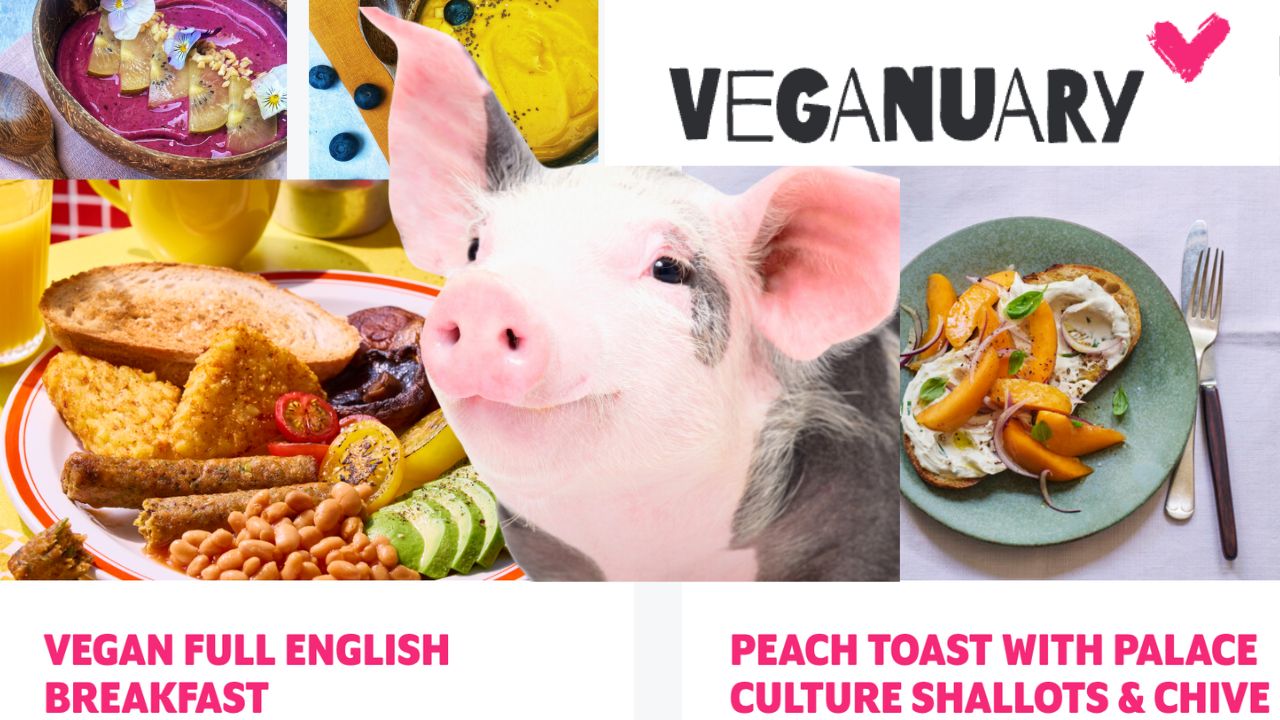
10:31 Right. Because it's more fun if you do it with somebody else. So the numbers really look really great. We're very happy that it's not just for the month that a lot of people just really find that it aligns with their values and they stick to it. Now, one of the things that I love about the Veganuary website, Veganuary.com, is that it seems like thousands of incredible recipes. These are some of the photos from the Veganuary website showing just a smidge of the recipes, truly extraordinary amount of recipes. So how do people avail themselves of that?
11:13 I'm sorry, how do they what? How do they how do they actualise that? How do they take that? How do they get involved? Somebody's watching this and said, you know, this sounds like a great idea. Like a lot of people, January is the time, myself included, that I make the vow. I'm going to get in shape, better shape. I'm going to change my life. That's why I'm doing those green smoothies, by the way. It's a Veganuary vow, Veganuary vows. That's a good one. But if they decide, OK, yeah, I'm in. Like, what's the process for them to really maximise the benefits of being Veganuary? You go to the website, you sign up.
11:54 Give us the process. Yeah, so they go to the website. There's a button that says participate, take part. And then they just put their name, email address, what country they're in to make sure they get the content for the country they're in. And then they select the start date. As mentioned before, it can be any time in the year. And then we encourage them throughout the email content to make sure to follow our social media platform, because we also share a lot of content on especially Instagram, but also most of the other major social media. And then that group that I was mentioning, the Facebook group is a great place also to find recipes and ask questions to other participants. We also have a team that moderates that group to make sure we can answer the questions that people have.
12:36 And we even encourage people to check out some apps, to connect with others, to go to these events that we were talking about, like in D.C., to connect with others, because, yeah, it's really helpful when you have others who also do the programme with you. And like you said, there's over a thousand recipes on our website. We also had one contribution this year from Pamela Anderson, which we're super, super happy. And she was also part of my vegan journey. Like she back then was the main person in those ads that I was seeing back then as a vegetarian. She was vegetarian, I think, or at least that was the message back then. Vegetarian with PETA. And so, yeah, I was super, super thrilled that she was sending us a recipe for the website.
13:19 And then to your point earlier, too, because the meat industry and lots of things are talking about whether or not veganism is over processed foods. So we also talk about that in our content and we really explain what is a processed food and what is healthy, what is not healthy. And we explain how people can really make their whole meal with just whole foods, foods like whole grains and legumes and things like that. And our latest campaign also talks about the animal aspect, the health aspect and sustainability. And one of my favourite messages is one of the ads and it says we kill billions of animals, but then eating that food from these animals kills us, like in a nutshell, right?
14:03 It's not it makes no sense the way that that we are eating these animals and then it's not healthy for us. So it's really a big part of our message. Yeah. And we here at Unchained TV show some of that. We cover some of that. This happens to be a DXC investigation into a chicken factory farm. And, you know, yes, it's it's important that people see the truth. But sometimes I get the sensation that people don't want to see the truth. And the real way to get to people and to change their hearts and minds is by offering them a good, healthy, delicious alternative.
14:47 And that's what Veganuary does. So it's kind of a philosophy. And what I read was you don't even say go vegan. You say try vegan and that that sort of takes the onus off of people who might otherwise feel stressed out or resentful or I can't do this for the rest of their lives. It's like 12 step programmes. You do it one day at a time. All we have is today. And so I'd like to hear a little bit more about the psychology, because maybe folks who are vegan watching might say, hmm, OK, that's good. I might try that myself. Tell us about the the philosophy of the psychology of try vegan.
15:30 Yes. So in my work specifically, like I can share some stories when I present Veganuary to companies or potential businesses who would participate. And I mentioned the programme when I talk about the fact that there's no vegan police, they sometimes physically you can see that they're relaxed because we want to make sure that people don't think I have if I do this, if I register on Veganuary, that means I'm all or nothing like it's 100 percent. I have to stick to it. We don't want them to have that pressure. We want them to be able to to try it. We want everybody to try it. And so that's why we make it non -judgemental and as welcoming and as approachable as possible.
16:11 And we really encourage them to take it at their own pace. You know, some people will try Veganuary maybe on certain days of the week. Even though the companies that we would talk about workplace challenges later, I know, but they they also in their message tell people that. So that message continues to get trickled down. And that really helps for everybody to feel like, oh, I can participate even if I just do it for one day, even if I just try one recipe. But then they see the information and they then continue to learn. And then that's often how people stay in the programme and stay vegan afterwards. A lot of people also in our survey said a 40 percent that the reason the motivation is animals.
16:52 Wow, that is extraordinary. You really know your stuff and it's very impressive. What I'd like to ask is about the stats regarding the results. And here they are. We talked about that, but let's talk about the corporate aspect again. I mentioned that veganism is under attack and one of the reasons it's under attack by the meat, dairy and pharmaceutical industry, because they're all one in the same. I mean, let's face it, people would need all those erectile dysfunction pills and cholesterol lowering pills and obesity pills if they followed a vegan diet.
17:34 But they can't really stop veganism because there's no way to stop an idea whose time has come. So off of the Veganuary website, it says ninety one billion dollars is the estimated worth of the global vegan food industry by the year 2027. Tell us about that. Yeah, so that's a statistic from another organisation. I believe it's either GFI or Plant Based Food Association. And yeah, they measure the markets and how it increases. And it just yeah, it's very successful. I remember there were some stats throughout COVID where they were showing how the growth of the different categories were comparing and plant based was growing faster than than the others.
18:17 So there's definitely the data showing that there is growth. And then on the on the other side of your page to write over 10,000 media stories. So that was our record last year. We went over the 10,000 mark. There were over a thousand alone in the US media hits. So, yeah, it continues to be talked about. And we just yeah, like you said, I guess it is it is unstoppable because it's everywhere now, whether or not we even are the ones that are triggering those media hits. It's just a word of mouth kind of effect. And and if businesses and people and everybody's participating, they kind of encourage each other. So it's like that snowball effect. We call it the Veganuary effect. Oh, yeah.
18:57 Let's talk a little bit about the Veganuary effect and some people who are in the midst of it. They've they're drinking the Kool-Aid and love it. Our best advice for people trying vegan for the first time is to stay open and have fun with it because you just can't do anything in life without having fun. See who else is willing to do it with you. You're trying out vegan for the first time. Try new foods. We've really expanded our palette. If you live with people, be like, hey, I want to try a vegan meal. Let's make a cool beet burger. And then just see how it goes. Love how our bodies felt as we transitioned out of dairy and meat into all plants, whole food plants.
19:39 And we're just never going to go back. We love it so much. And it's changed our lives completely. Make it as easy as possible. Don't try to build the whole boat at once. Be convenient about it. Maybe go to a restaurant, go to a vegan restaurant or some takeout. Wow, very good advice. So what are we've talked about? I mean, you make it seem so easy, but if it were that easy, the entire planet, all 8.1 billion humans would be vegan at this point because it makes perfect sense. You know, I've been reading a lot about the 80-20 rule, which is a new thing. It's kind of a fad where they try to explain all sorts of problems with the 80-20 rule.
20:21 And I was like, that is exactly the dynamic of the meat industry. Meat is creating 80 percent of the problems. In other words, it's the 20 percent that's creating the 80 percent of the problems. We right now in Los Angeles are experiencing horrific fires. I'm being inundated even as I speak. Are you OK? Are you OK? Are you? Yes, I'm fine. But not a lot of people are not. Many have lost their homes. They've they've some people have lost their pets. Think about the wildlife as well. How devastating to the wildlife. And I always think about that.
21:03 And climate change is the reason why we're just in the early stages. I hate to say it, but it's going to get worse. OK, we've got approximately nine boundaries and we're crashing through six of them in terms of, you know, glacier evaporation, wildlife extinction, ocean dead zones. There's another person trying to find out if I'm OK. But it is that the answer is to end animal agriculture, transition to a plant based society, reforest all the huge percentage of the earth's usable land that is used for either cattle grazing or to grow crops to feed 92 billion animals.
21:45 Just land animals were killing every year. We would have also end world hunger because we would have an abundance of food. We would also radically reduce health care costs because people would be healthier. And now there's a whole move. Make America healthy again. I've been saying that for years. I was like, wait a second. I said that first. So when you look at all the problems it solves, disease prevention and not to mention, yes, compassionate animals, all these animals are suffering. The Guardian just recently had a story where the headline was the culturally acceptable genocide. And I agree, culturally accepted genocide.
22:27 Ninety two billion animals, many, many, many millions of animals that have died horrible deaths since we started talking. So there it is. And now people are losing their homes. But somehow it doesn't seem possible to wake everybody up. What are your thoughts? What are your insights? Because we're at a pivotal juncture when it comes to climate change. Yeah, I have a few answers also to the parts that the first one, the 80 20 rule. There's also the land use. You probably know that one, too. We use 80 percent of our land to create only 20 percent of the global calories with animal agriculture. But the other 20 percent of the land that is used currently for crops to feed people is actually 80 percent of the calories supplied for the whole world.
23:13 So it is it is like there's so much data that proves what you were talking about. And I love using that example because of the 80 20. It's easy to understand for people when I make those presentations. And then also all these animals, we never see them. Right. So in our campaign, we're also raising the question. Isn't it weird that there's millions, billions of animals that are raised for food? There are many, many more animals that there than there are humans. And the farm animals are the ones that are the most in the whole world. And we don't really see them. Isn't that weird? So, yes, it's very interesting. And animal ag is, yeah, it's proven to be the most contributor to greenhouse emissions.
23:53 So there are all these facts. And then there's also the cognitive dissonance or the psychological effect of of people defending things because eating has is cultural. We are since we're little told what to eat, what not to eat. And so we're really trying in our current message to to raise the question, isn't it weird that we are eating these animals? Isn't it weird that we are eating animals that are smarter than our own dogs like pigs? And and hopefully, you know, we've been creating that conversation that there's always people who who are like kind of trolling and and they will respond with a comment that says bacon. And so it's just that that that seed that is planted.
24:36 And I consider every response, no matter if it's positive or negative, that person saw the message and they will maybe talk about it or think about it again. And the more they talk about it, the more you know that they're thinking about it. But in general, our message is really just, again, to to invite people. And we try to make it as easy as possible. And also because sometimes it's hard for people to find the time to cook. We also do our best to give them tips of how to find affordable and quick ways to eat more plant based because we just want to make sure that everybody can try it, even even if they have challenges. And and there's many challenges right at this moment.
25:16 And there's the the cost has been rising of a lot of food. So we also just continue telling, hey, rice and beans is a super cheap way to eat. And we just talk about all these topics to remove all the other challenges. And look at the delicious, delicious food. Now, who put this together? These are such incredible dishes. Does Veganuary have like an entire chef team that puts all these incredible dishes together? No, we're actually really lucky that a lot of businesses like the food companies and the retailers and restaurants send us some of those recipes. And then there's the celebrities that send them. You were also talking or there's also a physical cookbook.
25:57 That one was made with a publishing company. And they also welcomed our team to send in recipes. So our teams were able to send some of their favourite ones. And then when we need pictures, we do have a photographer who then is also a cook. And so she will make the recipe and take pictures. But most of it is provided by others. And we're just really thankful for that. I want to talk about corporations. I was in the news business for many years and quite often I was the only vegan. In fact, our social media director that we have here at Unchained TV today was the other only vegan when we both worked at Paramount Studios at a local TV station here in Los Angeles 20 years ago.
26:45 And now we're working together. And at the time, we were both considered freaks. But things have changed. I remember at another job I worked at, couldn't get a vegan option. And all of a sudden, one day I walked in the cafeteria, everything had a vegan option. I was like, have I died and gone to heaven? What happened? Well, it turns out one of the top executives had gone vegan. Boom, like that. Everything changed. So let's talk about the workplace and how people who are vegan or trying to be vegan can manage the workplace and your workplace challenge. Yes.
27:25 So one of the challenges is for people to eat out. Thirty percent of people say, I have a hard time eating out. And then the second top challenge at around 20 percent is dealing with friends and family. So I don't think we have a data specifically about challenges in the workplace, but I know from experience and from my friends that it is also challenging. Sometimes there's people who are vegan, but they don't always want to talk about it because they don't want to have to deal with the conversations and the debates that might come with that. We do also share tips in our newsletters and blog about how to handle some of those questions. And we also try to give as many facts as possible to our participants so that they are ready and they have all those tools.
28:09 But, yeah, we encourage workplaces to also participate in Veganuary and there's people who have done Veganuary as a participant and that's how they bring it to their workplace. And I say, you know, there's this thing I want to bring it to my work. But we also have an official programme, the Veganuary Workplace Challenge, where we give free resources to the employers. Everything we do anyway is free, but we also then created extra content so that the person at the workplace can copy paste email templates, like an email to ask leadership to approve a Veganuary programme. We have an email template to just encourage the colleagues to participate. Then we also have quizzes and lunch, like just ideas on how to make it interactive, like potlucks and luncheons and things like that.
28:55 We have leaflets that we give them, posters where the teams can take pictures and they can answer, like, why am I doing Veganuary? So it's like a nice photo op, just so many tools to make it fun and as easy as possible to implement. And what happens is that we reach out to the bigger employers, HR, sustainability, wellness and ESG team members. But we also encourage vegans and people who are really interested in bringing plant-based into their work to simply talk about it at work. They can use our tools and they can also work with us. They can contact us and ask us for advice. So we are very happy to help with that. And this year we are at over 40 participating companies in the US, which is also a record.
29:40 So we're really, really excited. And some of the bigger employers this year are Ernest & Young, EY, Lush. There's also municipalities that are celebrating the Workplace Challenge, like City of San Antonio, Texas, is already participating for the second year. And then also City of West Hollywood, which is participating with the Workplace Challenge, but also as a city overall, did a proclamation and a resolution as part of their implementation of the plant-based treaty to communicate about Veganuary to residents, businesses and staff. So that was the first newer kind of size of municipality participating. And there's many more. Some of them also don't share it publicly, so I cannot name all of the participating companies, but there are some really major ones that are astonishing sometimes.
30:28 Like we're positively surprised to see lots of industries participating and new ones this year, where media, trucking, like engineering, manufacturing started to participate already last year. And then we also have schools that are participating this year. So it just continues to touch new sectors. And a lot of it is thanks to just the Veganuary effect and also participants who speak up and want to talk about it at work. And Veganuary. You said media, because that is so important. One of the biggest challenges we face and the reason I started Unchained TV is because the media is not reporting our story the way it should.
31:09 Veganuary is a big exception. But I've seen many undercover investigations, for example, that we've reported here at Unchained TV. And then I look to see what media has picked it up. Oh, laws being broken. Terrible. We passed here in California, Prop 12, Prop 2. These are animal welfare laws that are not being enforced at all. So these undercover investigations are very serious. Also, animal activists being put on trial. It's not getting the coverage it deserves. Because look at the advertisers on these major networks, meat, dairy and pharmaceuticals. So I would like to understand your strategy for having success with media, getting all the media reports, as well as getting media companies, you said, to participate, actually their staff, their employees in Veganuary.
32:00 Can you elaborate on that a little bit? Because honestly, that is huge. As the media goes, so goes the nation. Yeah, I love that. And yes, it's the first time we have a participating media company and they publicly announced that they gave us a quote. It's one of the channels in Spokane, Washington, one of the TV channels, public television, television. And the person who is leading it is in the sustainability and did participate in Veganuary in the past and therefore knew there's this workplace challenge format. I can bring it into work. Oh, oh, oh, I don't know what happened there, but that's OK.
32:42 I'll tell you what, this is a good opportunity for us while we get that back on track to talk a little bit about Unchained TV. We're going to tell you a little bit about what Unchained TV does. We're a 501C3 nonprofit and our whole effort is to promote veganism. So it's a vegan Netflix. OK, that's the craziest thing I've ever heard. I love Unchained TV. Unchained, Unchained TV, your life will change. It's just that easy. Unchained TV has all sorts of content for everybody. Unchained TV changed my life. Unchained TV is crushing it. I love Unchained TV.
33:23 Unchained TV is my go to. Unchained TV, who knew? Unchained baby, yay! So I can tell you a little bit more about Unchained TV. I'm the founder and there it is right behind me on my Samsung TV. So if you want to get involved with telling the story that we all need to tell, that the solution to so many of our problems, literally, I would say 90 percent of our problems, climate change, world hunger, preventable lifestyle diseases and so many other problems.
34:09 We got a little bit of a problem there. We'll get through it. The solution is for the world to understand. Yes, I can hear you. You're back. Yay. I was just telling everybody about Unchained TV. Anytime there is an opportunity for me to talk about it, I will. So I'm going to explain a little bit more about how you can get Unchained TV right on your phone. We're a 501C3 nonprofit. It's absolutely free. And there's 2000 videos, including this one that's playing right now behind me. Documentaries, vegan cooking shows, biographies, lifestyle shows and news shows.
34:50 And the greatest part about it is you can get it on your phone for free. Just go to your App Store, Google Play or your Apple App Store, and you just put in Unchained TV, one word, and then you can text these videos. If somebody says, oh, the animals aren't treated that bad, you can text them a video. If they say I could never give up cheese, you can text them a video. It's all completely free. And if you want to watch it on your TV, it's on all Samsung TVs. But also if you have an Amazon Fire Stick, a Roku device or an Apple TV device, you can also get it that way. And of course, you can watch it online. So just go to Unchained TV dot com or watch Unchained TV dot com. So, all right, we're back with the one and only Sandra Hungate, the U.S. Director of the January.
35:36 And I see you got some mood lighting there. You probably had an electrical outage, if I had to guess. But we're happy to have you back. So you covered a lot of ground, but I want to know why the January has succeeded when so many other similar efforts have not had the same level of success. What is your secret sauce? Thanks. I'm sorry about the technical problem. We we think that there's a few elements. The first one is the fact that it is not nonjudgmental and inviting. So that there's that pressure. The pressure is taken away, as mentioned earlier.
36:17 So people feel more comfortable giving it a try. But we also had a lot of support early on from celebrities. So you were saying earlier how it started in the U.K. 11 years ago with two people. And the first year they had about 3000 participants and they thought this was going to be like a side project. But then it just exploded because they got big businesses that took part. They got celebrities that participated. And so that that was really how that snowball effect started, because there were these big names that participated. And then also you were asking me about the media we have ourselves. You know, we send out the press releases and the content. We also have other participating entities that are sending out the content as well.
36:58 So I was mentioning the West Hollywood city participation. Right. So they they had the city council meeting. There were media there. So it was also mentioned in the media because it was part of their programme. We also have the Mellow Mushroom, for example. We're talking about them as a chain. They just sent out a press release about their participation. So they also are part of the messaging. And then we also send our own messages. Yeah, it's like a team effort between all the other groups of people who are who are making this bigger and bigger every year. It is so amazing. And, you know, 2013, when that coffee table discussion was happening is not so long ago.
37:40 So it started in 2014 small. Then it exploded. You're hearing that it exploded because celebrities got on board. What I'd like to know is, first of all, we have a question from somebody watching on Facebook, and it's kind of a silly but fun question. Sandra, is there any significance to your question mark symbol? Oh, ha ha. Yeah, I actually made these. And I love the question mark symbol for a few reasons. I like to always question things. I'm part of also the Generation Y that is always asking why. And yeah, just overall, like the the symbol as a design element itself. So, yeah, I thought it would be a good a good symbol for today when we're talking about and learning about beginner and beginners question what you're being told on the news media.
38:28 I saw a ridiculous article. Somebody told me about it. There's something does do veggie burgers cause depression? Now, you know, at a certain point, we need to counteract this nonsense. It's like when if if I have a an injured pinky and I go to the doctor, sometimes I'll try to make my injured pinky about veganism. I go, what about all these sick people who are lined up in the gurneys in the hallways and who are vegan? Do you make it about them being meat eaters? You know, there's this, I think, institutional bias that we're seeing. And when that institutional bias occurs, we as independent thinkers have to question it.
39:12 And we have to question when doctors tell us we have to eat meat or dairy. Well, how much training have you had in nutrition? Because the average doctor has very little training in nutrition. Their health stats aren't better than the general public. And there's an entire organisation called Physicians Committee for Responsible Medicine that tries to educate doctors because a lot of them are just repeating urban myths. They don't know. I mean, I read that the guy who created the ham and cheese breakfast was a PR guy who had ham, you know, pork producer as a client. And he called one doctor up and said, would you recommend eggs and bacon for breakfast?
39:54 And the doctor said, sure. And then he turned that into a whole campaign. It's online. You can find this where he said the medical establishment is suggesting that we all eat this breakfast. And he on the online video. He's very old now. He brags about how he basically scammed everybody. So, you know, we have to question what we're being told, because as somebody far wiser than myself said, we're all being factory farmed. If the animals are being factory farmed, but we're being factory farmed to to get sick, to get diabetes, to get high cholesterol, to need operations, to need drugs.
40:36 We don't inherently. There's a lot of stuff. Look, I believe in doctors. I do go to the doctor. I'm not somebody who's against established medicine. There's a there's a good reason for doctors, OK? But we also have to question authority and not just obey. All right. We're back with Sandra Hungate. And I want to ask you, what's next? OK, if you could tell us what are the future plans for the January? Obviously, we won't know all the stats until 2025. January is done. But what's happening in the years ahead? If you could unmute and tell us.
41:18 Yeah, so we work all year long. That's sometimes the question that we get. Yeah. What what does the January do after January is over? So we work all year long in contacting businesses and different organisations and entities to to prepare for the next campaign. And also some campaigns that are in the middle of the year. We do call them mini campaigns. So we already are planning one in April, May to talk about chickens. And, you know, they're the ones that are in numbers suffering the most from animal agriculture. So we're talking about how to how to swap out chicken products specifically. And that helps to keep people on the January waggon, how we call it.
42:00 And we also talk about other topics like the fish industries, usually in the summer and then plants, milks versus dairy later in the summer. And yeah, just to keep people as as much on the waggon as possible. We also continuously email the participants throughout the year. They get every few weeks more emails and tips and recipes, kind of like those ones that are in the first month. And then, of course, we also do fundraising. We're also a nonprofit. We also need and rely on other donations to make sure that our content also is available and free to everybody. We also regroup. We see what worked, what didn't work. To your point with media, we look at what are the stories that the media is actually picking up the most and how can we then utilise that in the next year?
42:48 And then I also forgot, I guess we also take a quick break in February because we work throughout the holidays, as you can imagine. That's like our main time, December, January. So we still have a few days where we take a break as an organisation in February. And then we also start brainstorming already in the summer about like, what is our next angle? What do we want to talk about next year? And it's usually based on what the industry and the current cultural news are about or what are some of the products or things that people are looking for and things like that. We just kind of look at everything and then decide on some of the new topics. I love it. And what really fascinates me is it's constantly evolving, but it remains very positive, which I think could be a challenge, honestly, because a lot of us who are vegan experience frustration.
43:44 For example, the environmental catastrophe happening here, I remember there was a catastrophe on the East Coast and people had held a news conference saying, we have to have no more factory farms here in this particular state until we find out the connection between these factory farms and the ever escalating weather turbulence and just meteorological nightmare that we're experiencing. And the news media videotaped that news conference. None of them aired it. But what they did air instead was a barbecue for the victims, a meat barbecue.
44:25 And I remember that. Yes, it was so frustrating to me. It's like we're trying to help you avoid the next catastrophe. This is just the appetiser of climate change. I mean, it's going to get exponentially worse. And yet the very people we're trying to help are refusing. It's this weird dilemma that they're regarding us as some of some of them infringing on their lifestyle when we're trying to say, hey, it doesn't matter how much money you make. If you can't walk outside the street without collapsing because of extreme heat, you know, your money isn't going to mean that much to you.
45:09 What are your secret strategies for maintaining a positive approach no matter what? I'd like to hear it. I just need to tell you, sorry, I cannot speak to that as an organisation. But personally, I would say my strategy is that I focus on the the impact that we're creating. And that's what motivates me. And especially in this time of year, like in the winter time is when we see all those those entities participating and all that energy. And then when you see the stats in the spring of how people how many people participated, how many stayed vegan, that just fuels you for the rest of the year, basically.
45:49 Which is like, oh, my gosh, we continue to reach more people. And we just we just want to do more and more and more until we don't need to anymore. And the world will be vegan, which is our our vision. And I think all of our vision in the vegan space. So let me let me ask you, we we here at Unchained TV, just like you accept everybody wherever they are on the journey we put up. You know, you said there's no there's no problem with answering any questions. So here's sort of a provocative question from Animal Vegan Animal Defender 269. How is asking people to change their diet for a month while still using animals fighting for emancipation is justice or respect a challenge? How is it respectful to ask for just a month of respect?
46:31 What's your answer to that? So because we know that we are just the beginning and we're the the first trial for them, we then give them the information so that they can learn about all these other problems that are linked to not just how they eat, but also how what they wear, what kind of cosmetic they use. And as mentioned earlier, a lot of people say that their main motivation are the animals. So even though maybe they start for health reasons or sustainability reasons, which are also really, really important reasons, they just learn a lot about animals and then realise there are so many problems in in this. And I even after eight years of being vegan, I continue to learn more things about how awful they're the animal ag and and the industries are.
47:17 And so we continue to just we give them that way in and we encourage them to continue to learn more so that they can really also become a defender of the animals and learn more. And you know what I remind myself of? My point is not to be right. My point is to convince other people. And so there is a psychological strategy to convincing other people. And so sometimes you've got to speak truth to power and confront people. I went vegan when a fourth generation cattle rancher turned vegan advocate named forget his name now, but he's the mad cowboy. OK, he was on Oprah and he was quite famous.
48:00 And he pointed at me when I said I still consume dairy and pointed his finger right in my nose and said liquid meat, because I was a vegetarian who committed who would continue to consume dairy, liquid meat like that. And I'm sure somebody's going to tell me his name because I just for some reason forgot it. But anyway, that was confrontational. It was a little rude, but it got to me. And that was the last day that I consumed dairy. That was twenty nine years ago. So I was already vegetarian. Then I went vegan because somebody confronted me rudely. But that's me. I'm a certain type of person.
48:41 Somebody else might be horribly offended and go out and drink a gallon of milk because of that. So it really depends. It's it's a multi level chess game, a three dimensional chess game. There's no right answer for any one person. Different people, because of their life habits, are going to respond differently to different stimuli. So, yeah, if you want, he has one more follow up. We can we can live dangerously and check that out, too. But why can't you call it something else without using the only word for animal emancipation, like plant based challenge or diet challenge? Why hijack the term, which means rejecting animal use?
49:23 I'll let you answer. I am not the one who created the name, so I cannot really discuss that or or change it. But I'm trying to think if there's anything I can really share otherwise. But I understand your question. There's obviously a lot of other challenges. I would like to say a couple of things. One, somebody reminded me the person's name was Howard Lyman, who I know well. Oh, I forgot his name is crazy. But I'd like to respond because. This brings up a bigger issue that I'd like to address, and that is when vegans are fighting amongst themselves, the other side is applauding and winning. Keep going, keep fighting.
50:04 The truth is the January works and it is arguably the most successful vegan campaign that has ever happened in the history of veganism. You know, and I I learned recently that veganism is a very new term. In fact, it only went into the dictionary in 1962. Wow. The word vegan only went into the dictionary in 1962. So let's not attack something that's working so well. And I also would urge everyone who is vegan to take all the energy that you might use telling somebody else, you know, this is how you should do it and actually use that energy and send it out to people who are not yet vegan and spread the word.
50:57 There's too much of this bubble vegan bubble conversation. And I say, cut it out. When two vegans are talking to each other, although we are talking, but hopefully others are listening and will listen, then what are we accomplishing? But when we talk to somebody else who needs the message, that's when we're going to achieve change. So I don't think we should all try to do report cards on other people's activism. My activism is an imperfect, completely imperfect. I mess up every day, go knucklehead.
51:38 What were you thinking? But I keep going and learning and hopefully improving. But I have to say that Veganuary is brilliant. It's a brilliant concept from a psychological standpoint for the very reason that it's like, I'll just tell you, I'm 29 years sober. I'm a recovering alcoholic. And the first thing that they'll tell you is if you tell yourself when you first get sober, I'll never drink again. The pressure is so enormous. You'll last five minutes. But if you say just for today, just for today, I'm not going to do it. Sometimes it's just for five minutes. I'm not going to do it. Well, for 29 years and hopefully on April 1st, April Fool's Day, which is very appropriate, I will celebrate 30 years sober.
52:20 I've managed to do it 30 years, one day at a time. And it's the first day I got sober. You're going to have to you're never going to be able to drink for 30 years. I'd be like, you're crazy. I can't. I can't. I can't. But one day at a time, I was able to do it. So it's psychological. Just thinking about never being even now today, 30 years later, I get a physical reaction. No, it takes the pressure off to answer your question. That's why Veganuary is brilliant, because it takes the pressure off and then allows people to participate because they're not worried about failing. The anxiety is being removed. So I'm just answering the question because I think it's that's the answer.
53:02 I as a person who has a dubious honour of being an expert in addiction, I've written two books about it. That's the psychological issue that we come up against. That's why Try Vegan is so brilliant. And would you like to elaborate more on that? I agree with what you're saying, even though, like I said, I can't comment to the word, I think that the efficiency or the efficacy shows itself. And there's many stories like the one you just described. Even in our team who say, I started Veganuary so many years like it was seven years ago for one of them the other day. And she was saying, and I was telling myself at just one month and then I'll get back to my favourite chocolate. And she looked at her chocolate and she said, I haven't had that chocolate for seven years now, and I'm waiting for it to be veganized.
53:47 And it's the Lindor, which they veganized this year. So it's just so cool, the stories that we hear. And to your point earlier, to everybody, every story that I've heard is different. And we're just part of that story. Everybody will find their why inside of them. And we just give them the tools. We invite them in. And that's what we're focussing on. And, you know, he says, I don't see why you're not open to discussing this and frame it as hostile. I'm not framing it as hostile at all. I'm only giving my opinion about it. You asked a question. I'm not framing it as hostile at all. I do think that dialectics, which is by definition, argument and counter argument to reach a higher understanding of the given subject matter is fine.
54:30 I'm I respect you. I posted it. I'm not I'm not characterising it in a negative way. What I'm giving you is my take on what needs to be done. We are at a pivotal juncture. Perhaps it's been brought home to me because people I know have had their houses burned down. People I know have had their dogs die of smoke inhalation as as they try to find them in a burning building. I mean, we are in crisis and we really have to stick together, is my opinion, and and support each other. I hope you support the January. I hope you support Unshade TV. It's these are all things that different people are doing.
55:13 And yes, trying to get in with Mario says, hope everyone stays safe in L.A. right now. Thank you, Mario. And he has a cooking show on Unshade TV. I want to just look at a couple of other comments. Vegan going to be around forever. I'm proud to be vegan and everything is going to be vegan eyes. Whoo hoo. I want to say thank you so much, Sandra, for taking an hour of your very busy time. You are a dynamic team member, leader of U.S. Vianuary, and we hope you will come by next year and tell us what the fabulous Vianuary strategy is for 2025 and 2026.
56:00 Thank you so much. And for everybody, please, please support Unshade TV. We'll leave you with this. Discover Unshade TV and transform your life for free. Unshade TV is a nonprofit organisation producing plant based content built with tips and tricks to spice up those healthy veggies, grains and legumes. For more information on Unshade TV productions, just visit Unshade TV dot com. That's.