Why They're Prosecuting a Woman for Rescuing 4 Chickens
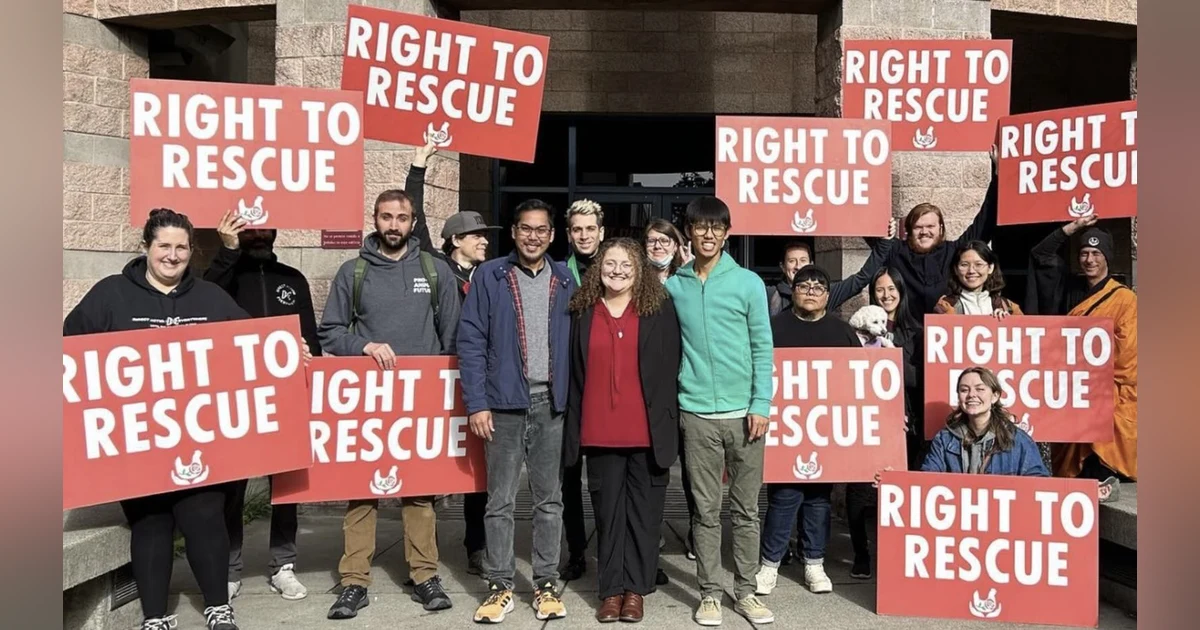
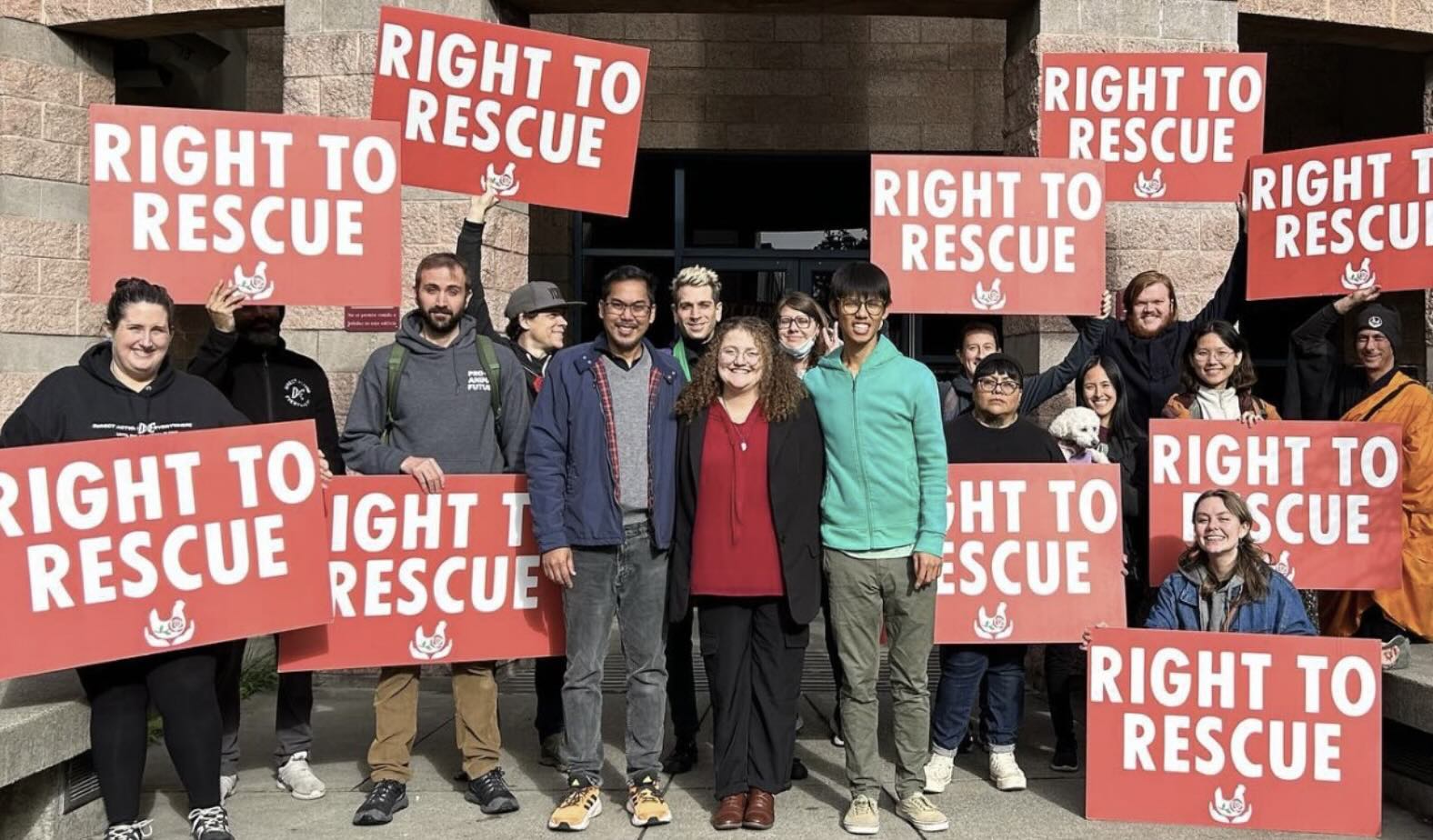


Zoe Rosenberg Chicken Rescue Trial: Week 2, Day 5 – Jury Still Not Seated as Judge Warns Trial May Stretch Into Late October
As Week 2 of the landmark trial against animal rights activist Zoe Rosenberg begins its fifth day, the Sonoma County, California courtroom remains deep in the jury selection process — with no jury yet seated. Judge Kenneth Gnoss addressed the potential panel, cautioning that the trial could last 6 weeks, and acknowledged the significant hardship this imposes. Over 80 jurors were questioned both Thursday and Friday, with a large percentage claiming hardship, underscoring just how difficult seating a jury is proving to be.
Rosenberg, a Direct Action Everywhere animal cruelty investigator, affirms she took 4 chickens from a truck at Petaluma Poultry’s slaughterhouse, calling it a rescue of sick and suffering birds undertaken after repeated calls for law enforcement to investigate evidence of animal cruelty were ignored.
A pivotal series of pre-trial evidentiary rulings last week could heavily shape the outcome. Most notably, Judge Gnoss ruled that the defense is prohibited from introducing any of Direct Action Everywhere’s animal cruelty investigations prior to May and June of 2023, stating that it would be “unduly confusing” for the jury, except for the rescue of Rose. Rose was the single chicken law enforcement allowed to be rescued from a massive Direct Action Everywhere open rescue action in 2018, a chicken Zoe cared for and who has become a symbol of the open rescue movement and the namesake of Rose’s law, a proposed bill of rights for animals.
The court also rejected testimony from a proposed witness who would have detailed unsuccessful attempts to involve law enforcement in addressing animal cruelty allegations. Defense attorney Chris Carraway objected on the grounds of Rosenberg’s right to present a legal defense, to which Judge Gnoss dryly replied, “I note your continuing objection to the entire trial.”
Meanwhile, the prosecution lost on some key points. They are barred from referencing Measure J (a proposal to phase out animal factory farms that was defeated by voters in Sonoma County, where the trial is taking place) or the DxE investigation manual during their case-in-chief — though these may be brought up if Rosenberg takes the stand and her testimony opens the door.
Despite legal friction on both sides, a witness order was finally agreed upon: alleged Co-conspirator Raven Deerbrook, vet tech Carla Cabral, veterinarians Dr. Sherstin Rosenberg (who is also Zoe’s mother) and Dr. Daniela Castillo.
According to the criminal complaint, Rosenberg allegedly entered Petaluma Poultry four times and rescued the 4 chickens on one visit. As part of the conspiracy charge, it is alleged GPS trackers were placed on 12 farm delivery vehicles. Supporters from Direct Action Everywhere insist these actions were driven by moral urgency and supported by legal rights under California’s rescue and animal cruelty laws.
The company involved has denied all allegations of animal cruelty and has called Direct Action Everywhere an extremist group with a radical agenda to end animal agriculture. The company is invited on any time to comment further.
The trial is already shaping up to be a defining moment for open rescue, constitutional rights, and how far activists can go to expose alleged cruelty in factory farms. Now, UnchainedTV’s Jane Velez-Mitchell discusses the case with an expert panel and reporter Johnny Mora LIVE at the courthouse.
0:00 Welcome to Unchained TV's coverage of the Zoe Rosenberg chicken rescue trial. It is week two, day five, and we've got plenty of breaking news for you. For example, over the weekend there were marches in the area where the trial is occurring. Cows deserve to be free, just like us. Pigs deserve to be free, just like us.
0:42 Chickens deserve to be free, just like us. One smile, one fight. Happy Freedom Animal Rights! Zoe Rosenberg is facing one felony conspiracy and three misdemeanors and could face up to five years in prison for rescuing four chickens from a slaughter truck. What you are watching now is the actual incident for which she is charged in progress. This happened way back in 2023.
1:23 At first she was facing 20 years behind bars. They keep dropping the charges to now one felony and three misdemeanors. We have a team that is on hand to cover this case and I have to tell you there's been some pretty interesting developments. First of all, it's week two and there is no jury seated. The judge, Kenneth Noss, has told the jury panel, the potential jurors, this trial could extend through the end of October. More than 80 jurors per day were questioned on Thursday and Friday with a huge percentage claiming hardship, underscoring just how difficult seating a jury is going to be.
2:11 So there were a series of pivotal pre -trial evidentiary rulings last week that could shape the outcome and most significantly, and I want to go to Justine Block on this, an attorney, the judge ruled the defense cannot introduce any of direct action everywhere's animal cruelty investigations prior to May and June of 2023, except for when Zoe Rosenberg testifies about Rose, the one chicken that authorities at one point did allow rescuers to take. What do you think, and I'm going to introduce our incredible expert panel now, but going to Justine Block, what do you think about the fact that DXC's defense team, Zoe Rosenberg's defense team will not be able to testify about the seven years that they tried to report what they describe as criminal animal cruelty at the facility from which and the suppliers to the facility of the chickens that she took from that from that location?
3:23 Thanks, Jane. I think that it is for us. It's frustrating. My understanding is only that video that you showed is going to be allowed in as evidence. Are you able to hear me? Okay. Yes. Okay, great. So, um, my understanding also on the good side, as far as good news, though, is that Zoe would be able to testify as to her firsthand accounts in 2023 of the investigations and what she saw that night in the video going in as to counter the intent of the crimes she's charged with. So my understanding of the judge's ruling is that I'm not on the good side for the defense is that there is some evidence witnesses and for Zoe to be able to testify.
4:15 She could also testify as to the the situation in in rescuing Rose when she took Rose, the chicken Rose. So we can talk more about that as well. Absolutely. And we've got Johnny Mora at the courthouse. Johnny, take it away. You're there at the courthouse with Cassie, who is DXC's lead investigator, lead communications lead, I should say. Take it away. Correct. Yes, Johnny more over here at the Superior Court of California Santa Rosa. I have here Cassie King, who is the organized one of the organizers for direct action everywhere. She's gonna let us know a little bit about what happened today in court on day five.
4:55 Cassie King. Thanks, Johnny. Hi, everybody. Yeah, we just literally got out. It's the lunch break now. We've only had about 55 minutes of court this morning, but I can break down what happened in there because it is starting to get interesting. We had Carla Cabral, who is a former veterinary technician working in emergency rooms and hospitals and who has a lot of experience caring for chickens at sanctuaries like One Living Sanctuary and Jolene's retreat. She took the stand and basically the 402 hearing that was happening for Carla outside of the presence of the jury. It's kind of a pre screening of her testimony, what it will be, but limited to her credentials and her experience as a vet tech and an animal caretaker to specifically determine whether she will be able to testify as an expert witness.
5:48 So she's already been admitted, fortunately, as a fact witness because she was the primary caretaker of the four rescued birds, Poppy, Ivy, Aster and Azalea after Zoe rescued them. But we're hoping that she'll be admitted as an expert witness so that her physical observations of the animals can have that backing behind them. That, you know, it wasn't just me, someone without veterinary training, but someone with that training making these assessments of the animals and in consultation with a veterinarian and that has. Oh, well, let me just ask you overview wise. This is a case about four chickens to a large degree, which direct action everywhere says in the best of cases, even if they were healthy, they would be worth approximately $24.
6:37 Right? How long has the judge said this trial is going to go on? How many jurors are there? How many have claimed hardship? Do you get any sense of like jurors going? Uh, what? Are you gonna keep me here for weeks over four chickens? Any thoughts on that? Yes, because I was in there last week for the first day of the start of jury selection, and there were audible gasps and pause in the courtroom when the judge said the expected length, which is six weeks. Of course, it could be less. It could also be more. Wayne's trial was a whopping eight weeks. So, you know, we didn't think that that would happen in this case because that involved two open rescues and a lot of different moving parts.
7:21 And this is a much more slimmed down, uh, story, I guess, incident. But it is looking like because this is such a weighty issue and because there are such strong feelings in the community and I think just in the world about the treatment of animals, this is looking like it'll be six weeks. So there are a lot of jurors who are claiming hardship, understandably taking six weeks off of work or six weeks away from child care or anything that you're occupied with. That's a huge burden. That's a hardship. So I mean, that's kind of unfortunate because I don't know if that leaves us with a more homogenous group of people in the jury rather than a diverse jury.
8:02 If it's a specific group of people who are able to take that kind of time away, but we don't even have a jury yet. So it's hard to say at this point with that. So let me ask you about this. Uh, this is something that Zoe talked about over the weekend on her instagram real, uh, stand with Sonoma County poultry workers, a glossy brochure that was widely distributed to, uh, people who live in Sonoma County. Obviously that impacts the jury pool. You know, by the same token, there have been a lot of marches by those in support of Zoe Rosenberg. So I guess it goes both ways. But what are your thoughts on this? And is this going to be mentioned by the defense team?
8:44 Uh, in court? Well, right now there's no gag order on Zoe. Thank goodness. The prosecution tried to gag her, bar her from speaking about this case publicly. And the judge in the case denied that. And he made some excellent points about how that would not be equal to gag Zoe. While Petaluma poultry is free to tell, you know, he didn't say all the lies they're telling, but that's what's happening, right? They're telling their version of of the facts, which is false. And that wouldn't be right to gag us from speaking the truth. So people are at this point allowed to chime in. And this is an active discussion in the county. There's the press Democrat.
9:26 The big paper here has already had this case on the front page. There's six billboards that Petaluma poultry just got, and that actually is Petaluma poultry. The flyer you showed it wasn't sent directly by Petaluma poultry. They may have had a hand in it, a say in it, but that was sent by basically a pack that's opposing animal rights activism and telling people that, you know, we need to stand up against these extremists. And that is, by the way, littered with photos that are not from the Sonoma, not from Sonoma County, not even from the United States. They're from three different countries. We did reverse image searching on those stock photos and found them on stock photo sites from Germany and South Africa. You know, completely random.
10:06 They probably looked up happy chickens outside because they knew they couldn't find photos of that at Petaluma poultry. So that's that's what people are being led to believe through their mailbox is what Petaluma poultry factory farms look like. And so fortunately there is a billboard up now countering that with photos of crowded animals at Petaluma poultry and a chicken stuck on their back at Petaluma poultry that says when they tell you it's free range and organic because these billboards Petaluma poultry has up are all bragging about being an organic brand and showing you these rolling hills. And we need to we need to show people the truth. Well, I just want to thank you for taking the time. I hope that you will come back again and update us as um it's there's no cameras in the courtroom.
10:54 Uh we can't even get still photos from inside the courtroom. So we kind of rely on the folks who are inside court to bring us the very latest. So uh if there's any questions, I know Justine, we have an attorney here today. Do you have any questions for Cassie before she goes? I do. Thank you for asking Cassie. Do you know as far as the jury questionnaire whether measure J was allowed to be mentioned in the questionnaire? Yes, it's one of the I believe 11 questions on there and I think it's something along the lines of did you have strong feelings about measure J. So it's not, you know, did you vote a certain way?
11:34 But did you have strong feelings? And it's a short answer. So I think people can put whatever they're comfortable sharing without being put on the spot about how they voted. All right, excellent. Thank you so much, Cassie. We really appreciate you taking the time and thank you johnny Mora out there doing a great job at the courthouse. So let's do a little round robin. What are some of the thoughts that that you have page? But before I get there, it's very important that I mention that, uh, the, uh, the company mentioned by those folks and I'm going to mute johnny because it's kind of busy out there at court. Um, the company mentioned that is at the heart of this case, the company that that Zoe took the four rescued the four chickens from is Petaluma Poultry owned by Purdue Farms, one of the largest chicken producers in the world.
12:27 They deny all the allegations of animal cruelty. They have a very in depth website talking about their treatment of animals. Corporate dot Purdue Farms dot com forward slash responsibility forward slash animals dash care. And they have said that they are a leader in animal welfare, dedicated to the highest standards of animal care, give their bird space to roam and that the false claims in their mind are being pushed by extreme group D. X. C. With the ultimate goal of ending animal agriculture and imposing a radical agenda. We invite them on any time for further comment page.
13:07 Um, what were you going to say as a result of what you were hearing from the court this morning? Well, when I heard about these brochures being sent out, um, to potentially, uh, the juror jury in the future, right? So they're, they're receiving these in the mailbox. Here's what came to mind. And then now a billboard being placed. First of all, this is a lot of money. This is a lot of money being put in about this messaging. And here's the thing is the profits are at stake for the producers. You see the, the, the, the life of Zoe Rosenberg is at stake because she's dealing with health challenges as well as own livelihood of being a 23 year old who has just recently graduated from college.
13:57 So to me, this is an expensive endeavor, six weeks of jury costing people their time, their energy, and now billboards are being put up and brochures are being sent out with alleged misinformation. This is taxpayers dollars that are being spent right and left. And it's okay. But let me, let me clarify here. The trial is taxpayer dollars, not the brochure. Of course. But what I'm saying, that's why left and right, because the money being spent for the jury and the, all the proceedings that happen inside that courtroom are taxpayer dollars.
14:38 So this is, you said earlier, these chickens are worth their lives are worth their, their animal lives matter and are worth more than $24, but to the regular consumer, they would purchase them at X amount of dollars to come to 24, $8 piece, let's say on the high end. And the thing is, what do you think about it? These are, they're duping the public for the profit for them, the profitability for the producer. And we invite those producers on anytime we would love. Actually, we would love to dialogue with them. Let's play what Zoe Rosenberg said over the weekend about this brochure and then talk about it on the other side.
15:24 Just days before my trial was set to begin an animal agriculture interest group sent these mailers to just about every household in Sonoma County. It urges my potential jury to support local family farms that are quote being unfairly targeted by extreme animal activists. These photos are stock photos. This is how multi-billion dollar factory farm company twist reality to protect their profits. The truth is our investigation show tens of thousands of birds crowded together in filthy sheds. Sick birds are left to die often slowly and painfully at the slaughterhouse. Evidence shows that birds are routinely scolded alive in hot water due to negligence and fast moving slaughter lines.
16:08 I faced nearly half a decade in jail for rescuing four chickens. And the jury is not going to see any of the footage that you just saw there. That's another ruling. So let's do a little round robin. What are your thoughts considering all these developments? I'm going to go to Ellen Dent. You're going to have to unmute yourself, my dear. Sure, Jane. Thank you. I mean, it's just really upsetting that they're tampering with the public that way ahead of this trial. I mean, Direct Action Everywhere should be flattered that this business feels so intimidated by their actions that they are going to these measures of sending out this, you know, mailer and this like super pack of, you know, animal agriculture companies.
16:56 So I don't know. It's just it's just really upsetting to see that. And I'm glad that Direct Action Everywhere has up their billboards showing the truth from their investigations, showing the footage that they have so that the public can actually see what's happening and not see these stock photos of of what the public thinks, you know, chickens are experiencing as they grow on these farms. Are we all complicit in the stories we tell ourselves? This is very interesting. I was worked all day yesterday, but then I unwinded by watching a documentary about Victorian England and the Industrial Revolution, where all these people came from the countryside to work in these factories.
17:41 And while some people were getting very rich, the conditions in the factories were horrific. It reminded me of factory farming, children drenched in just filth. And then if if they were protected, they were put in these workhouses, which were a form of punishment in themselves, where they were fed gruel that was pretty much inedible. And what was so interesting is that the painters of the day were painting these, but they were always told when they sold them to beautify them. So when people bought the paintings of what was happening, suddenly the women in the workhouse had smiles and they had flowers.
18:25 And they basically, the conclusion of the documentary was that the powers that be, people who weren't suffering themselves, did not want to know what was happening in the streets to all these children. In Manchester in particular, which was the hub of the Industrial Revolution, they didn't want to know. Everybody was in collusion with keeping this quiet because they were all benefiting. There was a growing middle class and then obviously the aristocracy were benefiting and becoming fabulously wealthy due to the textile mills, etc. And as I was listening to this, I was like, this has such commonality with what's happening today.
19:06 So consumers do, I'm going to posit this, do consumers really want to know? Or would they prefer to have fairy tales about how you can kill 140,000 chickens a minute in this world? That's how many are killed globally, 140,000 chickens every minute. Tiffany Brunelli, I want to put it to you. You're a former law enforcement investigator turned DXC member. Yes, I bought the fairy tale a few years ago. I would buy, you know, I'd pay the extra $3 for the cute little chicken on the cart and out in the field.
19:46 It reminds me of these photos. And I thought, oh, I'm doing the right thing. So yeah, I was buying into it. So I can see how, why they want to continue this campaign. This trial must be, they must be very concerned to put this kind of money and PR into those flyers. They really are protecting the truth to continue to benefit off of it. So they must, I think it's a good thing. They must feel threatened by the trial and the publicity and the press that this trial is receiving. It does feel with that brochure, you're absolutely right. It actually sort of offers confirmation that Lindsay Baker, the powers that be, and let's face it, while this is about a particular company, because that's a particular company is where she went in to rescue these chickens.
20:40 It's truly all of animal agriculture on trial. When they're marching, they're not just talking about chickens, they're talking about pigs, they're talking about cows. Is there any nice way to kill more than 80 billion animals every year? Okay, I'll put it out to Lindsay Baker. I would say, of course not. And the one thought I had was when you said this footage would not be shown to the jury, or sorry, the video that Zoe made, when, where she shows the stock footage and the real, what it really looks like would not be shown to the jury.
21:21 My thought was, that's tragic, but it's going to be out all over social media. And just addressing your point, it isn't, you know, there's no way, nice way to kill any animal. And getting that out to the public is really paramount. And it is getting out, this is just going to explode. And I think the thing that's going to make it explode is people are not buying into the BS anymore. They're seeing it right in front of their eyes. And they're believing it. And I believe it's going to make a change happen. But no, it's tragic. And the fact that when you watch that footage of how these animals are put through this process so fast, just for profit, and how inhumane it is, think back to what you were saying about those children, we're one step away from that, on the other end of it.
22:13 I like to look at the positive and say what I just said. But I also see the other side of it. This is the footage that Direct Action Everywhere has offered, which will not apparently be included in the trial of what they say they videotaped at a Purdue's facility. And this is what they're talking about animals being too sick to reach the water, when they fall on the ground, they can't get up. This is the video that Direct Action Everywhere took with their undercover investigations into these facilities, that they tried to report to law enforcement.
23:01 And they say law enforcement repeatedly ignored them over and over again. The jury will not see this footage. That's what the court has ruled. They've narrowed it to the, I believe the only chickens that the jury is going to see are the chickens that Zoe Rosenberg took. And apparently they do have surveillance footage, like in other words, the camera, what we had showed you prior is Direct Action Everywhere videotaping themselves, taking the chickens, but apparently there's also a security camera of Zoe and others entering. But these slaughter lines with the chickens flapping, the jury is not going to see that.
23:48 And they're not going to see any of this footage. So my question is, you know, how can they make an informed decision? And once again, I'm going to emphasize that we invite, we definitely invite Purdue Farms Petaluma Poultry on any day, we would love to dialogue with you. And we also urge people to check out your side of the story at the website that you have created, which is corporate.purduefarms .com forward slash responsibility forward slash animal care. Who wants to take that like, the way I see this developing is that, and I think I'll throw this to Justine, because you're an attorney, it seems more and more, it's going to come down to what Zoe can get on the stand.
24:42 And we still don't know if she's going to take the stand. It seems like pretty obvious that she would, but you never know. And they don't make that decision. They don't announce that decision generally. But it seems like it's all falling on her shoulders, Justine, that videos are not going to be shown. Right, Jane, I, I did want to address where we're at now in the process is the jury selection. And the propaganda, I'll call it propaganda, the brochures that you put out there earlier, completely go against the reality that you're showing us here, that the prosecution has worked so hard to not let in, they're not letting in evidence of the reality that goes against this, the humane washing and, and these brochures, it's not the first time the public has seen the PR reflected in these brochures.
25:43 I want to go back to measure J. It's the same argument that the Sonoma County area is a rural, generally farm areas, and they have seen the arguments and all the information characterizing the the animal advocates as radicals and trying to take away the livelihood of the local farms. And one of the arguments is that from measure J was that for people that voted for it, it would increase the cost of the food in, it would have to be imported and all of that.
26:25 So I just want to say- Yeah, and just to clarify, for people who don't know what measure J is, it was a measure that was put before the voters in Sonoma County that basically would phase out factory farms, such as the one at the heart of this case, and it failed. Continue on, Justine. Right, I did. Exactly. So the measure J would have phased out factory farming over three years, it would have basically prohibited the, the concentrated feedlots. So people have heard about this issue for a while there in Sonoma County. So what that means is, how does this affect the jury pool? So it's not, it's not just the hardship of potentially a very long trial, six weeks or longer, Wayne's was eight, that's a long commitment.
27:10 But also for the defense, they want to make sure these people are fair and impartial. And so it's good that for the defense, that the measure J aspect is on the question so that when, during the voir dire process, that the defense attorneys can ask how heavily is this weighing on people? And so get a sense of how much are they affected by all this propaganda that's put out there by the industry. So those are my thoughts. Yeah, it's very interesting because it does kind of dovetail, there was this measure that said, hey, let's phase out these concentrated animal feeding operations, these factory farms, but it failed. So a lot of these jurors may have voted one way or the other on that. And just in terms of probability, they probably voted against it, which means that they kind of cast their vote for factory farms, because, well, I can't read their minds, but it is a heavily agricultural area.
28:02 So there's an old saying, it's very hard to convince people of a truth that their income depends upon not accepting. Paige, you wanted to say something. I just want to say that absolutely, this is all, who's being twisted, who's twisting the truth here? That's what's the question for me is, when I learned that my food was coming from 98% of it, or allegedly from factory farms that were not these humanely raised, and I was spending extra money to pay for, and the truth was being twisted that I'm now learning about, I was enraged, honestly, enraged.
28:48 So that's what I want to say there, but go ahead, back to you. Yeah, no, I just was, somebody was asking what the charges were, so I put up that graphic, but everybody jump in when you have a thought, raise your hand. This is a freewheeling conversation. Go ahead, Tiffany Brunelli. Yes, actually, Johnny and I went door knocking for Measure J, the campaign, and we had some flyers there, we would show the conditions of the farms up there, and they're up there, they love their rosy and rocky brands and their clover, and many of the doors we knocked on, several would say, that is not, those pictures are not our family-owned farms.
29:33 We have family-owned farms up here, so maybe they're, because they're going back to the days when a single family would own the farm, they don't realize that they've been sold to corporations and what's been going on. So I feel like the trial in this press may get that out up there more also, because a lot of the residents up there are very loyal to their so-called family brands and how many jobs would be lost. So it was interesting to see when you get out there and actually knock on the doors. Remember, Johnny? Yeah, feel free to weigh in on that, Johnny.
30:13 Yes, I remember very clearly last year with Tiffany, several organizers, activists, as well as volunteers for direct action everywhere, we went out into suburbia and knocked on many doors. It was quite impressive to be able to pull into any of these suburban areas and park our car and just see an ocean of houses that would say, you know, it was pretty split in the middle, yes on J, no on J, yes on J, no on J. And as we would walk up, I remember vividly with Tiffany, I mean, it was a little intimidating because we were knocking on doors of homes where residents knew more about J than we did.
31:01 I mean, because there were residents in that community. And so as we would knock on or as we would approach these doors, a lot of these people were already opening the door, kind of nodding their head up and down, like, yeah, we know why you're here. And of course, those that felt that we were trying to take away jobs from the average farmer that in turn was affecting their family and or that we were trying to destroy their community by trying to pass a measure that would essentially phase out CAFOs and factory farms. Of course, we weren't very welcome in their homes, and there were some heated debates, but there were also, of course, residents that have no attachment to factory farming and, you know, don't like the smell and don't like the idea of birds, you know, tortured and scalded in boiling tanks before they were their throat slashed.
31:53 And so, you know, the conversations went swang both ways. You know, clearly we did not have enough time to be able to have all the conversations we could have. And yes, it was quite impressive. Johnny, is anybody else there? Yes, I believe that Paul, I'm not sure exactly how deep he is into his notes, but I could definitely reach over here. Yeah, why don't you check with him and come back, and if he can speak, we can get some thoughts from him. All right, and I'm going to mute you in the meantime. You know, it's very interesting because if you look at history, and I'm going to play previous coverage here on Unchained TV behind me, and anybody who has to leave, go ahead, Ellen.
32:41 We love your commentary. We'll see you next time. We're going to be doing this every day through the length of the trial, so you're going to see more of these folks, and we urge everybody to share out, share out, share out. But if you look at history, anytime there is an attempt to advance and change the status quo and give rights to a group that didn't have rights, let's say women, okay? One of the biggest arguments is always it's going to be jobs. Jobs are going to be lost, okay? Well, jobs are also going to be won for women, for example. Let's go to Paul Picklesimer, who's one of the lead organizers at Direct Action Everywhere.
33:21 Hey, Paul, what are your thoughts on the trial at this point? Yeah, the trial has been interesting. I'm overall just encouraged by the judge because he seems to be a lot more fair than other judges we've had in the past, whether that's my case that we actually got an acquittal in or Wayne's case up here where the judge was terrible and we lost. But this judge definitely seems more fair than any other judge we've had, in my opinion. And yeah, today's interesting. We heard from Carla Cabral today, a little bit about her expertise, and yeah, it's been interesting. So Carla is going to be, from my understanding, correct me if I'm wrong, because I'm not in the courtroom, but I'm looking at notes, for example, Purdue Rescue Trial has a bunch of notes that they, it's going to be Raven Darebrook, who my understanding is an alleged co-conspirator of Zoe's, then Carla Cabral, who is a vet tech amongst being a animal rescuer, then Dr. Sherston Rosenberg, who was also Zoe's mother, but a veterinarian, and then Dr. Daniela Castillo, who was also a veterinarian.
34:31 Can you give us a sense of what we might expect from that testimony? Obviously, that's a lot, but just like maybe the elevator. Yeah, we got started with Carla at 11 a.m. and the purpose of her 402 hearing, which is still ongoing, we're just on break, was to assess whether or not she can be counted or just sort of advertised as an expert witness for the case, because Carla is definitely going to testify a bit regarding her possession of the birds themselves. And today we're going to try to figure out if the court will view her as an expert witness, which would help a little bit with the credibility. And yeah, so far it's went well.
35:13 Chris Carraway, Zoe's attorney, questioned her on that kind of stuff, asked her a bit about the conditions, and then Jessilee Mills from the state, she questioned Carla, and at that point it was kind of interesting because the judge, he basically, he just showed his fairness a bit, I think. Pretty early on, right off the bat, Jessilee Mills said, okay, before we go into the 402 hearing questions, I want to establish some stuff about your background with DXC. And so Chris Carraway objected to that, and the judge said, yeah, that's not really the purpose of this hearing.
35:56 And Chris mentioned that Jessilee Mills even said before we talk about the 402 stuff, and Chris said it wasn't relevant. And the judge said, yeah, I'll let you ask a couple questions about that, but we're going to cut you off pretty soon. And so, yeah, Jessilee Mills proceeded to ask her questions about DXC and her role with them. And then eventually the judge was like, or Chris objected again, and the judge said, yeah, sustained. Let's get to the actual substance here. And so that was- If I can summarize that, are you essentially saying that Carla Cabral's role as a vet tech is going to be focused on in court, not her work with direct action everywhere, where she's been involved in some rescues?
36:40 Well, actually, no. When she actually testifies in front of the jury, I'm sure that the defense will ask her a lot of questions about DXC and even her actions with DXC, because that can apparently play to her motive and her intent as a witness. And so we'll hear about that stuff. But for this 402 hearing is supposed to be just about determining if she's an expert or not. And so, yeah, we'll eventually- Carla will get grilled for being a member of DXC, I'm sure. Yes. Well, we're putting up some photos of her rescuing a goat and being arrested. So there you go. Paul, thank you so much for bringing us up to date.
37:22 Really appreciate it. Absolutely. Hopefully you can talk to us throughout the trial, because we don't have anybody really, we can't see inside the courtroom. So it's really important. And Johnny's doing a great job there at the courthouse. All right, well, we're going to wrap it up in a second, because remember everybody, share this out, share this out, share this out. You can be a part of history. Unshade TV- Can Ellen make a comment about the jobs? Ellen, can you please comment about, just before we go off, I'm sorry, Jane, but she has an important point to bring out about the jobs being lost. And I really take this personally. So Ellen, could you please explain about that? Yes.
38:03 Oh, sure. Well, on our internal chat, I put statistics saying that the World Economic Forum estimates that 18 million jobs would be created by transitioning to a plant-based food system. So we shouldn't fixate on the jobs that are lost, because they aren't lost. They can be transitioned to other opportunities. These farms, these so-called farms can actually be changed into producers of different crops, like mushrooms, or make almonds for almond milk, something other than using a living, breathing being as a commodity.
38:45 I totally see your point and think it's a very, very important point. My point was that anytime society attempts to move forward, and I use the example of giving women rights, the right to vote, the response is always, it's going to rob people of jobs. Every single social justice movement, the powers that be that want to preserve the status quo will cite jobs. Doesn't mean it's valid. Just like anytime there's a technological innovation, when refrigerators were brought in to replace iceboxes, they said, oh, it's going to stop jobs, right? So that's just the knee-jerk reaction of entrenched establishment that wants to preserve the status quo, because they're benefiting from the status quo.
39:35 They don't want things to move forward. They're generally wrong. I mean, we've had that when cars came in to replace horses, there was a whole hullabaloo about how this was going to put carriage horse drivers out of business. So everybody who is against change will have a tendency to want to cite jobs. Doesn't mean it's valid. And your point is very good. Go ahead, Faith. I was just going to say, Jane, that I'm going to pass it over to Justine because some new initiative that just happened. But when we were working towards the fur ban in the city of Los Angeles, that was definitely one of the pushbacks was jobs.
40:18 So back over to you, Justine. Yes. And it's always that way. Justine Block, you are very involved with trying to find justice for animals beyond chickens. Tell us about the big breaking news that your team, your campaign has achieved. Sure, Jane. Thank you. Thanks, Paige. So I am working on a campaign to ban the sale. We're venturing into Anaheim, too, to ban the sale of animals in pet stores and expos.
40:59 So we had a really important victory that Ellen, Paige, other organizations worked on to urge the city of West Hollywood to expand the current ban on the sale of cats and dogs to include other species. And that includes other mammals, as well as birds, fish, spiders, hermit crabs. So this is really, really, really important to push forward on including other species that are sold at pet stores that come from very cruel mills.
41:41 And the reptiles are also included in this, reptiles and amphibians. And they are an unregulated sort. They're unregulated in terms of at least the mammals are regulated under the Federal Animal Welfare Act, but reptiles and amphibians are generally not. So there's these mills that feed into the pet stores. So this is really huge, a huge victory for the animals sold in pet stores in West Hollywood. So that's excellent news. West Hollywood has banned the sale of live animals. And it relates to what we're talking about here, Tiffany, because the big argument is animals are not products.
42:23 Animals are not a can. Animals are not a widget. And this has come up over and over again. In one of the cases that are similar to this, that Wayne Sheung won, he was acquitted. One of the reasons that the jurors later said that they voted to acquit was that they were kind of, well, they were very much turned off by the closing statement of the prosecutor who acquitted animals to inanimate objects. Let's listen to that closing statement and talk about it on the other side. Analyze for just a moment the reasoning being demonstrated here tonight.
43:05 I think it's clear that the pigs were stolen, they were taken, and they were not returned. In fact, Mr. Sheung stated he didn't want to. That's that. Imagine the use of the word rescue in some other context. Suppose you were in the grocery store and you saw a can with dents in it. You thought to yourself, oh my goodness, that can has a dent. It has the potential of going bad. I better rescue that can, put it in my purse, take it out of the store. Or imagine your DQ, you see a dripping ice cream cone up there. The clerk just put it on the counter, oh dear, that cone is dripping off the side. I better take it so that it doesn't make a mess on the floor.
43:50 By the way, there's always a chance that during the lunch hour, the prosecution in the Zoe Rosenberg case could be watching us. If you're watching us, don't use that argument, okay? Or maybe do use that argument. Do use it, please. Yes, compare chickens to ice cream cones that are melting in dented cans. But you can see how the jurors said that really turned them off because it was sort of insulting their intelligence. Talking to them like children and suggesting that a living being that has eyes, that had a mother, had a father, that's lived, well, let's face it, these chickens are not living the lives that they would in nature, that somehow that's equivalent to a can or a melting ice cream.
44:36 Who wants to weigh in on that mentality? Because ultimately, Lindsay Baker, that's what this case is about. The mentality that humans have toward non-human animals. Exactly. And that attorney right there showed it in the way his mental thinking. He was talking about food, a dented can. Maybe I could take the dented can home, eat the contest, the ice cream cone, eat it. What do you do with, it was a pig, I think, that was stolen. What do you do with a pig? You eat it, of course. So how stupid that anyone would think of doing anything else but eating a pig.
45:18 It's like built into his mentality. So you're expressing what his mentality was? Yes. What was your question? Well, no, I was asking you, the reason why this is a fascinating case for many reasons, but one is that it is a window into our culture and our cultural divide and where we are as a human species, how we treat other species. And anytime you look back in history, you're aghast. How could they have done that? I was looking at Victorian England, where they were putting all these children, eight, 10 children, and they were all living.
46:01 They said they had one bathroom for 380 people, one hole, one hole, and that they would put bricks on it so that people could walk through the feces. I mean, this is how they were letting people live in Victorian England, and they didn't want any coverage of it. And then when the paintings were made, it was all the happy people sipping tea and holding flowers. The society demanded that the reality not be shown by the artists who were painting this, which was our media of the day. And so it really struck me that human nature does not want to look at, well, how the sausage is made, right?
46:49 That's the old cliche. We don't want to know how the sausage is made. But this trial is about showing how the sausage is made. But unfortunately, Zoe's team will not be able to show how the sausage is made during the trial because they've dropped the theft charge. So it limits the amount of footage and even testimony about that. And that's really what I think is this epic David and Goliath battle. There's only one chicken she's allowed to speak about, apparently, aside from the four chickens that she rescued, and that's the chicken in the trying to report allegations of animal cruelty to law enforcement and being ignored.
47:39 She is allowed to talk about Rose, the one chicken that cops allowed, way back in 2018, animal activists to rescue during an open rescue. Let's listen to that, and then we'll get Paige's comment on the other side. About five years ago, animal rescuers went to a factory farm, this applies to Petaluma Poultry, and tried to rescue chickens for dying on the floor of this factory farm. And the animal rescuers called the police because they were hoping that the police would come and try to help the animals and address the criminal animal cruelty.
48:23 And the police did show up, but they decided, instead of helping the animals, that they were going to protect corporate interest. And they actually tore those chickens out of the arms of animal rescuers, and law enforcement killed all of them. All but one. One chicken. One chicken was allowed to go past police lines. One chicken was allowed to go to the vet and get care and spend her life at sanctuary. And that chicken was Rose. Rose was brought to me, and she was severely debilitated. She was really sick. The first night that she was with me, she was so scared.
49:07 I remember I had her in my bedroom in case she needed anything. And when I turned the lights out, she started crying. And I couldn't figure out what was wrong. I didn't know if she was in pain. I just didn't know why she was so upset. She just wouldn't stop crying. And finally, I wrapped her in a blanket, and I brought her up onto my bed. And then she fell asleep. She stopped crying. And I realized she just didn't want to be alone. And from that day forward, she slept in my bed every night. She went with me everywhere. She came with me to the grocery store, to restaurants, even sometimes to school. And about a year after she was rescued, she passed away very suddenly.
49:49 She had never really fully regained her health. She never regained use of one of her legs. And I've spent the last four years grieving Rose. After Rose's death, her story inspired a mass movement for animals, a movement for Rose's law, a law that would give animals a bill of rights. And the first one of those rights is the right to be rescued. Wow, so powerful. First of all, Zoe is a very powerful speaker. So I want to get your reaction, Paige. And then also from Justine, how much of that do you think the jury is ever going to hear?
50:31 So Paige, take it away. Well, here's the thing that I'm left with. I actually posted about this today. Compassion should not be a crime. In this case, this is what she's on the stand for. If you ask me, think of a dog in a hot car. We talked about that. What about a chicken on the road? Or any animal that you were driving along and saw on the road? Most people would veer out of the way for that chicken to stay alive. What about, okay, we've all seen videos of animals like deers stuck in a barbed wire fence in distress. That's my point. So most human beings living and breathing right now have compassion for animals, period.
51:18 Then we have the disconnect, which is purposeful of our food system, right? Standard average diet has made it American call it average is this circular plate that includes protein. It does not say sometimes poultry, beef, right? They do go with ham, right? That's all considered protein. We're not talking shit. Well, there is chicken. That's interesting because it's sometimes used like that or poultry. But the point is, this all is a dodge and slide and twist of the truth that these are animals that we're consuming. When I used to eat pepperoni on my pizza chain, I didn't think about that being an animal and pig and lots of pig parts.
52:04 It was tasty pepperoni. So my point is, most human beings and the jury have the right, I believe, to be presented with all the information. How can you create a full picture? Because right now there's billboards up, there's brochures going out about extremists. We are human beings who are showing that compassion matters and is not a crime. Yeah. Good points. Justine, that was a very incredible speech that Zoe Rosenberg gave. She is a very good speaker. She is compelling. How much of that do you think is going to get to the jury and what impact could it have on the jury?
52:47 Well, I think that it remains to be seen the extent of the story that she's allowed to share on the stand. It is a good ruling in the defense's favor that she is allowed to talk about the story with Rose to counter the intent element of the crimes that she's charged with. So that's really big. That's important. And the story really humanizes Rose, the way she talks about Rose. This addresses that cognitive dissonance. I think that page was addressing as well, is that you have the story that Zoe's conveying and I think it's compelling.
53:35 I think that most people want to see animals treated humanely. That's why that people buy into the humane washing and the aspect of just going up, you used the phrase earlier about seeing how a sausage is made. Well, who is involved with a sausage being made? For us, it's about terminology and what the jurors hear in that story and the terms used matter. Are they going to see Zoe's story as that she did this out of compassion, care.
54:16 She was worried about the health of the four chickens that were taken. And it's other good news that the veterinary information will be allowed. The witnesses about the health of those four chickens is important. So the dissonance is on the one hand, people want to see that animals are treated humanely. So that's going to be really important is how sick were these chickens? Were they really cruelly treated or was that just standard care, standard practice in this industry? So the terms matter. And if I could just get back to the measure J language for a while about the opposition of what people are seeing in those brochures, it really talks about animals as products.
55:05 They're talking about their family, whether it's the family industry or the CAFOs, the animals are referred to, I mean, what we think of as care for the animals, people are thinking of as, yes, we care about the animals too, but we see them as food. And the terms used in a no on measure J language, I just want to say, this is an opposition to measure J. We talked about that would have banned the CAFOs in Sonoma County. Measure J would increase costs of dairy, eggs, and poultry as these products would need to be imported from other parts of the state country and other countries.
55:56 So people want to have their products, but not recognize who, what bodies are involved with those products. Another way of saying it is they want their cake and eat it too, except it's not cake. It's a living animal. Just yesterday I was at the supermarket and yes, I did have my two service dogs there. And the woman behind me checking out just loved my dogs and was talking and petting. And then as I turned, she had literally two things she was buying, bacon and steak. And it was just such a disconnect because obviously she loves animals, but she doesn't see pigs when she looks at bacon.
56:37 She doesn't see cows when she looks at steak. That's really the big challenge for us is to get that truth to people, that truth. And all of us, I think we're at a point once where that switch hadn't turned. It's literally a switch. And so maybe if let's say, for example, the prosecutors are watching, that switch can be turned because you might have dogs at home that you love. And the chickens are very similar to the dogs you have that are similar to the cows that are similar to the pigs. They all are sentient beings with individual personalities who want to live.
57:23 So how do we get people to make that switch in their mentality? That's it. We're at the end of our broadcast. I'm going to give everybody 30 seconds. Thank you for your patience. Final thoughts, Paige. Final thoughts. Compassion is not a crime. Over to you. All right, Ellen Dent, final thought. Well, my final thought is that I hope that they do show some of the footage. I hope they show Rose. I hope that they change their mind about showing the footage from the other chickens, Poppy, Ivy, Azalea, and Aster as well so that people can see the truth.
58:09 Because how can they come to that conclusion? How can we break through the cognitive dissonance of not understanding who they're eating? It's not a what, but a who that they have on their plates. How can they do that without seeing the footage? Thank you. All right. Now we're going to go to Tiffany Brunelli. Final thought. Yes. I want to give a plug out to DXC Los Angeles too. For Rose's Law, we're going into a week of action all over the world. We have something very exciting planned in LA on October 1st. If people want to join, hit up the DXC Los Angeles Facebook page. We're going to do six bridges, consecutive bridges, and each one is going to have a 16-foot-long banner for one of the Rose's Laws, each one.
58:59 They'll be driving and you can see each one, each of the six requests for Rose's Law. Wow. Okay. We'll talk more about Rose's Law and the details of that tomorrow. Lindsay Baker, your final thought. Yeah. I'm just glad to hear what Paul said about the judge being more fair this time, hopefully. I also agree what Ellen said and what Paige said. Compassion is not a crime. I do hope that footage is shown. I hope that everyone does everything they can to make sure the word gets out. Well, Anne, I want to thank ... Let's hear it for Johnny Mora at the courthouse doing a bang-up job. Really, way to go, Johnny.
59:40 You've really come through. My final thought is share this out, people. Back in the day when you had people at night handing out leaflets in the dark, that's where we're at. The power of social media is great. We're streaming this across all of our socials on X, on YouTube, on Facebook, on LinkedIn, and on our streaming network behind me. Please share it out. We invite the companies involved on any time. Thank you so much, everybody. We'll see you tomorrow. Be part of the history. Come back tomorrow.
1:00:21 Woo-hoo, Anne. Thanks.